
What 'Out-the-Door Price' Actually Means
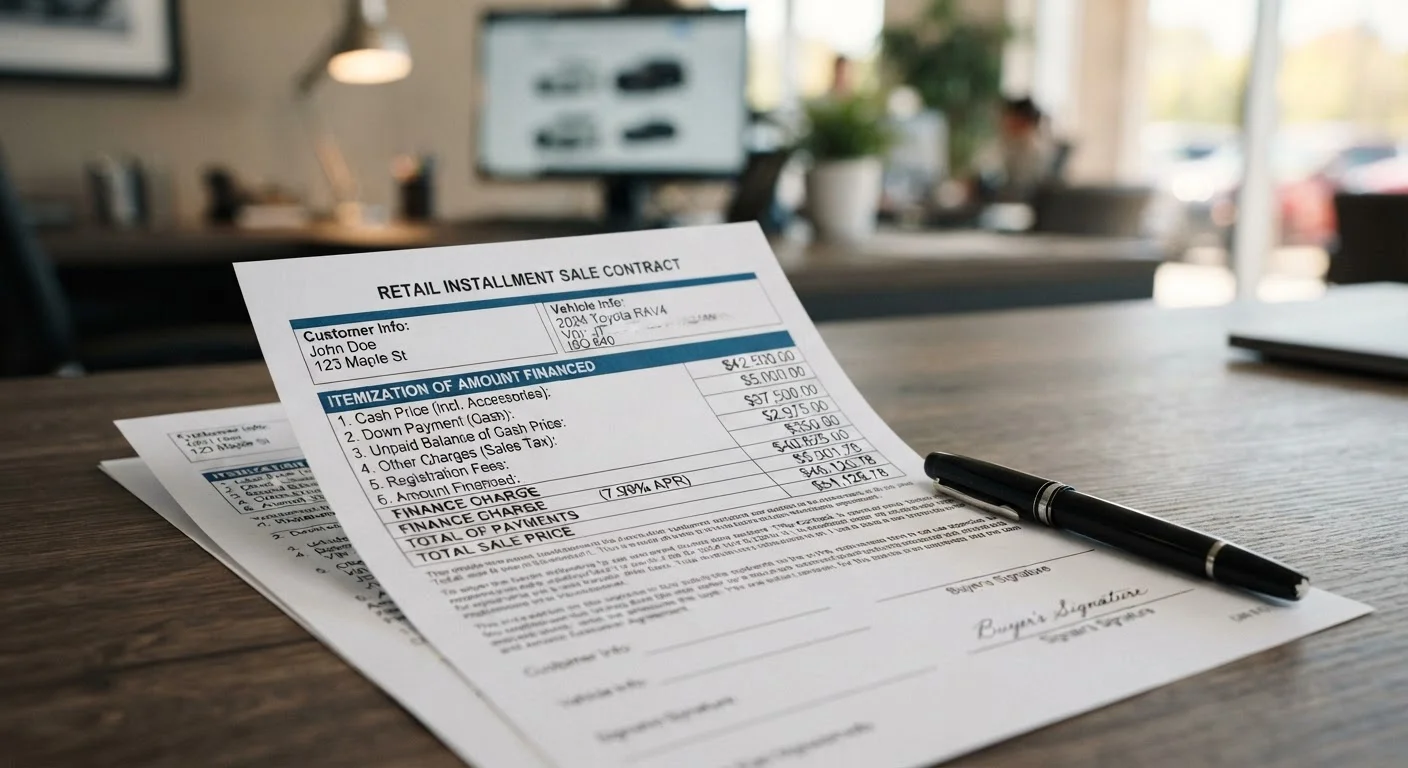
Photo credit: FaqsInsights.com | Stay Informed, Stay Ahead
In this article
Sticker price is just the beginning. Learn what fees, taxes, and add-ons typically make up a car's true final cost.
Key Takeaways
- The sticker price is only a starting point - final costs are always higher once fees and taxes are added.
- Sales tax, title, registration, and documentation fees are the most common additions to the vehicle price.
- Always ask for the out-the-door price in writing before agreeing to any deal.
- Some dealer-added fees are negotiable; others, like government taxes, are fixed.
- Comparing out-the-door prices across dealers gives you a true apples-to-apples cost comparison.
Why the Sticker Price Is Just the Starting Line
Walk into any dealership and you'll see a price displayed on the window - the Manufacturer's Suggested Retail Price, or MSRP. Many buyers assume that's what they'll pay, or close to it. In reality, the MSRP doesn't include the taxes, government fees, and dealer charges that are added before the deal closes.
The gap between the sticker price and the out-the-door price can range from a few hundred dollars on an inexpensive vehicle to several thousand dollars on a higher-priced one - depending on your state's tax rate and the dealer's fee structure. Understanding this gap before you sit down at the negotiating table puts you in a fundamentally stronger position.
“Focusing only on the monthly payment is one of the most common mistakes car buyers make. The out-the-door price is the only number that tells you what the vehicle is truly costing you at the point of sale.”
— Philip Reed, Automotive consumer advocate and former staff writer, Edmunds
What Goes Into the Out-the-Door Price
While exact line items vary by state and dealership, most out-the-door prices are built from the same core components:
- Negotiated vehicle price: The agreed sale price of the car, which may be at, above, or below MSRP depending on demand and negotiation.
- Sales tax: Calculated as a percentage of the vehicle price. Rates vary significantly by state and sometimes by county or city.
- Title and registration fees: State-mandated charges to transfer legal ownership and register the vehicle in your name.
- Documentation fee ("doc fee"): A dealer charge for processing paperwork. Amounts vary widely - some states cap this fee, others do not.
- Destination or dealer prep charges: Sometimes included in the MSRP, sometimes listed separately. Confirm which applies to the vehicle you're considering.
8-12%
Typical gap between MSRP and out-the-door price
Consumer financial education sources generally estimate that fees and taxes add 8-12% to a vehicle's negotiated price, though this varies widely by state tax rate and dealer practices.
$100-$999+
Range of dealer documentation fees across U.S. states
Documentation fee amounts and caps vary significantly by state; some states impose a legal maximum while others leave the amount entirely to dealer discretion.
Optional add-ons - such as extended warranties, paint protection, or accessory packages - may also appear on the final worksheet. These are generally negotiable or removable, and they should be evaluated separately on their own merits, not bundled silently into the total.
How to Get the Real Number Before You Sign
The most effective step any buyer can take is simple: ask the dealer for a complete out-the-door price worksheet in writing before any agreement is reached. This document should itemize every charge so you can see exactly what you're paying for.
Ask for the Out-the-Door Worksheet in Writing
Before signing anything, request an itemized out-the-door price sheet that lists every charge separately. This gives you a clear record to review and compare, and removes any ambiguity about what's included. A reputable dealership will provide this without hesitation.
When comparing offers from multiple dealerships, always use the out-the-door number - not the monthly payment or the sticker price. Two dealers quoting the same vehicle price may have very different doc fees or add-ons, and those differences only become visible when the totals are compared directly.
If a line item isn't explained to your satisfaction, ask. Dealers are required to disclose all charges, and a transparent dealer will have no difficulty walking you through each one. Unfamiliar fees with vague descriptions - sometimes called "market adjustment" or "processing fees" - are worth questioning before you agree to them.
Frequently Asked Questions

Author
Cars & Driving Editorial Team
Cars & Driving Editorial Team is the collective byline for our editorial team and contributor network. Articles published under this byline or an editorial pen name are researched, written, and reviewed according to our editorial standards for clarity, consistency, and independence before publication.
View all articles →