
East Africa's Safari Circuit: Understanding the Geography Before You Go
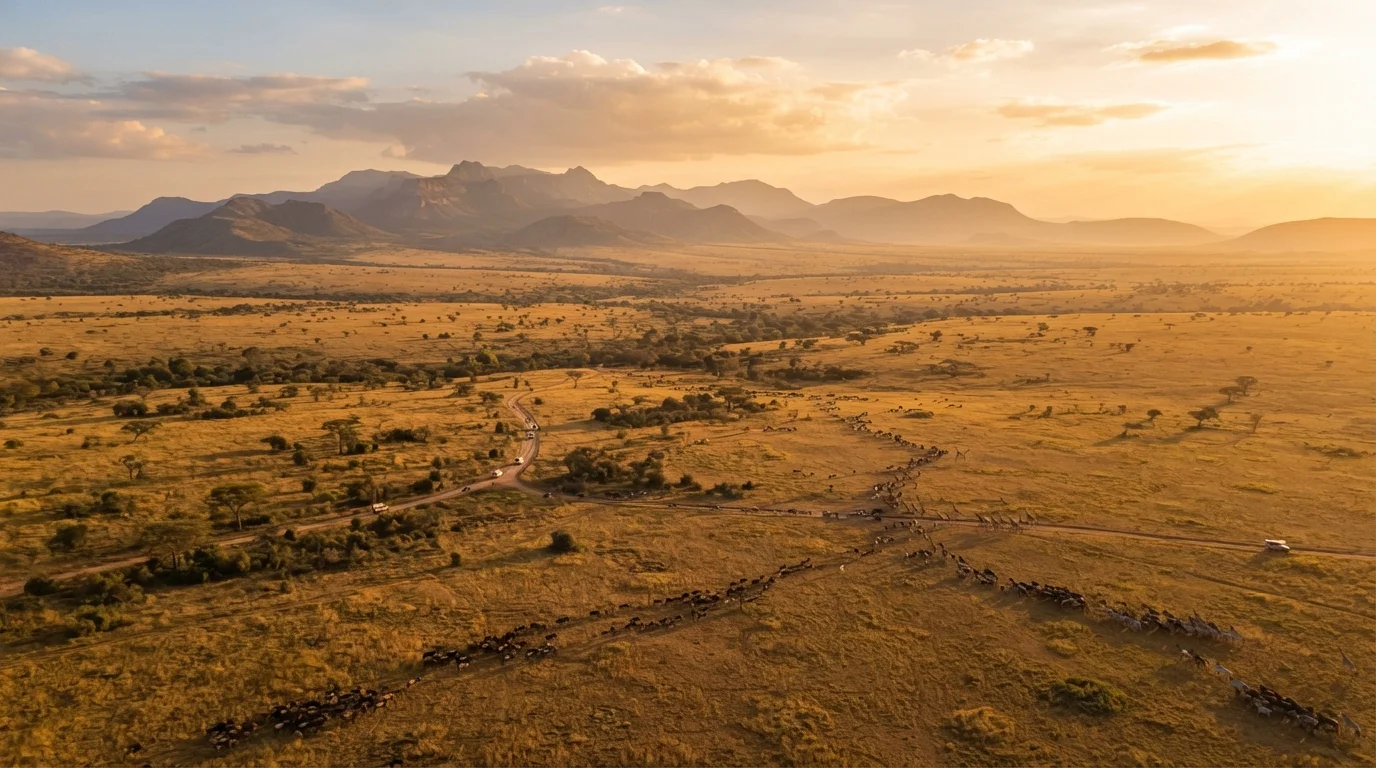
Photo credit: FaqsInsights.com | Stay Informed, Stay Ahead
In this article
Kenya, Tanzania, Rwanda, and Uganda each anchor different wildlife experiences. Here's a geographic and ecological overview of the region.
Key Takeaways
- East Africa's safari circuit spans four countries - Kenya, Tanzania, Rwanda, and Uganda - each with distinct ecosystems.
- The Great Rift Valley is the defining geographic feature that shapes wildlife habitats across the entire region.
- Savanna, volcanic highlands, tropical forest, and crater lakes all exist within a relatively compact travel area.
- Seasonal rainfall patterns determine when and where wildlife concentrations peak, making timing essential.
- Mountain gorilla trekking in Rwanda and Uganda requires a separate planning approach from savanna safaris.
Why Geography Is the Foundation of Safari Planning
East Africa is one of those rare places where the land itself tells the story. Before you start thinking about lodges or itineraries, understanding the region's physical geography will help you make sense of everything else - why certain animals appear in certain places, why a two-hour flight can feel like a different planet, and why the same month can mean lush green landscapes in one country and bone-dry plains in another.
The defining structure underlying it all is the Great Rift Valley - a vast geological fracture running roughly north to south through the entire region. Over millions of years, it has generated volcanoes, soda lakes, freshwater lakes, and elevated plateaus. These features have produced a patchwork of microclimates and habitats that support extraordinary biodiversity.
Great Rift Valley
A massive geological fracture running through East Africa that created a chain of lakes, volcanoes, and highlands, directly shaping the region's ecosystems and wildlife habitats.
Savanna
A tropical grassland ecosystem with scattered trees and distinct wet and dry seasons, covering large portions of Kenya and Tanzania and supporting iconic wildlife like lions, elephants, and wildebeest.
Caldera
A large volcanic crater formed when a volcano collapses inward. Tanzania's Ngorongoro Crater is a famous example that now functions as a self-contained wildlife ecosystem.
Montane Forest
Dense tropical forest found at higher elevations on mountain slopes. Rwanda and Uganda's montane forests are the habitat of mountain gorillas and chimpanzees.
Albertine Rift
The western branch of the Great Rift Valley running through Rwanda, Uganda, and neighboring countries, characterized by volcanic peaks, high-altitude lakes, and biodiverse rainforest.
The Great Migration
A year-round circular movement of roughly 1.5 million wildebeest and hundreds of thousands of zebra between Tanzania's Serengeti and Kenya's Maasai Mara, driven by rainfall and grass availability.
For first-time visitors, the most useful mental model is to think of East Africa's safari destinations as four distinct zones - each anchored by a country, each shaped by its own terrain.
Kenya: The Classic Savanna Experience
Kenya is where many people's idea of an African safari was formed - and with good reason. The country's southwestern corner contains the Maasai Mara National Reserve, a sweeping grassland ecosystem that forms the northern portion of a cross-border ecosystem shared with Tanzania's Serengeti. The Mara River bisects the landscape and, during certain months, becomes the dramatic stage for wildebeest river crossings.
Beyond the Mara, Kenya offers geographic variety that surprises most first-timers. The central highlands around Mount Kenya - Africa's second-highest peak - create cooler, forested zones. The Samburu region to the north is semi-arid, supporting specialized species not found further south. The Rift Valley lakes, including Lake Nakuru and Lake Bogoria, attract dense concentrations of flamingos and waterbirds.
Think in Ecosystems, Not Just Countries
When researching East Africa, try mapping destinations by ecosystem type rather than by national borders. Kenya and Tanzania share overlapping savanna systems, while Rwanda and Uganda share the Albertine Rift forests. This framing helps clarify which experiences are genuinely distinct and which are complementary.
Kenya's internal geography means that a single trip can deliver multiple ecosystems, though distances and road conditions should factor into your planning.
Tanzania: Volcanic Craters and the World's Largest Migration
Tanzania contains one of the most geologically dramatic landscapes in Africa. The Ngorongoro Crater - a collapsed volcanic caldera roughly 12 miles across - functions as a self-contained ecosystem with permanently resident wildlife and relatively predictable sightings year-round. It sits at high elevation, which means noticeably cooler temperatures.
Stretching west from Ngorongoro, the Serengeti is Tanzania's most famous park: over 5,700 square miles of open savanna, woodland, and kopjes (rocky outcrops). The Serengeti anchors the southern and central portions of the Great Migration circuit. Wildlife populations here rank among the densest on the continent.
Tanzania also encompasses the vast and remote Selous Game Reserve (now known as Nyerere National Park) in the south, and the Mahale Mountains along Lake Tanganyika - where chimpanzee trekking offers a forest counterpoint to the open plains.
Rwanda and Uganda: The Montane Forests of the Great Rift
Moving west, the landscape transforms dramatically. Rwanda and Uganda share the Albertine Rift - the western branch of the Great Rift Valley - where volcanic mountains rise above dense tropical rainforest. This is a completely different safari experience from anything on the open savanna.
Rwanda's Volcanoes National Park and Uganda's Bwindi Impenetrable National Park are the two primary destinations for mountain gorilla trekking, one of the most sought-after wildlife encounters on Earth. The terrain is steep, forested, and can be wet; visits require advance permits that are managed by each country's national park authority.
Uganda also offers chimpanzee trekking in Kibale Forest and classic savanna wildlife in Queen Elizabeth and Murchison Falls National Parks - making it one of the region's most ecologically diverse single-country destinations.
Gorilla Trekking Requires Advance Planning
Permits for mountain gorilla trekking in Rwanda and Uganda are limited in number and issued by national park authorities. They often book out months in advance, particularly during peak travel periods. If gorilla trekking is central to your trip, begin the permit research and booking process well ahead of your planned travel dates through official national park channels.
Rwanda and Uganda sit at higher elevations than the coastal-adjacent savannas, and trekking in montane forest requires a reasonable level of physical fitness. Discuss any health concerns with your doctor well in advance of your trip.
How Seasons Shape Wildlife Viewing Across the Region
East Africa generally experiences two rainy seasons and two dry seasons, though the exact timing shifts as you move across the region. The short rains typically arrive October through December; the long rains run March through May. The dry periods - June through October and January through February - are generally when wildlife viewing is considered easiest on the open savannas.
During the dry season, vegetation thins and animals concentrate around remaining water sources, making them easier to locate. The green season brings lush scenery and newborn animals, but can make off-road game driving more challenging in some areas.
Gorilla and chimpanzee trekking is possible year-round in Rwanda and Uganda, though trails can be extremely muddy during peak rainy months. Always verify current conditions and access requirements with official national park sources before finalizing travel plans, as conditions and regulations change.
This article provides general geographic and travel education. Entry requirements, health recommendations, and park regulations vary by country and can change - always verify current details with official government sources and consult qualified professionals before traveling.
Frequently Asked Questions

Author
Travel & Trips Editorial Team
Travel & Trips Editorial Team is the collective byline for our editorial team and contributor network. Articles published under this byline or an editorial pen name are researched, written, and reviewed according to our editorial standards for clarity, consistency, and independence before publication.
View all articles →