
Certificates, Credentials, and Degrees: Sorting Out Online Qualifications
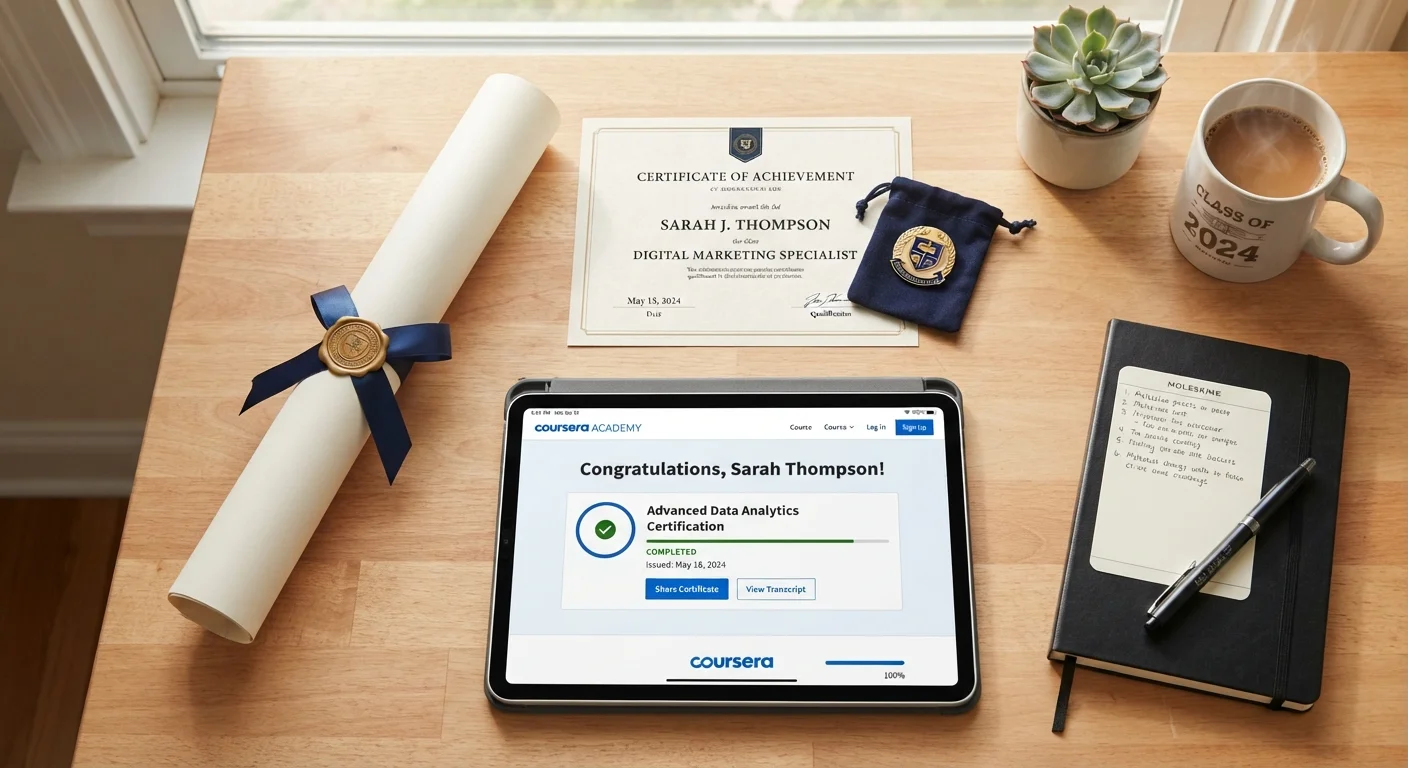
Photo credit: FaqsInsights.com | Stay Informed, Stay Ahead
In this article
Online learners face a maze of qualification types. Here's a clear breakdown of what each credential means and when it matters to employers or institutions.
Why the Terminology Matters
Search any job listing or graduate school requirement and you'll encounter a blur of terms: certificate, certification, credential, degree, badge, diploma. Online learning has expanded access to education dramatically, but it has also multiplied the number of qualification types - and not all of them carry equal weight in every context.
Understanding what each term actually means helps you invest your time and money wisely. The credential that impresses a hiring manager in one field may be nearly invisible in another. The qualification that satisfies a licensing board has nothing in common, structurally, with a completion badge from a self-paced course. Getting these distinctions right is practical, not pedantic.
For a broader view of how credentials fit into the online education landscape, see The Complete Picture of Online Learning.
| Broadest employer recognition | Accredited degrees |
| Most field-specific authority | Professional certifications (e.g., CPA, PMP, RN licensure) |
| Shortest time to earn | Digital badges and micro-credentials |
| Requires standardized exam | Certifications (typically); degrees and certificates do not |
| Credit-bearing potential | Academic certificates from accredited colleges may carry credit hours |
| Key question before enrolling | Is this credential recognized by the employers or institutions I'm targeting? |
Degrees, Certificates, and Certifications Defined
These three terms are the most commonly confused, and the differences matter significantly.
Degrees
A degree - associate, bachelor's, master's, or doctoral - is awarded by an accredited college or university upon completing a defined program of academic study. Degrees are recognized broadly by employers, licensing boards, and graduate institutions. Online degrees from accredited schools carry the same formal standing as their on-campus equivalents, though the institution's accreditation status matters enormously. See how accreditation works in online education for a full explanation of what to verify before enrolling.
Certificates
A certificate is typically awarded by a college, university, or training organization upon completing a shorter, focused course of study - often in a specific skill area or profession. Academic certificates issued by accredited institutions may carry credit hours and can sometimes count toward a degree. Non-credit certificates from professional associations or online platforms vary widely in employer recognition; their value is largely field-specific and issuer-dependent.
Certifications
A certification is a credential granted by a professional body or industry organization, usually after passing a standardized exam and sometimes meeting experience requirements. Certifications validate competency against an external, third-party standard. Examples include professional licensure exams in nursing, accounting, or project management. Because they require demonstrated performance - not just course completion - certifications generally carry more weight in regulated industries than most certificates do.
Accreditation
A formal quality-assurance process by which an independent body evaluates and recognizes an educational institution or program as meeting established standards. Accreditation status directly affects whether degrees and credits are recognized by employers, other institutions, and licensing boards.
Certificate
A document awarded by a school, training organization, or platform upon completing a defined course or program. Certificates range from credit-bearing academic credentials issued by accredited colleges to non-credit completions from online platforms; their value varies by issuer and field.
Certification
A credential awarded by a professional or industry body, typically requiring a standardized exam and sometimes work-experience prerequisites. Certifications validate competency against an external standard rather than simply completing coursework.
Digital Badge
A visual, verifiable credential issued online - often by a platform or institution - upon completing a course, module, or skills challenge. Badges can be displayed on professional profiles, but their employer recognition depends heavily on the issuing organization's reputation.
Micro-credential
A short-form qualification that demonstrates competency in a narrow skill area, often issued by universities or professional organizations. Micro-credentials sit between a standalone badge and a full certificate in scope and recognition.
Degree
An academic qualification awarded by a college or university upon completing a full program of study - associate, bachelor's, master's, or doctoral level. Degrees from accredited institutions are broadly recognized by employers, graduate programs, and licensing bodies.
Digital Badges and Micro-Credentials
Digital badges and micro-credentials have grown rapidly alongside the expansion of online learning platforms. These are typically issued after completing a short module, skills challenge, or course series on a platform, then displayed on a professional profile.
Their value depends heavily on context. A badge issued by a well-known university or major industry association may be recognized and respected. A badge from an obscure platform with no institutional backing often carries little weight with employers or admissions offices. Before pursuing a badge or micro-credential, research how it is perceived in your target field - not just by the issuing platform's marketing materials.
When evaluating any short-form credential, the same checklist used for evaluating full courses applies. Choosing an Online Course: What to Evaluate Before You Enroll offers a practical framework for assessing issuer credibility and credential substance.
Platform Badges Are Not Industry Certifications
A course completion badge from an online learning platform and a professional certification from an industry body are structurally different credentials. Platforms may use the word 'certification' loosely in their marketing, but unless the credential is issued by a recognized professional or standards body and requires demonstrated performance, it functions more like a certificate of completion. Always verify what an employer or institution actually sees when they review the credential - not just what the platform calls it.
Matching Credentials to Your Goals
The credential that serves you best depends entirely on your purpose. Consider the following patterns:
- Career entry or change: An accredited degree remains the most universally recognized baseline in many fields. Where degrees aren't required, industry certifications often carry more hiring-manager credibility than platform certificates.
- Skill demonstration within a current role: Employer-recognized certificates or certifications from field-specific associations often matter more than degrees here. Check what your own industry values - it varies considerably.
- Graduate or professional school admission: Accredited degrees are typically required. Non-credit certificates and badges rarely satisfy admissions prerequisites on their own.
- Personal learning or exploration: Any structured course or self-directed learning path can be valuable regardless of the credential it produces. The structured vs. self-directed learning comparison can help you decide what format fits your situation.
The single most important question to ask before investing in any qualification: does the issuer and credential type have demonstrated recognition among the employers, schools, or licensing bodies you are targeting? If you cannot confirm that with external evidence, treat it as personal enrichment rather than a career asset.
For a deeper dive into building skills strategically, explore our Skill Development hub.

Author
Learning & Education Editorial Team
Learning & Education Editorial Team is the collective byline for our editorial team and contributor network. Articles published under this byline or an editorial pen name are researched, written, and reviewed according to our editorial standards for clarity, consistency, and independence before publication.
View all articles →