
Common Assumptions About Visiting India That First-Time Travelers Should Reconsider
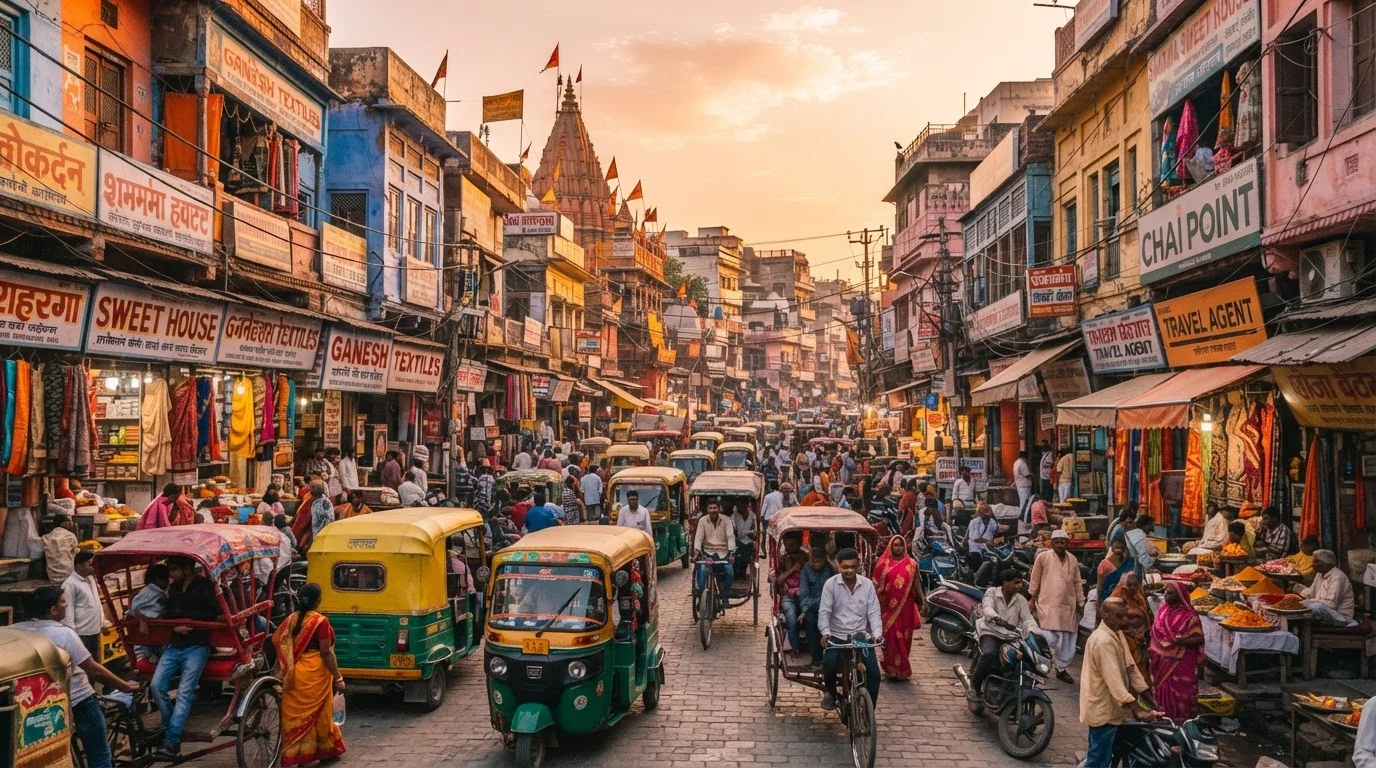
Photo credit: FaqsInsights.com | Stay Informed, Stay Ahead
In this article
From infrastructure expectations to cultural norms, many first-time visitors to India arrive with misconceptions that shape their experience.
Key Takeaways
- India's infrastructure varies enormously by region - many cities have modern transport and reliable connectivity.
- Vegetarian food is widespread, but India's culinary diversity includes abundant meat, seafood, and regional specialties.
- Most major tourist sites, airports, and hotels are accustomed to international visitors and English is widely spoken.
- Monsoon season doesn't shut down India - many regions remain accessible and even scenic during the rains.
- Safety concerns, while real in certain contexts, should be assessed by region and situation rather than applied broadly.
Why First-Time Visitors Arrive With the Wrong Map
India is one of the world's most anticipated destinations - and one of the most misunderstood. Much of what circulates online about traveling there is either outdated, overgeneralized, or drawn from experiences in a single city applied to an entire subcontinent. For a country with 28 states, dozens of languages, and millennia of layered history, that's a significant problem.
The assumptions travelers carry shape how they pack, how they plan, and how they respond when reality doesn't match the mental picture. Some misconceptions lead to unnecessary anxiety; others produce genuine surprises on arrival. Unpacking them ahead of time is one of the most useful things a first-time visitor can do - right alongside verifying entry requirements, which travelers frequently get wrong before they even board the plane.
Below are some of the most persistent assumptions about India - and what a clearer picture actually looks like.
Myth
India's infrastructure is too underdeveloped for comfortable travel.
Fact
Urban infrastructure varies dramatically - many Indian cities have metro systems, modern airports, and reliable high-speed internet.
Cities like Delhi, Mumbai, Bengaluru, and Hyderabad have extensive metro rail networks, well-developed expressways, and international-standard airport terminals. Train travel across India, while sprawling and sometimes complex to book, connects regions efficiently and affordably. Rural and remote areas present more variable conditions, but that's true of most large countries. Lumping all of India into a single infrastructure category misrepresents a subcontinent-sized nation.
Myth
Everything in India is vegetarian - meat-eaters will struggle.
Fact
India has rich meat-eating traditions across many regions, and seafood, lamb, chicken, and beef substitutes are widely available depending on location.
Coastal Kerala serves exceptional seafood. Kolkata is famous for its fish dishes. Lucknow is celebrated for slow-cooked mutton preparations. Punjab has a robust tradition of tandoor-cooked meats. Vegetarian food is certainly plentiful and often extraordinary, but non-vegetarians will find abundant, delicious options across most of the country. Dietary restrictions - in either direction - are worth researching by region rather than assumed uniformly.
Myth
It's impossible to get around without knowing Hindi.
Fact
English is an official language of India and is widely used in tourism, business, signage, and public transport across the country.
India has no single national language - Hindi is one of two official languages at the federal level, alongside English, and neither dominates in southern states like Tamil Nadu or Kerala. In airports, hotels, major tourist sites, and urban transit systems, English signage and staff are standard. Learning a few courtesy phrases in the local state language is always appreciated, but language barriers are rarely the obstacle first-time visitors anticipate.
Myth
Monsoon season means India is off-limits for travel.
Fact
The monsoon affects different regions at different times and intensities - many destinations remain accessible and visually stunning during the rains.
The monsoon sweeps across India progressively from June through September, but its impact varies enormously by location. While some regions do see flooding or travel disruption, destinations like Rajasthan become more temperate and less crowded. Kerala's backwaters are considered by many to be at their most beautiful during the rains. Hill stations in the northeast offer dramatic cloud-shrouded scenery. Travelers who understand the regional monsoon calendar, rather than treating it as a blanket ban, often find exceptional value and fewer crowds.
Myth
India is uniformly unsafe, especially for solo travelers.
Fact
Safety in India - as in any large, diverse country - varies significantly by location, context, and individual circumstances.
Broad safety generalizations about India often reflect specific incidents or particular regions rather than a country-wide condition. Many travelers - including solo women - visit India without serious incident by researching their destinations carefully, staying in well-reviewed accommodations, using registered transport services, and trusting local advice. That said, risk is real in some contexts and should be assessed honestly rather than dismissed or exaggerated. Checking current travel advisories from your government before departure is always wise. Avoid applying a single story to the full picture.
Traveling in India With Clearer Expectations
Letting go of a fixed mental image of India doesn't mean traveling without preparation - it means preparing for what's actually there. India rewards travelers who come curious rather than cautious, and who treat variation as the point rather than the problem.
1.4B+
Population across India's 28 states
India's population and geographic scale mean experiences vary more within the country than between many pairs of countries.
22
Officially recognized languages in India
India's constitution recognizes 22 scheduled languages, underscoring the cultural and regional diversity travelers encounter.
Top 5
Global ranking for international tourist arrivals (pre-pandemic trend)
India has consistently ranked among the most-visited countries in Asia, according to UNWTO regional tourism data.
If you're heading out for the first time, it's worth reading through a grounded starting point for solo travel and double-checking the full checklist of what to verify beyond the visa before landing. India also offers a meaningful opportunity to practice respectful, context-aware travel - something that goes a long way toward a richer experience. For more practical travel tips to smooth out any trip, the details are in the fundamentals.
Conditions Change - Check Official Sources
Travel conditions, regional safety advisories, and entry requirements for India can shift with little notice. Before finalizing plans, consult your government's official travel advisory page and India's official tourism and immigration resources. No article - including this one - can substitute for up-to-date, authoritative information.

Author
Travel & Trips Editorial Team
Travel & Trips Editorial Team is the collective byline for our editorial team and contributor network. Articles published under this byline or an editorial pen name are researched, written, and reviewed according to our editorial standards for clarity, consistency, and independence before publication.
View all articles →