
Accessible Exercise: Moving Well With Physical Limitations
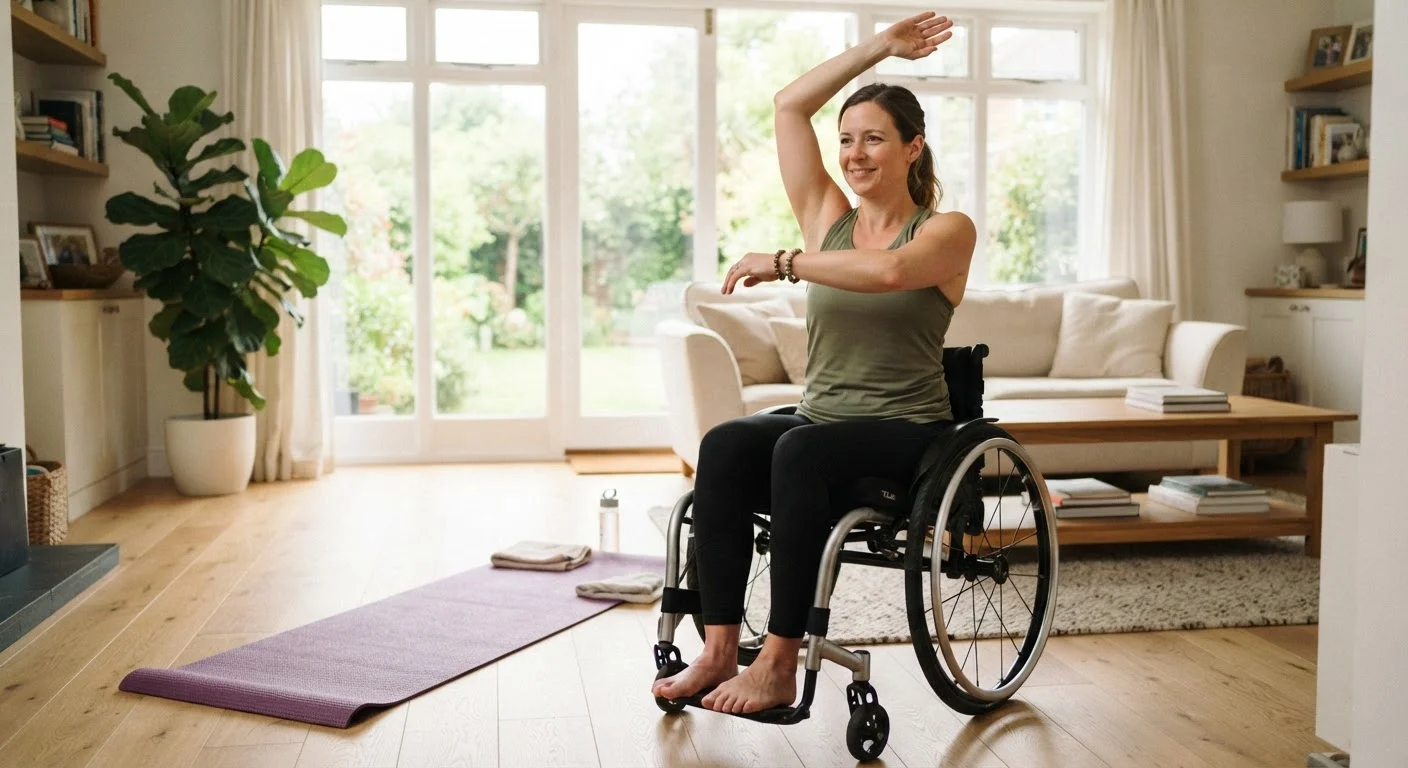
Photo credit: FaqsInsights.com | Stay Informed, Stay Ahead
In this article
Physical limitations don't have to mean sedentary living. This guide explores movement strategies adaptable to a range of abilities, injuries, and chronic conditions.
Key Takeaways
- Physical limitations don't eliminate the benefits of movement - they redefine how you access them.
- Consulting a physical therapist or physician before starting is essential for chronic conditions or injuries.
- Seated, aquatic, and low-impact exercises can provide meaningful cardiovascular and strength benefits.
- Consistency over intensity is the foundation of accessible, sustainable fitness.
- Adaptation is a skill - routines should evolve as your condition, energy, and goals change.
Why Accessible Exercise Matters
The assumption that exercise requires a fully functioning body, a gym membership, or pain-free joints keeps many people from moving at all. That assumption is worth challenging directly. Research consistently shows that physical activity - even gentle, modified movement - supports cardiovascular health, mental well-being, and functional independence across a broad range of conditions and ages.
For people living with chronic pain, physical disability, neurological conditions, or recovering from injury, the stakes of inactivity are often higher, not lower. Sedentary behavior is associated with greater risk of depression, metabolic dysfunction, and reduced quality of life - risks that affect people with limitations disproportionately.
Accessible exercise is not a consolation prize. It is a legitimate, evidence-informed approach to physical health that meets people where they are. As our movement habits guide explains, structured workouts aren't the only path to physical health - everyday movement counts too.
1 in 4
US adults living with a disability
According to the CDC, approximately 61 million adults in the United States have some form of disability that affects major life activities.
150 min
Weekly moderate activity recommended
The US Physical Activity Guidelines note that even smaller amounts of movement provide health benefits when 150 minutes per week isn't achievable.
40-50%
Reduced fall risk with balance training
A Cochrane review of exercise interventions found balance and functional exercises can significantly reduce fall rates in older adults.
Understanding Your Starting Point
Before building any movement routine, understanding your specific situation is essential - and this is where professional input is non-negotiable. A physician, physical therapist, or occupational therapist can identify which movements are safe, which to avoid, and how to sequence a program that supports rather than stresses your body.
Always Get Cleared Before Starting
If you have a diagnosed chronic condition, recent surgery, joint replacement, cardiac history, or any unmanaged symptoms, do not begin a new exercise program without first speaking with your physician or physical therapist. This is not a formality - it is how you ensure the movement you do supports rather than harms your body. Self-directed exercise based on general information alone is not appropriate for higher-risk situations.
This doesn't mean waiting for a perfect plan before moving at all. It means gathering enough information to act safely. During a clinical assessment, ask specifically: What movements should I avoid entirely? Which activities are safe to try at low intensity? What warning signs should stop me mid-exercise?
Once you understand your parameters, you have a working canvas. People often discover they have far more options than expected. Someone with severe knee arthritis may not be able to walk for long periods but may tolerate seated rowing or water aerobics well. Someone with limited grip strength may still perform meaningful lower-body and core work.
Movement Strategies for Common Limitations
Different limitations call for different adaptations. The following are general categories - always verify individual suitability with a qualified professional:
Joint Pain and Arthritis
Low-impact movement that reduces joint loading is often well-tolerated. Water-based exercise (hydrotherapy or pool walking) dramatically reduces mechanical stress while maintaining cardiovascular demand. Chair-based yoga and seated resistance band exercises can maintain muscle tone without compressing painful joints.
Mobility and Balance Limitations
Seated exercise expands the available movement repertoire considerably. Seated marching, seated leg lifts, and upper-body circuits with light resistance can be performed safely with support. Tai chi, adapted for seated or limited standing use, has a documented evidence base for improving balance and fall risk in older adults.
Neurological Conditions
Conditions such as multiple sclerosis, stroke-related disability, or Parkinson's disease require individualized guidance. Generally, rhythmic, predictable movement patterns - cycling on a stationary recumbent bike, for example - tend to be more accessible than dynamic, unpredictable ones. Fatigue management is a core consideration; shorter, more frequent bouts of activity often work better than single longer sessions.
Respiratory or Cardiac Conditions
Supervised cardiac rehabilitation programs exist precisely for this population and should be explored when appropriate. Outside formal programs, low-intensity movement with attention to perceived exertion - not pushing into breathlessness - is the standard framework. See our walking vs. running comparison for context on how different movement types affect cardiovascular demand.
Rate your perceived exertion on a 1-10 scale before, during, and after exercise sessions. This helps identify patterns - such as which activities consistently leave you fatigued versus energized - without relying on wearable tech.
For people with variable symptoms or pain levels, subjective effort tracking provides more meaningful data than time or pace metrics alone.
When adapting an exercise, change only one variable at a time - either the position, the resistance, or the duration - so you can pinpoint what works if something causes discomfort.
Changing multiple factors simultaneously makes it impossible to know which adjustment was responsible for a positive or negative outcome.
Building a Sustainable Routine
Sustainability is where most accessible fitness plans succeed or fail. The principle of progressive overload - gradually increasing demand over time - applies even to adapted movement, though the increments are often smaller and the recovery periods longer.
A practical framework for building a routine includes:
- Start shorter than you think you need to. Five to ten minutes of movement, done consistently, builds more long-term capacity than an ambitious session followed by a week of recovery.
- Anchor movement to existing habits. Pairing exercise with a daily routine - morning coffee, a TV program, or lunchtime - reduces the decision-making burden.
- Track effort, not just duration. Perceived exertion (how hard it feels) is often more relevant than time or distance for people managing variable symptoms.
If you're returning to movement after a significant pause, our guide on returning after a break offers a detailed framework for easing back safely. For readers managing a packed schedule alongside health challenges, building a routine around a busy schedule provides additional structure.
The Two-Minute Rule for Low-Energy Days
On days when motivation or energy is very low, commit only to two minutes of movement. Often, beginning is the hardest part - and two minutes frequently extends naturally. Even if it doesn't, you've maintained the habit signal your nervous system needs to keep showing up.
Adapting as Your Needs Change
One underappreciated aspect of accessible exercise is that the goal posts move - sometimes by design, sometimes by circumstance. A flare-up, a surgery, a medication change, or simply a difficult week can all alter what's possible on any given day. Building flexibility into your approach from the start makes this less destabilizing.
Consider maintaining two versions of your routine: a full version for higher-capacity days and a minimal version - perhaps five minutes of seated movement or gentle stretching - for lower-capacity days. The minimal version preserves habit continuity even when performance isn't possible.
Progress in accessible fitness rarely looks like conventional fitness progress. It may look like less pain after movement, improved sleep, better mood stability, or greater confidence in daily tasks. These are meaningful, measurable outcomes - not lesser ones.
Progress Looks Different Here
In accessible fitness, improvement is often functional rather than performance-based. Reduced pain after activity, improved sleep quality, and greater ease in daily tasks like climbing stairs or carrying groceries are all legitimate markers of progress. Don't discount these outcomes because they don't appear on a fitness tracker.
This article is for general informational purposes only and does not constitute medical advice. Always consult a qualified healthcare professional before beginning or modifying an exercise program, particularly if you have a chronic condition, injury, or disability.

Author
Health & Wellness Editorial Team
Health & Wellness Editorial Team is the collective byline for our editorial team and contributor network. Articles published under this byline or an editorial pen name are researched, written, and reviewed according to our editorial standards for clarity, consistency, and independence before publication.
View all articles →