
Progressive Overload: The Principle Behind Every Effective Workout Plan
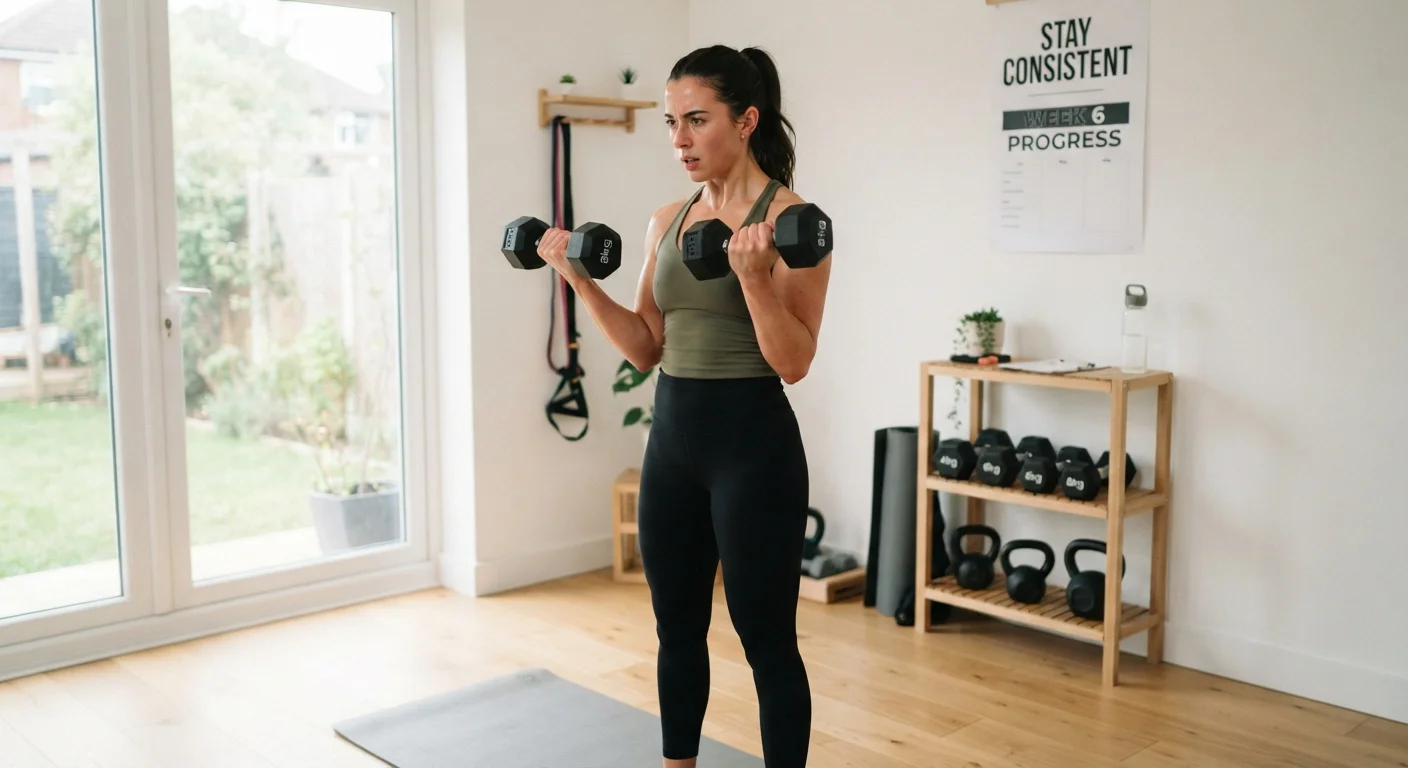
Photo credit: FaqsInsights.com | Stay Informed, Stay Ahead
In this article
Understand progressive overload — what it means, why it drives fitness gains, and how it applies to strength, cardio, and everyday movement.
Key Takeaways
- Progressive overload means gradually increasing exercise demands so your body continues to adapt.
- It applies to strength training, cardio, flexibility, and everyday movement - not just lifting heavy weights.
- Small, consistent increases are more effective and safer than sudden large jumps in intensity.
- Plateaus in fitness are often a sign that progressive overload has stalled - not that you've failed.
- Rest and recovery are essential parts of the overload cycle; adaptation happens between sessions.
Why Your Body Stops Changing Without It
Your body is remarkably good at conserving energy. Present it with the same workout week after week, and it adapts - then stops adapting. What once felt challenging becomes routine, and physiological change slows to a halt. This is not failure; it's biology. The body reaches equilibrium with its current workload and no longer has a reason to build additional capacity.
Progressive overload breaks that equilibrium. By incrementally increasing the demand placed on your muscles, heart, or lungs, you give your body a new problem to solve. Adaptation - stronger muscles, improved endurance, better coordination - is the solution your body produces in response. Remove the new challenge, and adaptation stops. This is why fitness plateaus happen: not because something went wrong, but because the stimulus stopped changing.
Overload Is a Concept, Not a Number
There is no universal formula for how much to increase challenge each week. Individual factors - age, training history, sleep quality, stress, and nutrition - all influence how quickly your body can adapt. What constitutes progressive overload for one person may be too much or too little for another. Listening to your body is as important as tracking your numbers.
The Many Ways to Apply Progressive Overload
A common misconception is that progressive overload means simply adding more weight to the bar. In reality, it can take many forms - and matching the right type of progression to your current situation is what makes it sustainable.
- Load: Increasing the resistance or weight used in an exercise.
- Volume: Adding more sets or repetitions at the same intensity.
- Frequency: Training a movement pattern or muscle group more often per week.
- Tempo: Slowing down the movement to increase time under tension.
- Density: Completing the same work in less time, or more work in the same time.
- Range of motion: Gradually increasing the depth or control of a movement.
- Exercise complexity: Progressing from an easier to a more demanding variation.
This variety matters. For someone starting strength training without gym experience, progressing from a wall push-up to an incline push-up to a floor push-up is progressive overload in action - no weights required.
Start Simpler Than You Think You Should
Beginners often underestimate how quickly small progressions compound. Starting conservatively - even if sessions feel manageable - leaves room to increase challenge steadily without risking injury or burnout. The goal in early weeks is building the habit and baseline, not maximizing effort.
Progression, Recovery, and the Adaptation Cycle
Progressive overload is only half the equation. The other half is recovery - the window during which your body actually builds the new capacity you're demanding. Skipping rest undermines the process entirely. As covered in the principle of rest days as active training, recovery is not passive absence from exercise; it's a physiologically active phase where adaptation takes hold.
A useful mental model: exercise creates the signal; recovery creates the result. Applying overload without adequate rest is like repeatedly planting seeds in soil you never water. The stress accumulates, but the adaptation doesn't.
~6-8 weeks
Typical timeline for early strength adaptations
Exercise physiology research generally shows that meaningful neuromuscular adaptations begin within 6-8 weeks of consistent resistance training in beginners.
5-10%
Recommended weekly increase in training load
Sports medicine guidelines commonly suggest limiting load or volume increases to around 5-10% per week to reduce overuse injury risk.
Practically, this means tracking your workouts in even a basic way - a notebook, a phone note - so you can see what you did last session and deliberately do slightly more this time. Precision isn't the goal; direction is. Consistent, moderate effort applied over time will outperform occasional bursts of intensity that leave you too sore or fatigued to train again for two weeks.
Applying the Principle to Everyday Movement
Progressive overload doesn't belong only in structured gym sessions. It's relevant any time you're building a physical habit - whether that's walking more, improving posture, or managing a health condition with movement. If you currently walk 15 minutes a day and add 5 minutes per week, that's progressive overload. If you carry groceries up stairs instead of taking the elevator, then gradually take two flights, that counts too.
This framing matters because it lowers the barrier to entry. You don't need a program, a trainer, or specialized equipment to begin applying the principle. You need only a starting point and a habit of incrementally raising the bar. For a practical framework on structuring this across a week, see building a weekly movement routine around a busy schedule.
Understanding what progressive overload is - and what it isn't - also connects naturally to functional fitness, which focuses on building movement capacity that translates to real life. Both concepts share the same foundation: sustainable, incremental challenge applied with consistency over time.
This article provides general fitness information for educational purposes only and is not a substitute for personalized advice from a qualified health or exercise professional. Always consult a healthcare provider before beginning a new exercise program, particularly if you have an existing health condition or injury.
Frequently Asked Questions

Author
Health & Wellness Editorial Team
Health & Wellness Editorial Team is the collective byline for our editorial team and contributor network. Articles published under this byline or an editorial pen name are researched, written, and reviewed according to our editorial standards for clarity, consistency, and independence before publication.
View all articles →