
Cabin Air Filter vs. Engine Air Filter: Two Very Different Jobs
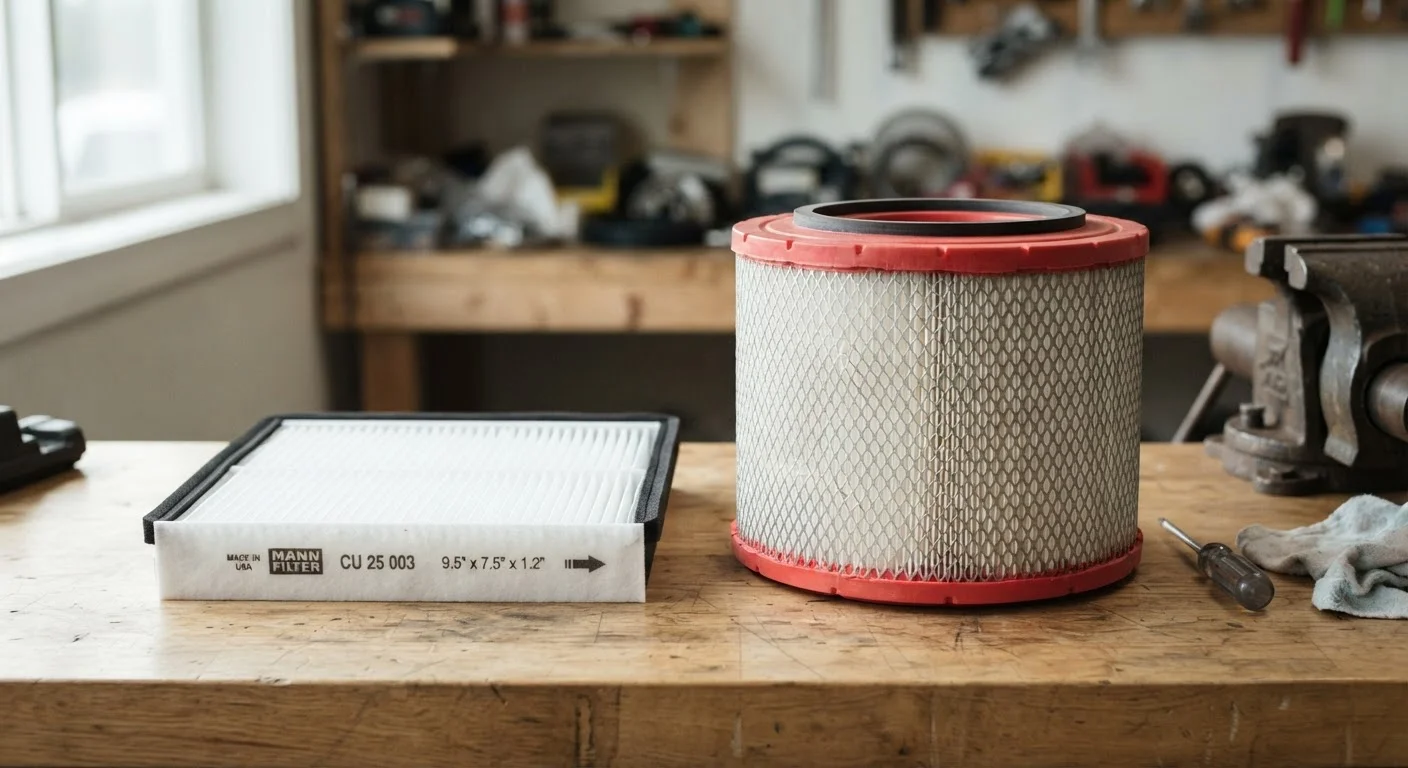
Photo credit: FaqsInsights.com | Stay Informed, Stay Ahead
In this article
These two filters are often confused, but they serve entirely different purposes. Learn what each protects, where it lives, and when to replace it.
Key Takeaways
- Cabin air filters protect passengers; engine air filters protect the engine - they are not interchangeable.
- A clogged cabin filter reduces HVAC airflow and air quality; a clogged engine filter can hurt fuel economy and performance.
- Most cabin air filters are replaced every 15,000-25,000 miles; engine air filters typically last 15,000-30,000 miles depending on conditions.
- Both filters are usually straightforward to inspect visually - a grey or black color signals it's time to replace.
- Driving in dusty, high-pollen, or polluted environments shortens the service life of both filters.
What Each Filter Actually Does
Despite sharing the word "filter" in their names, the cabin air filter and the engine air filter serve completely separate systems in your vehicle. Mixing them up is one of the most common sources of confusion in routine car maintenance - and understanding the distinction can save you unnecessary repairs.
The cabin air filter sits within your vehicle's HVAC (heating, ventilation, and air conditioning) system, typically behind the glove box or under the dashboard. Its job is straightforward: filter the outside air before it enters the passenger compartment. It captures dust, pollen, mold spores, exhaust particles, and other fine debris - essentially acting as a barrier between the outside world and the air you and your passengers breathe.
The engine air filter lives in the engine bay, housed in an airbox connected to the intake system. It filters air before it enters the engine's combustion chambers. Engines require a precise mixture of clean air and fuel to operate correctly. Any dirt or debris that bypasses this filter can act as an abrasive inside the engine, accelerating wear on pistons, cylinders, and other critical components.
| Criterion | Cabin Air Filter | Engine Air Filter |
|---|---|---|
| What it protects | Passenger compartment air quality | Engine internals and combustion system |
| Location | Behind glove box or under dashboard | Engine bay airbox, intake system |
| Typical replacement interval | 15,000-25,000 miles | 15,000-30,000 miles |
| Symptom of clogging | Weak HVAC airflow, odors, poor air quality | Reduced fuel economy, sluggish acceleration |
| Primary contaminants filtered | Pollen, dust, exhaust particles, mold spores | Dirt, sand, debris, airborne grit |
| DIY accessibility | Generally easy, no tools required | Generally easy, minimal tools needed |
Signs Each Filter Needs Replacing
Both filters signal their decline in different, system-specific ways. Learning to recognize these symptoms means you can address problems before they escalate.
Cabin Air Filter Warning Signs
- Reduced airflow from dashboard vents even at high fan speeds
- Musty, stale, or unpleasant odors when the HVAC is running
- Increased dust accumulation on interior surfaces
- Worsening allergy symptoms or stuffiness while driving
Engine Air Filter Warning Signs
- Noticeable drop in fuel economy without a clear cause
- Sluggish acceleration or reduced engine responsiveness
- Check engine light activation (a severely restricted filter can trigger sensors)
- Rough idling or occasional misfires in extreme cases
Check Your Owner's Manual First
Filter locations vary significantly between vehicle makes and models. Some cabin air filters are accessible in minutes; others require partial dashboard disassembly. Your owner's manual will show the exact location and recommended replacement interval for your specific vehicle. When in doubt, a qualified mechanic can confirm the right filter specification and interval for your driving conditions.
The simplest check for either filter is visual. Pull it out and hold it up to a light source. A new filter appears white or off-white; a filter ready for replacement looks grey or black. If you can't see light through it clearly, it's time for a new one.
Replacement Intervals and What Affects Them
Manufacturer recommendations vary, but general guidelines give you a useful starting point. Most automakers suggest inspecting the cabin air filter every 15,000 to 25,000 miles and the engine air filter every 15,000 to 30,000 miles. Your owner's manual is always the authoritative source for your specific vehicle.
Several real-world factors will push you toward the shorter end of those ranges:
15,000-25,000 mi
Typical cabin air filter service interval
General industry guidance; always verify against your vehicle manufacturer's recommendation in the owner's manual.
15,000-30,000 mi
Typical engine air filter service interval
Intervals shorten considerably in dusty, high-pollution, or off-road driving environments.
- Dusty or unpaved roads: Both filters clog far faster when exposed to high particulate environments.
- Urban driving: Stop-and-go traffic in cities with higher pollution levels taxes the cabin filter more heavily.
- High-pollen seasons: Spring and fall can noticeably reduce cabin filter life in regions with heavy tree or grass pollen.
- Wildfire smoke or construction zones: Temporary but intense particulate events can prematurely saturate both filters.
Neither filter requires special tools or mechanical expertise to inspect - most are designed for owner access. However, if you're unsure about the location or removal process for your specific vehicle, a qualified mechanic can inspect both during a routine service visit.

Author
Cars & Driving Editorial Team
Cars & Driving Editorial Team is the collective byline for our editorial team and contributor network. Articles published under this byline or an editorial pen name are researched, written, and reviewed according to our editorial standards for clarity, consistency, and independence before publication.
View all articles →