
Dental Care for Dogs and Cats: Separating Myth from Reality
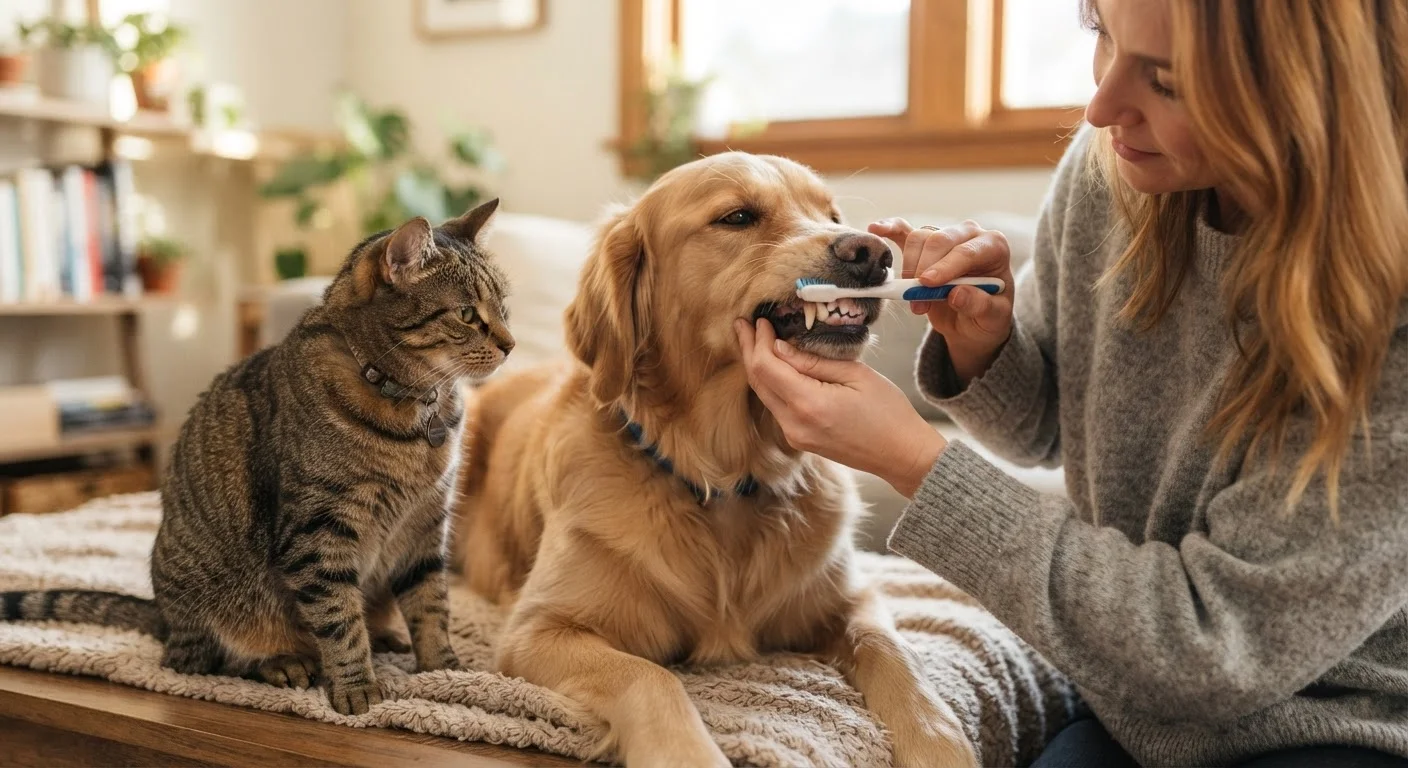
Photo credit: FaqsInsights.com | Stay Informed, Stay Ahead
Common misconceptions about pet oral health — from kibble cleaning teeth to signs of gum disease — addressed with clear facts.
Key Takeaways
- Kibble does not clean pets' teeth - daily brushing remains the gold standard for oral hygiene.
- Bad breath in dogs and cats is rarely normal and often signals underlying dental disease.
- Periodontal disease affects the majority of adult pets, yet it frequently goes undetected at home.
- Professional veterinary cleanings are necessary even when owners brush their pets' teeth regularly.
- Cats need dental care just as much as dogs - their oral health is equally at risk.
Why Pet Dental Myths Are So Persistent
Dental disease is among the most common health conditions diagnosed in dogs and cats, yet it remains one of the least understood by pet owners. Misconceptions spread easily - passed between well-meaning friends, reinforced by marketing language on product packaging, or simply assumed because a pet shows no obvious discomfort. The result is that many animals quietly develop serious oral disease while their owners believe everything is fine.
Clearing up these myths isn't about blame - it's about giving you the accurate picture so you can make informed decisions for your pet's wellbeing. For a broader look at how misinformation affects pet health choices, see our guide to common pet health misconceptions.
Myth
Dry kibble cleans my pet's teeth, so I don't need to brush them.
Fact
Kibble provides negligible dental benefit for most pets and does not substitute for brushing.
This is one of the most widespread myths in pet care. The idea is that the crunchy texture of dry food scrubs away plaque as a pet chews. In practice, many dogs and cats shear or swallow kibble with minimal chewing contact on tooth surfaces. Even when chewing does occur, the mechanical effect reaches only the tips of the teeth - not the gum line, where plaque accumulates and periodontal disease begins. Veterinary dental organizations consistently identify daily tooth brushing as the single most effective at-home intervention for controlling plaque.
Myth
Bad breath is just a normal part of having a dog or cat.
Fact
Persistent bad breath is almost always a sign of bacterial buildup, dental disease, or another underlying health issue.
A healthy pet's breath has a mild, neutral odor. Pronounced or persistent bad breath - often described as foul or "doggy" - typically indicates significant plaque and tartar accumulation, gingivitis, or more advanced periodontal disease. In some cases, it can also point to systemic conditions such as kidney disease or diabetes. Treating bad breath as an inevitable quirk of pet ownership delays care that could prevent serious disease progression. If your pet's breath has changed noticeably, a veterinary dental exam is the right first step.
Myth
If my pet is still eating normally, their teeth must be fine.
Fact
Pets frequently continue eating despite significant oral pain - their instinct to eat overrides discomfort signals.
This myth leads owners to underestimate how much pain their animal may be experiencing. Dogs and cats evolved to mask signs of weakness, and dental pain is no exception. A pet with fractured teeth, root infections, or advanced gum disease will often continue approaching the food bowl - sometimes favoring one side of the mouth, eating more slowly, or dropping food, though these signs are easy to miss or misattribute. Absence of a food-refusal signal is not evidence of oral health. Regular veterinary exams that include oral assessment are essential, as problems are frequently found in pets showing no obvious behavioral changes at home.
Myth
Cats don't need dental care the way dogs do.
Fact
Cats are equally susceptible to periodontal disease and tooth resorption, a painful condition unique to felines.
Cats are often overlooked in pet dental conversations, yet studies suggest that the majority of cats over three years of age have some degree of dental disease. Cats are also prone to tooth resorption - a progressive, painful condition in which the tooth structure breaks down from the inside out. Because cats are especially adept at concealing discomfort, dental problems can advance significantly before owners notice anything is wrong. A dental exam should be part of every cat's annual veterinary visit. For more on monitoring your cat's overall physical condition, see Cat Grooming Decoded.
Myth
Anesthesia-free dental cleanings are a safe and equivalent alternative to professional cleanings.
Fact
Anesthesia-free cleanings are cosmetic procedures only and do not address the areas where dental disease actually develops.
Anesthesia-free dentistry may make a pet's teeth look cleaner by removing visible surface tartar, but it cannot safely or effectively clean below the gum line - the subgingival space where bacteria drive periodontal disease. Without anesthesia, a veterinarian also cannot take dental X-rays, probe pocket depths, or fully examine the oral cavity. Major veterinary dental organizations, including the American Veterinary Dental College, do not recommend anesthesia-free cleanings as a substitute for proper dental care. The appearance of clean teeth after such a procedure can give owners a false sense of security while disease continues to progress beneath the surface.
Building a Realistic Home Dental Routine
Once the myths are out of the way, the practical question becomes: what actually works? The answer is straightforward, though it does require consistency.
~80%
Adult dogs with some dental disease by age 3
The American Veterinary Medical Association cites dental disease as one of the most common clinical conditions seen by veterinarians, affecting the vast majority of adult dogs.
70%+
Adult cats affected by dental disease
Veterinary estimates consistently indicate that most cats over three years old have some degree of periodontal disease, often undetected without a professional oral exam.
Tooth brushing is the most effective home care method. Use a soft-bristled brush and toothpaste formulated specifically for pets - human toothpaste contains fluoride and xylitol, both of which are toxic to animals. Start slowly, letting your pet sniff and lick the paste before introducing the brush. Short, positive sessions build tolerance over days and weeks rather than overnight.
For pets who resist brushing entirely, veterinary-approved dental chews, water additives, and oral gels can provide supplemental support - though none replaces mechanical plaque removal. The Veterinary Oral Health Council (VOHC) evaluates and recognizes products that meet measurable standards for plaque and tartar reduction; looking for the VOHC seal is a practical way to assess a product's credibility.
Even with a solid home routine, most pets benefit from periodic professional cleanings performed under anesthesia, which allow thorough scaling below the gum line - the area where periodontal disease actually develops. Learn more about why this matters in our article on dental disease as an overlooked threat to pet health.
Never Use Human Toothpaste on Pets
Human toothpastes commonly contain fluoride and xylitol, both of which are toxic to dogs and cats. Even small amounts of xylitol can cause a dangerous drop in blood sugar in dogs. Always use a toothpaste specifically formulated and approved for the species you are brushing. If you are unsure which product is appropriate, ask your veterinarian for a recommendation.
If you've recently adopted a pet, dental care is one of the foundational habits worth establishing early. Our new pet wellness checklist covers how to set up healthy routines from the start.
This article is for general informational purposes only and does not constitute veterinary medical advice. Always consult a licensed veterinarian for guidance specific to your pet's health needs.

Author
Pets & Animals Editorial Team
Pets & Animals Editorial Team is the collective byline for our editorial team and contributor network. Articles published under this byline or an editorial pen name are researched, written, and reviewed according to our editorial standards for clarity, consistency, and independence before publication.
View all articles →