
Structured Courses vs. Self-Directed Learning: Choosing the Right Path
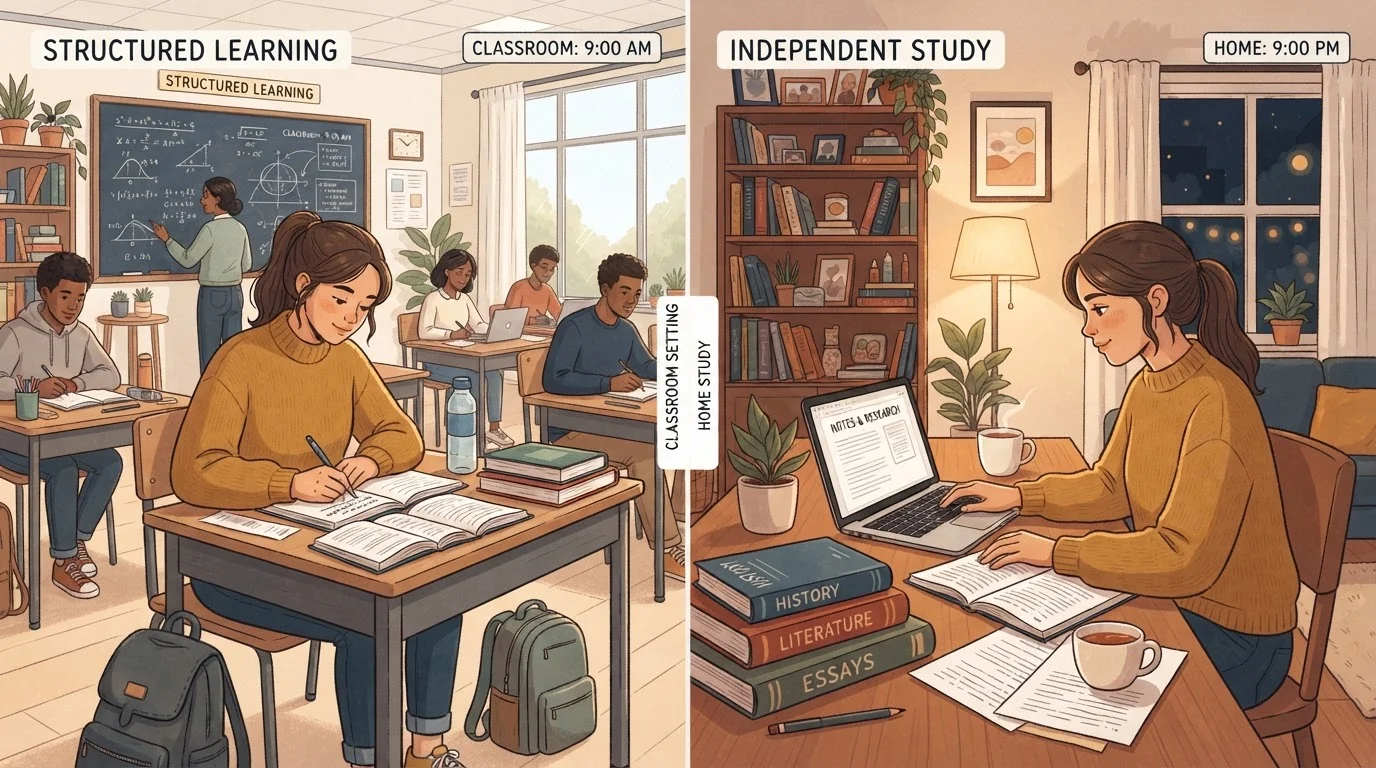
Photo credit: FaqsInsights.com | Stay Informed, Stay Ahead
In this article
Weigh the trade-offs between formal instruction and self-paced learning to find the approach that fits your goals and schedule.
Key Takeaways
- Structured courses offer clear sequencing, accountability, and often a recognized credential upon completion.
- Self-directed learning gives you maximum flexibility but demands strong internal motivation and planning.
- Your current schedule, learning style, and end goal should drive the format decision - not trend or cost alone.
- Hybrid approaches - blending both formats - are increasingly viable and may suit many adult learners.
- Neither path is universally superior; effectiveness depends on how well the format matches your situation.
What Sets These Two Approaches Apart
The difference between structured courses and self-directed learning is more than scheduling. It reflects a fundamental question about how you learn best and what you need from the process.
Structured courses - whether offered by universities, professional training programs, or online platforms - provide a predetermined curriculum, a set pace, and an instructor or facilitator who sequences material intentionally. Learners move through the content in a defined order, often with deadlines, graded assessments, and peer interaction built in. For a deeper look at how delivery format affects the experience, see our article on synchronous vs. asynchronous online learning.
Self-directed learning (sometimes called self-paced learning) places the learner in control of what, when, and how they study. There is no instructor pacing the group, no mandatory deadlines, and no fixed curriculum. The learner curates their own resources - videos, books, tutorials, podcasts - and decides the sequence. For a fuller explanation of how this model operates in practice, our guide on what self-paced learning actually means is a useful reference.
Key Trade-Offs at a Glance
Both formats involve real compromises. Understanding them side-by-side makes the decision more concrete.
| Structured Courses | Self-Directed Learning | |
|---|---|---|
| Pacing | Set by instructor or program | Entirely learner-controlled |
| Accountability | Built-in via deadlines and grades | Self-imposed; no external pressure |
| Credential outcome | Often includes formal certificate or credit | Varies; may be informal or none |
| Flexibility | Limited; fixed schedule or cohort | High; study anytime, anywhere |
| Community & feedback | Instructor and peer interaction | Largely solo; forums vary by resource |
| Best for beginners | Strong fit; expert sequencing helps | Riskier without prior orientation |
| Cost | Often higher; aid may be available | Often lower; many free resources exist |
Cost is another dimension worth examining separately. Structured programs often carry higher price tags, though financial aid, employer reimbursement, and free auditing options exist. Our article on free vs. paid online courses explores what the price difference actually buys you.
When Structured Courses Make More Sense
Structured courses tend to deliver more value in specific situations:
- You're new to the subject. Expert sequencing prevents the common pitfall of learning advanced concepts before foundational ones are secure.
- You need a credential. Employers and institutions frequently require verifiable qualifications. For context on what different credential types signal, see certificates, credentials, and degrees explained.
- Accountability is a challenge. Deadlines, cohorts, and instructor feedback create external pressure that many learners genuinely need to stay on track.
- You benefit from community. Discussion boards, study groups, and peer feedback amplify comprehension in ways solo study cannot replicate.
Try Before You Commit
Many structured programs allow you to audit the first module or week for free before enrolling fully. Use this to assess whether the pacing, instructor style, and workload match your expectations. A short trial period can prevent a costly mismatch between the course format and your actual learning habits.
If the cohort element appeals to you specifically, our comparison of cohort-based vs. self-paced courses goes deeper on that distinction.
When Self-Directed Learning Makes More Sense
Self-directed learning is a genuinely powerful approach - not a fallback - when the conditions are right:
- Your schedule is unpredictable. Shift workers, caregivers, freelancers, and frequent travelers often cannot commit to fixed class times or hard deadlines.
- You're building on existing knowledge. Supplementing a skill you already understand well requires targeted content, not a full curriculum.
- Exploration is the goal. Curiosity-driven learning - dabbling in history, coding, music theory - is often served better by following interest than by following a syllabus.
- You have strong planning habits. If you can set your own goals and stick to them, the flexibility becomes an asset rather than a risk.
Building a deliberate structure around your self-directed study significantly improves outcomes. Our guide to building a personal learning plan for online study walks through how to do that effectively.
Self-Direction Requires Active Planning
Self-directed learning without a clear plan often leads to scattered progress or abandonment. Before starting, define specific skills you want to develop, the resources you'll use, and a realistic weekly schedule. Without this structure, the flexibility that makes self-directed learning appealing can also become its biggest obstacle.
Making a Decision That Fits Your Situation
Rather than treating this as a binary choice, consider asking three diagnostic questions:
- What is my end goal? A career change typically demands verifiable credentials and foundational depth - structured learning. Upskilling within your current role may only require targeted modules - self-directed works well.
- How much accountability do I need? Be honest. Research on adult learners consistently finds that completion rates for self-paced courses lag those of structured programs, largely due to motivation and competing priorities - not difficulty.
- What does my schedule actually allow? Map your realistic weekly study hours before committing to any format. A structured course you cannot attend is worse than a self-directed curriculum you actually use.
For practical guidance on evaluating any course before enrolling - regardless of format - our course evaluation checklist covers quality signals, instructor credibility, and platform reliability. And if you're just starting your online learning journey, taking your first online course offers a grounded, step-by-step introduction.
This article is for informational and educational purposes only. Individual learning outcomes depend on many factors and cannot be guaranteed.

Author
Learning & Education Editorial Team
Learning & Education Editorial Team is the collective byline for our editorial team and contributor network. Articles published under this byline or an editorial pen name are researched, written, and reviewed according to our editorial standards for clarity, consistency, and independence before publication.
View all articles →