
Home Workouts vs. Gym Memberships: A Practical Trade-Off
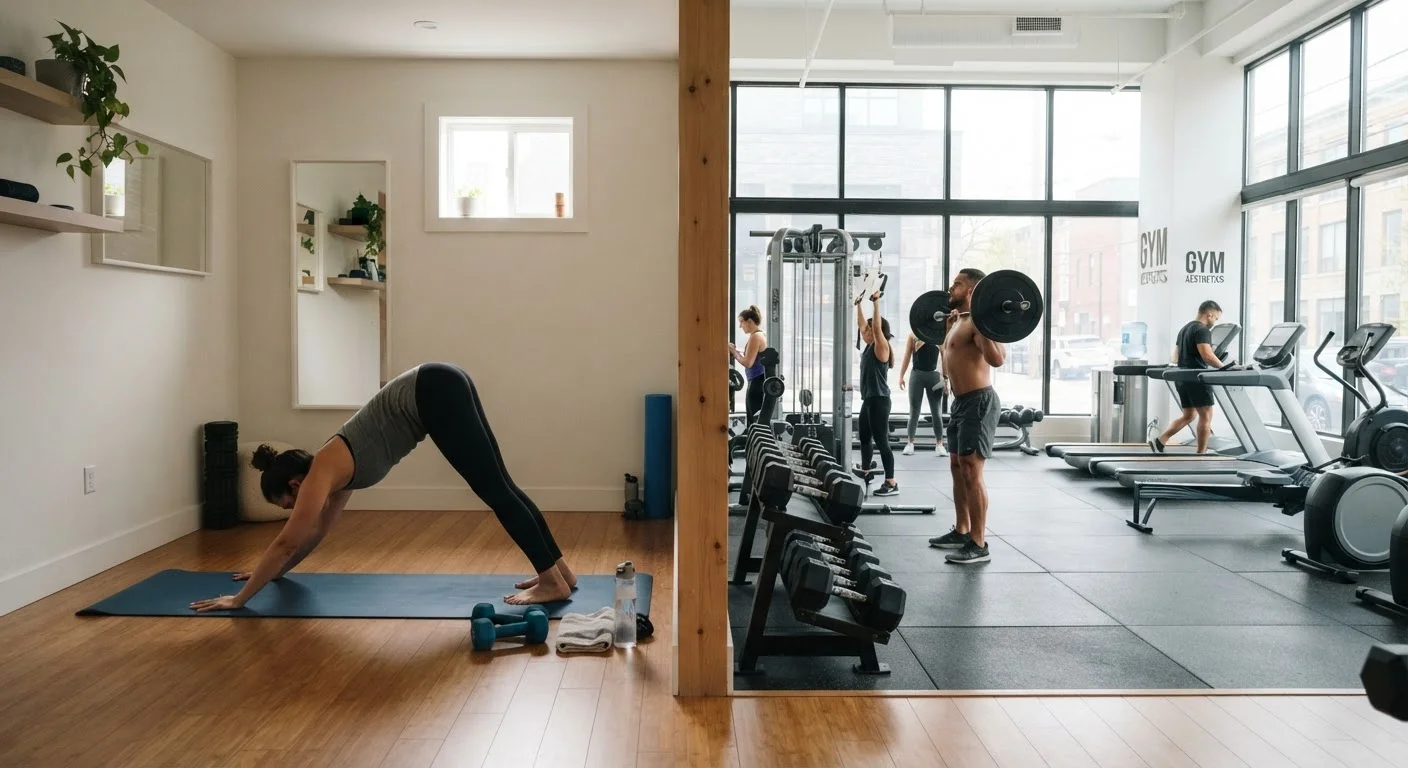
Photo credit: FaqsInsights.com | Stay Informed, Stay Ahead
In this article
Neither option is universally better. This breakdown helps you weigh cost, convenience, social factors, and results to find what fits your life.
Key Takeaways
- Home workouts eliminate commute time and recurring membership costs, lowering barriers to consistency.
- Gyms offer equipment variety, professional guidance, and social accountability that home setups rarely replicate.
- Cost differences are real but not always decisive - equipment purchases can offset gym savings over time.
- Neither environment guarantees results; adherence and progressive challenge matter far more than location.
- Many people find a hybrid approach - combining both - delivers the most sustainable long-term habits.
The Real Question Isn't Which Is Better
Fitness conversations often frame home workouts and gym memberships as competitors. In practice, they solve different problems for different people. The more useful question is: which environment makes it easier for you to show up consistently?
Research consistently shows that adherence - simply continuing to exercise over time - predicts health outcomes far more reliably than any specific training method or setting. A gym you never visit offers no benefit; a modest home routine done regularly builds real, lasting fitness. Understanding the concrete trade-offs between the two options helps you choose based on your actual life rather than fitness mythology.
For a broader look at how different movement types fit into a sustainable routine, see our guide to building a weekly movement routine around a busy schedule.
Cost: More Nuanced Than the Sticker Price
Gym memberships in the US typically range from roughly $20 to over $100 per month depending on facility type and location. Over a year, that's $240 to $1,200 or more - not including initiation fees, locker rentals, or add-on classes.
Home workouts can appear free, but building a functional space has real costs. A basic setup - resistance bands, a pair of adjustable dumbbells, and a yoga mat - can run $150-$400. A more capable home gym with a barbell, plates, and a bench might cost several hundred to several thousand dollars upfront.
~$500
Average annual US gym membership cost
The International Health, Racquet & Sportsclub Association (IHRSA) has reported average US membership costs in this range, though pricing varies widely by facility type and region.
67%
Gym members who rarely use their membership
Behavioral economics research, including studies cited by fitness industry analysts, suggests a substantial majority of gym members use facilities far less than intended - a key driver of cancellations.
The break-even point depends on your membership cost and how much equipment you'd actually use. For many people, a modest home investment pays for itself within six to eighteen months compared to an ongoing membership. However, if you'd use a gym's pool, group classes, sauna, or coaching staff, the value calculation shifts considerably.
Convenience, Accountability, and the Friction Problem
Convenience is consistently cited in behavioral research as one of the strongest predictors of exercise frequency. Home workouts remove commute time entirely - that 20-minute round trip to a gym, multiplied across dozens of sessions, is a meaningful barrier for busy people.
Gyms, however, create a form of intentional friction that some people need. Leaving the house, arriving at a dedicated space, and being surrounded by others exercising can sharpen focus and reduce distraction. Many people find that their home environment - full of competing demands - quietly erodes workout quality or frequency.
Reduce Friction, Increase Frequency
The single most effective thing you can do - regardless of where you train - is remove obstacles between you and starting. If working out at home, keep your equipment visible and accessible rather than stored away. If going to a gym, pack your bag the night before. Small environmental cues consistently improve follow-through in habit research.
Social accountability also plays a meaningful role. A gym environment provides passive social cues - seeing others work out normalizes the behavior. Group fitness classes add structured accountability. Neither of these is replicable at home without deliberate effort, such as virtual workout partners or scheduled check-ins.
Equipment, Variety, and Training Limitations
Gyms offer access to a breadth of equipment that most home setups can't match: cable machines, free weight racks, cardio equipment, and specialized tools for rehabilitation or sport-specific training. This variety matters most for people pursuing specific strength goals, training around injuries, or simply wanting program flexibility over time.
Home workouts, while limited in equipment, are more capable than many people expect. Bodyweight training, resistance bands, and a set of dumbbells can cover most of the fundamental movement patterns - push, pull, hinge, squat, carry - that form the basis of general fitness. Cardio training approaches like HIIT and Zone 2 work equally well at home or in a gym.
| Home Workouts | Gym Membership | |
|---|---|---|
| Upfront cost | $150-$2,000+ (one-time) | Initiation fee: $0-$200+ |
| Ongoing cost | Minimal after setup | $20-$100+/month |
| Convenience | No commute, 24/7 access | Travel time required |
| Equipment variety | Limited by budget/space | Wide range available |
| Social accountability | Self-directed only | Built-in social environment |
| Professional guidance | Not typically available | Trainers often on-site |
| Distraction risk | Higher (home environment) | Lower (dedicated space) |
| Flexibility for beginners | Private, low-pressure | Can feel intimidating initially |
Advanced strength goals - such as competitive powerlifting or progressive barbell training - genuinely require equipment that makes a gym more practical. For general health and fitness, however, home training limitations are often overstated.
Making Your Decision - and Revisiting It
Your optimal setup isn't fixed. Life circumstances change: a new job, a move, an injury, or a shift in goals may make one option more practical than it was before. Treating this as a one-time decision often leads to sticking with a choice that no longer serves you.
A hybrid approach - using a gym for heavier lifting or pool access while maintaining a home routine for shorter sessions - works well for many people. It captures accountability and equipment variety without full dependence on a single setting. Consider what types of movement you actually enjoy. If you love running outdoors, that running habit requires neither a gym nor a home setup.
This article provides general health and fitness information for educational purposes only. It is not a substitute for personalized advice from a qualified healthcare or fitness professional. Consult a professional before beginning any new exercise program, particularly if you have an existing health condition.

Author
Health & Wellness Editorial Team
Health & Wellness Editorial Team is the collective byline for our editorial team and contributor network. Articles published under this byline or an editorial pen name are researched, written, and reviewed according to our editorial standards for clarity, consistency, and independence before publication.
View all articles →