
Mindfulness vs. Meditation: Two Practices Worth Telling Apart
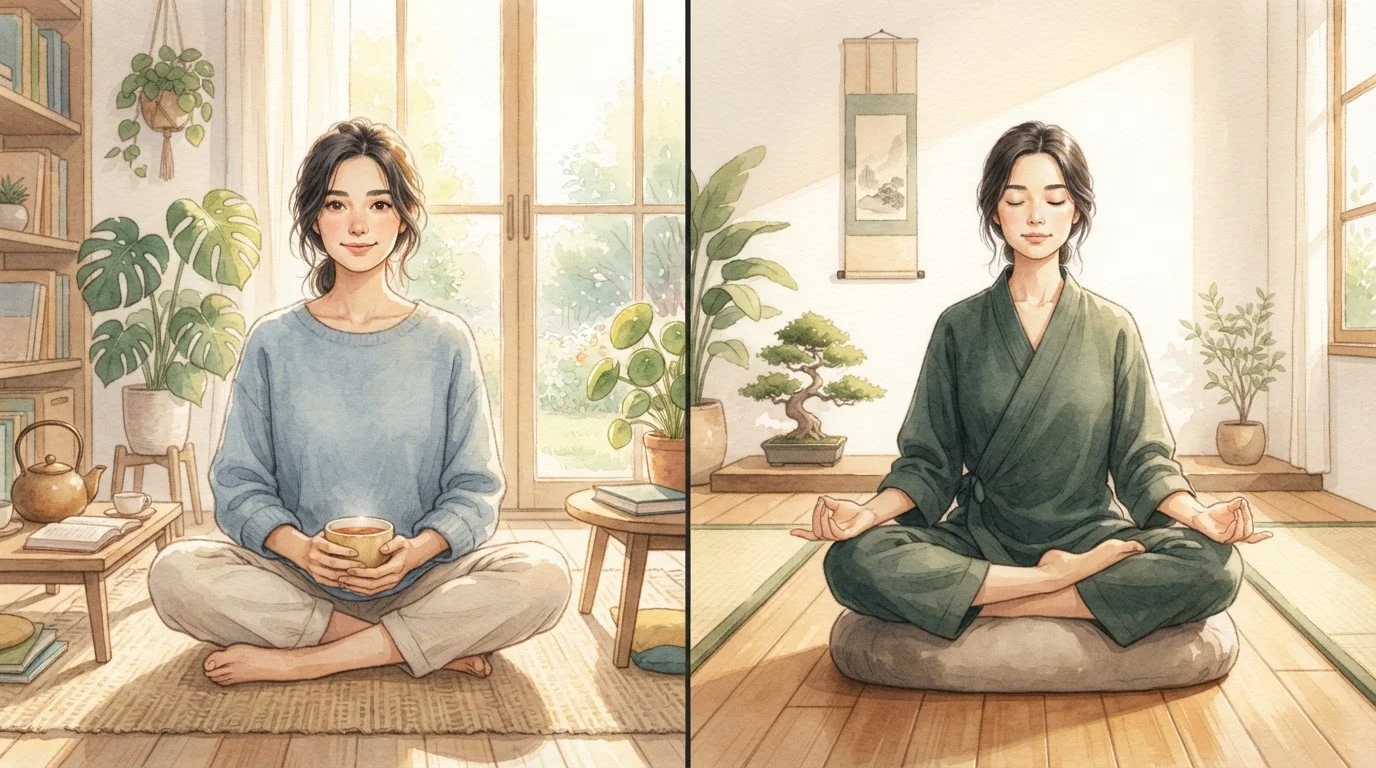
Photo credit: FaqsInsights.com | Stay Informed, Stay Ahead
In this article
Mindfulness and meditation are often used interchangeably, but they're distinct. See how they compare and which may suit your lifestyle better.
Key Takeaways
- Mindfulness is a quality of present-moment awareness; meditation is a formal practice used to cultivate it.
- Mindfulness can be woven into everyday tasks, while meditation typically requires dedicated, uninterrupted time.
- Both practices have research-supported associations with reduced stress and improved well-being.
- Neither is a substitute for professional mental health care when that care is needed.
- Most people benefit from understanding both - and many combine them.
The Core Distinction: State of Mind vs. Structured Practice
The terms mindfulness and meditation are often used as if they mean the same thing. They don't - and understanding the difference actually makes both more useful.
Mindfulness refers to a quality of attention: the deliberate, non-judgmental awareness of what's happening right now - thoughts, feelings, bodily sensations, and the surrounding environment. It's something you can bring to any moment. Washing dishes, listening to a colleague, or noticing tension in your shoulders while stuck in traffic can all become mindful acts.
Meditation, by contrast, is a practice - a structured activity, usually performed in a dedicated time block, designed to train the mind. Many forms of meditation use mindfulness as their core mechanism, but meditation also includes techniques that don't emphasize present-moment awareness in the same way, such as visualization, mantra repetition, or loving-kindness exercises.
A useful analogy: mindfulness is to meditation what physical fitness is to going to the gym. The gym session builds the fitness; the fitness shows up throughout your day. Meditation builds mindfulness; mindfulness can then permeate ordinary life.
| Criterion | Mindfulness | Meditation |
|---|---|---|
| What it is | A quality of present-moment awareness | A structured mental training practice |
| When it happens | Anytime, woven into daily tasks | During a dedicated, set-aside session |
| Time required | A few seconds to minutes | Typically 10-45 minutes per session |
| Equipment or setting | None - any environment works | Quiet space often helpful; sometimes guided audio |
| Learning curve | Low - accessible immediately | Moderate - technique and consistency take time |
| Research evidence | Growing; stronger for structured programs | Substantial, especially for focused attention types |
| Relationship to each other | The goal many meditations cultivate | A vehicle for developing mindfulness |
What the Research Actually Tells Us
Both practices have attracted significant scientific attention, and the evidence base - while still growing - is encouraging for both.
8 weeks
Duration of standard MBSR programs
Mindfulness-Based Stress Reduction programs, originally developed by Jon Kabat-Zinn at the University of Massachusetts, typically span eight weeks and combine formal meditation with everyday mindfulness.
~200+
Randomized trials on mindfulness interventions
A 2018 review in Perspectives on Psychological Science noted hundreds of randomized controlled trials on mindfulness, while also calling for more rigorous methodology in the field.
10 min
Common starting point for daily meditation
Many introductory programs and clinicians suggest beginning with sessions as short as ten minutes, with consistency considered more important than duration early on.
Mindfulness-Based Stress Reduction (MBSR), a structured eight-week program developed in clinical settings, combines formal meditation with mindfulness principles and has shown associations with reduced anxiety and improved quality of life in multiple peer-reviewed studies. However, researchers are careful to note that study designs vary widely, effect sizes differ, and mindfulness-based interventions are not universally effective for every condition or every person.
Informal mindfulness - the kind practiced moment-to-moment without any formal session - is harder to study but is widely supported by mental health professionals as a complementary coping tool. It's worth noting that neither mindfulness nor meditation replaces professional care. If you're navigating significant mental health challenges, see our guide on therapy, counseling, and psychiatry to understand which type of support may fit your situation.
Practical Differences in Everyday Use
Knowing how each practice shows up in real life helps clarify which - or which combination - suits your lifestyle.
Mindfulness in daily life
- Pausing to notice your breath before responding to a stressful message
- Eating a meal without scrolling or watching - just tasting and noticing
- Observing thoughts during a walk without getting pulled into rumination
These micro-practices take seconds to minutes and require no app, cushion, or quiet room. They're especially useful alongside efforts to manage your relationship with technology - a topic explored in our piece on digital boundaries and mental health.
Meditation as a dedicated session
- Sitting for 10-20 minutes focusing on the breath, returning attention each time it wanders
- A guided body scan before sleep
- A loving-kindness (metta) session focusing on compassion toward self and others
Formal meditation generally benefits from some consistency. Many people use apps to guide sessions, though it's worth being clear-eyed about the trade-offs of self-help apps for mental wellness before relying on them heavily.
These Practices Complement Each Other
Many people find that a regular meditation practice makes informal mindfulness easier throughout the day - and vice versa. You don't need to choose one exclusively. Starting with a few minutes of formal meditation each morning and then bringing that same quality of attention to routine tasks is a common and well-supported approach. Neither practice is a competition or a requirement; both are simply tools available to you.
This article is for general informational purposes only and does not constitute medical or psychological advice. If you are experiencing mental health concerns, please consult a qualified healthcare professional.

Author
Health & Wellness Editorial Team
Health & Wellness Editorial Team is the collective byline for our editorial team and contributor network. Articles published under this byline or an editorial pen name are researched, written, and reviewed according to our editorial standards for clarity, consistency, and independence before publication.
View all articles →