
Ways People Build Community to Support Their Mental Health
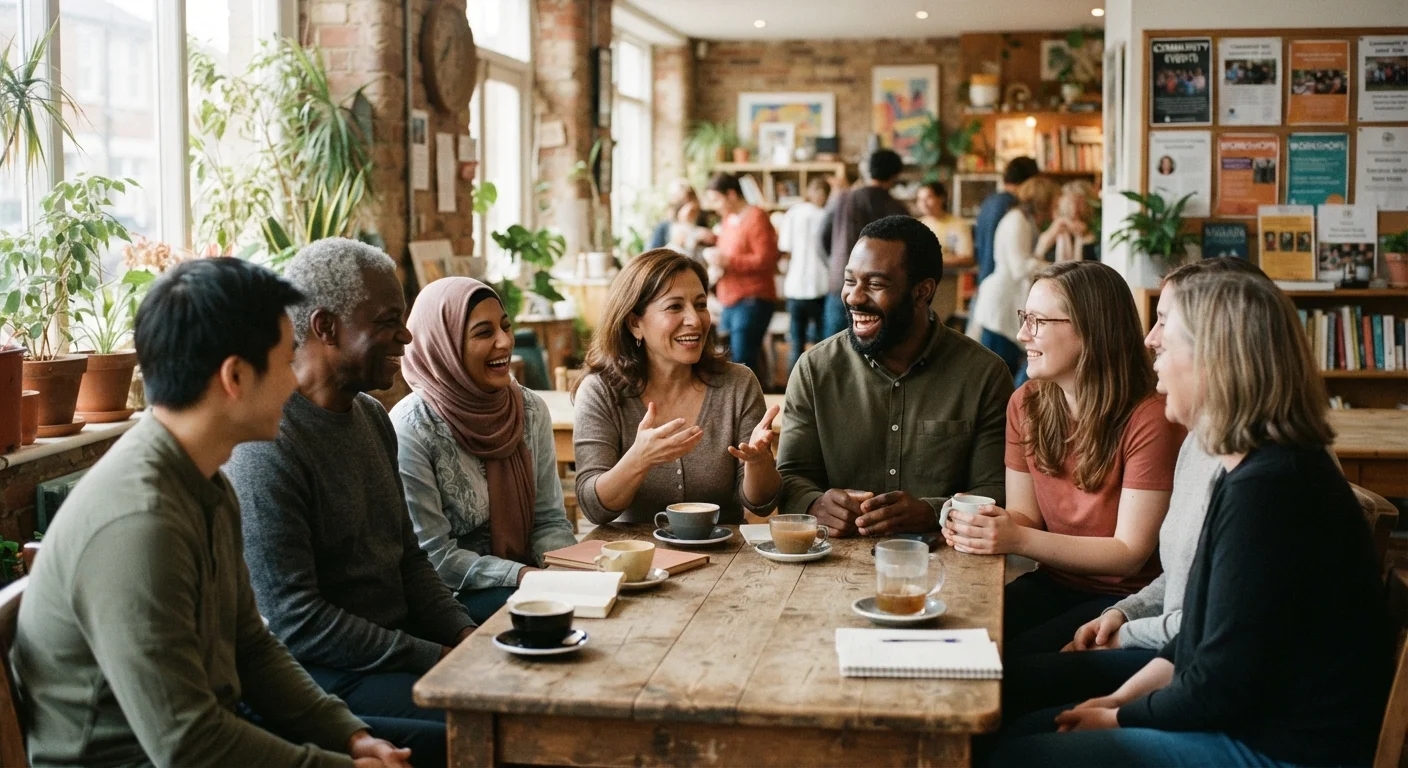
Photo credit: FaqsInsights.com | Stay Informed, Stay Ahead
Social connection is one of the most researched protective factors for mental health. Explore approaches people use to cultivate meaningful support.
Key Takeaways
- Social connection is consistently linked to better mental health outcomes across a wide range of research.
- Community-building looks different for everyone - it doesn't require large social networks to be effective.
- Both in-person and online connections can offer meaningful support when approached thoughtfully.
- Shared purpose, regular contact, and psychological safety are common threads in supportive communities.
- Community is a complement to professional care, not a replacement - seek qualified help when needed.
Why Community Matters for Mental Health
Loneliness and social isolation are associated with significantly higher risks of anxiety, depression, and cognitive decline - findings that have been replicated across decades of public health research. Yet community as a mental health resource is often overlooked in conversations dominated by individual coping strategies.
The good news: community-building doesn't require a packed social calendar or an extroverted personality. Research suggests that the quality of social connections - feeling understood, valued, and not alone - matters more than sheer quantity. People find that support in wildly different places: neighborhood groups, faith communities, hobby clubs, online forums, or even a single trusted friendship maintained over years.
This article explores approaches that many people find helpful when cultivating social connection intentionally. It is general health information and education, not a substitute for professional mental health care. If you're experiencing persistent distress, please consult a qualified mental health professional.
Join a Group Built Around Shared Interest
One of the most natural entry points into community is a shared activity - whether that's a running club, a book group, a gardening cooperative, or a crafting circle. When connection emerges from doing something alongside others, it tends to feel less pressured than purely social situations.
Shared interest groups create regular, predictable contact, which researchers associate with stronger social bonds over time. The activity itself provides a comfortable structure, lowering the social anxiety that can make initiating conversation feel difficult.
Shared activities lower the social pressure that makes initiating connection feel hard.
Participate in Peer Support or Community Mental Health Groups
Peer support groups - where people with similar experiences gather to listen and share - have a well-documented role in mental health recovery and maintenance. Organizations such as the National Alliance on Mental Illness (NAMI) offer facilitated peer support programs across the US.
These settings normalize mental wellness conversations by creating spaces where vulnerability is explicitly welcomed. Many participants report that being heard by someone who has shared a similar experience carries a distinct quality of validation that other relationships may not offer.
Being heard by someone with a shared experience carries a distinct quality of validation.
Invest in Existing Relationships Consistently
Research on social connection highlights that consistency - regular, low-key contact - often matters more than the intensity of occasional deep conversations. A weekly phone call with a sibling, a standing lunch with a coworker, or a brief daily check-in text can maintain connection across busy periods.
People sometimes wait for a 'good enough reason' to reach out, when in reality the simple act of maintaining contact is the reason. Prioritizing existing relationships, rather than always seeking new ones, can be a more sustainable and emotionally rewarding approach.
Regular, low-key contact often builds stronger bonds than infrequent intense conversations.
Engage With Faith or Values-Based Communities
Faith communities - churches, mosques, synagogues, temples, meditation centers, and similar groups - are among the most widespread sources of social support in the US. Research in social epidemiology consistently finds associations between religious or spiritual community participation and positive mental health outcomes, including lower rates of depression and stronger sense of meaning.
The mechanisms appear to be social as much as spiritual: regular gathering, shared rituals, and a culture of mutual aid all contribute. People who don't identify with a religious tradition can find similar structures in secular values-based communities and philosophical groups.
The mental health benefits of faith communities appear driven largely by social belonging and mutual aid.
Volunteer and Contribute to Something Larger
Volunteering connects people to community through purpose as well as proximity. Studies suggest that helping others is associated with improved mood, reduced stress, and a stronger sense of meaning - outcomes that researchers sometimes describe as a 'helper's high' linked to prosocial behavior.
Beyond individual benefit, volunteering places people in regular contact with others who share their values, naturally expanding social networks in a context oriented outward rather than inward. Even a modest commitment - a few hours a month - can build meaningful ongoing connection.
Volunteering builds community through shared purpose, not just shared proximity.
Use Online Communities With Intention
Online communities can offer genuine support - particularly for people navigating specific health conditions, identities, or circumstances where local communities are scarce. For someone living with a rare condition, or a person in a rural area with limited local resources, an online group may be the most accessible form of peer connection available.
That said, how online spaces are used matters considerably. Research on digital boundaries and mental health suggests that passive scrolling tends to have different effects on well-being than active, reciprocal participation. Engaging - commenting, contributing, responding - tends to be more beneficial than consuming.
Active participation in online communities tends to support well-being more than passive scrolling.
Create Rituals of Regular Gathering
Some of the most durable community bonds form around recurring rituals: a monthly dinner, an annual trip, a Sunday morning walk. Rituals provide something to anticipate, a shared history to reference, and a structure that doesn't depend on anyone's initiative in the moment.
Deliberately creating these structures - rather than waiting for connection to happen organically - is a practical form of social investment. Even informal rituals, like always grabbing coffee with a neighbor after the farmer's market, can anchor relationships across time and season.
Recurring rituals create shared history and reduce the friction of maintaining connection.
Finding Your Own Starting Point
There's no universal blueprint for building a supportive community. What works for one person may feel draining for another, and that's worth honoring. Some people thrive in structured group settings; others build their deepest connections one-on-one over time. The key is matching the environment to your own temperament and needs.
Start Small and Build Gradually
If social connection feels difficult right now, starting with a single low-stakes commitment - attending one group meeting or reaching out to one person - is a reasonable and valid approach. There is no minimum community size required for the benefits of belonging to take hold. Consistency over time matters more than scale at the outset.
It's also worth examining what might be getting in the way. Common mental health myths - such as the idea that needing support signals weakness - can quietly discourage people from reaching out at all. Recognizing those myths is often a necessary first step.
Community-building pairs well with other daily practices. Everyday habits that support emotional resilience can strengthen the foundation that makes meaningful connection easier to sustain. And for a broader view of how social belonging fits into overall mental well-being, the complete overview of mental well-being offers useful context.
This article is for informational purposes only and does not constitute medical or mental health advice. Always consult a qualified healthcare professional for concerns about your mental health.

Author
Health & Wellness Editorial Team
Health & Wellness Editorial Team is the collective byline for our editorial team and contributor network. Articles published under this byline or an editorial pen name are researched, written, and reviewed according to our editorial standards for clarity, consistency, and independence before publication.
View all articles →