
What "Waterproofing" a Basement Actually Involves - and What It Doesn't
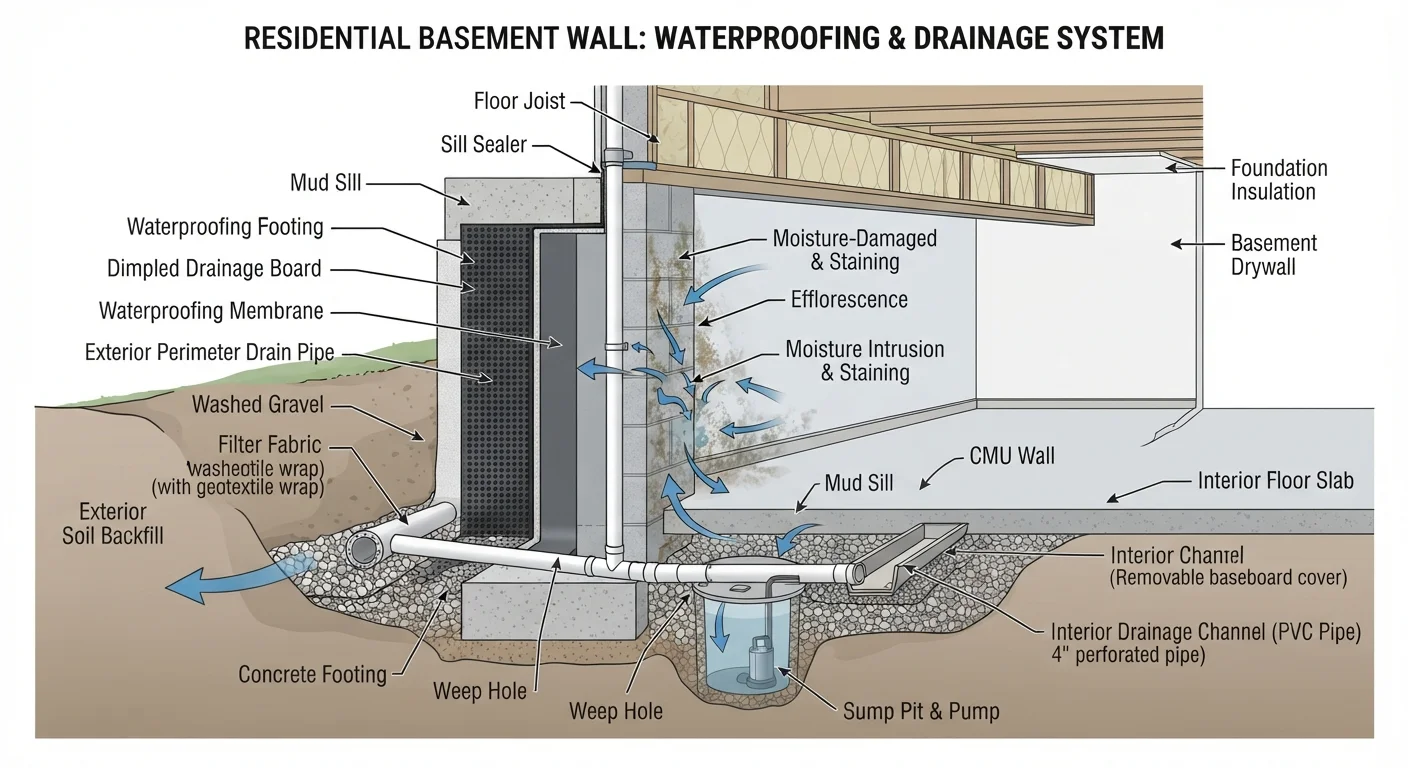
Photo credit: FaqsInsights.com | Stay Informed, Stay Ahead
In this article
"Waterproofing" is one of the most misused terms in home improvement. Here's what interior drainage, exterior excavation, and sealants each realistically accomplish.
Key Takeaways
- Painting on a sealant is not the same as waterproofing your basement.
- Interior drainage systems manage water entry rather than stopping it at the source.
- True exterior waterproofing requires excavation and is a major, professional-level project.
- Most basement moisture problems stem from grading, gutters, or soil issues outside the home.
- Permits and licensed contractors are typically required for significant waterproofing work.
Why 'Waterproofing' Means Different Things to Different People
Walk into any home improvement store and you'll find products labeled "waterproofing" that range from a $12 can of masonry sealer to information about systems costing tens of thousands of dollars. The word itself has become almost meaningless without context. Contractors, product manufacturers, and homeowners all use it to describe fundamentally different interventions - and that ambiguity costs homeowners real money.
Understanding what's actually happening when water enters a basement - and what each type of solution actually addresses - is the foundation for making a sound, cost-effective decision. The sections below break down the most common myths, paired with what the evidence and professional practice actually support.
Myth
Applying a waterproofing sealant to interior basement walls will stop water from getting in.
Fact
Interior sealants can slow minor vapor transmission but cannot withstand sustained hydrostatic pressure or active leaks.
Masonry sealants and paint-on coatings are marketed aggressively, which leads many homeowners to treat them as a complete solution. In reality, these products work only against minor humidity and surface condensation. When groundwater builds up in saturated soil outside your foundation - creating hydrostatic pressure - it will find the weakest point in your wall, and a thin coating layer will not hold it back. These products have a legitimate, limited role as part of a broader strategy, but they are not waterproofing on their own.
Myth
Interior drainage systems keep water out of the basement.
Fact
Interior drainage systems collect and redirect water that has already entered - they do not prevent intrusion at the source.
Systems like interior French drains and sump pumps are water management tools, not water prevention tools. A perimeter channel is cut into the basement floor, water that seeps in through the walls or floor is directed into it, and a sump pump then discharges that water away from the home. This approach is widely used because it's effective, less disruptive, and less expensive than exterior excavation. But understanding what it does - manages water after entry - helps homeowners set realistic expectations. The walls may still get wet; the goal is to prevent accumulation and damage.
Myth
Real waterproofing means excavating the entire exterior of the foundation.
Fact
Exterior excavation is the most comprehensive method, but it isn't always necessary or the right solution for every situation.
Exterior waterproofing involves digging down to the base of the foundation, applying a waterproof membrane or coating to the outside of the wall, and installing drainage board and a footing drain. It addresses the problem at its source and is considered the most durable approach. However, it is expensive, disruptive, and not always required. Many homes with chronic moisture issues are better served - or equally well served - by improving exterior grading, extending downspouts, or installing an interior drainage system. A thorough diagnosis should come before any major intervention.
Myth
If your basement leaks, the foundation is failing.
Fact
Most basement water intrusion is caused by drainage and grading issues outside the home, not structural foundation failure.
Homeowners understandably panic when they see water in the basement, but leaking and structural failure are very different conditions. The majority of basement moisture problems trace back to surface water that isn't being directed away from the house: gutters that overflow or discharge too close to the foundation, soil that slopes toward the house rather than away from it, or window wells without proper drainage. Fixing these issues - often inexpensively - can resolve or dramatically reduce water intrusion before any foundation work is considered. Active bowing, cracking, or shifting walls are signs of a structural issue that warrant immediate professional evaluation.
Myth
Waterproofing your basement is a standard DIY weekend project.
Fact
While some preparatory steps are DIY-friendly, most effective waterproofing methods involve licensed professionals, permits, and specialized equipment.
Improving your grading, cleaning gutters, and sealing minor cracks with hydraulic cement are legitimate homeowner tasks. But cutting a perimeter drainage channel, installing a sump pump basin, or excavating a foundation requires skill, equipment, and in most jurisdictions, permits and licensed contractors. Skipping permits is not just a code violation - it can create liability issues when you sell the home and void warranties on the work performed. If a contractor suggests skipping the permit process, treat that as a significant red flag.
How to Actually Diagnose Your Basement Moisture Problem
Before spending anything on interior or exterior systems, it's worth identifying whether your moisture is condensation, seepage, or active leakage - because the fix differs significantly.
Sealants Won't Fix Hydrostatic Pressure
If water is actively pushing through your foundation walls due to soil saturation and hydrostatic pressure, a painted-on sealant product will eventually fail - sometimes within a season. Applying a sealant without addressing the source can mask a worsening problem and delay necessary repairs, potentially increasing long-term costs.
A simple tape test can help distinguish condensation from seepage: tape a piece of plastic sheeting (roughly 12 inches square) to a dry basement wall, seal all four edges with tape, and leave it for 24-48 hours. If moisture forms on the room-facing side of the plastic, the issue is interior condensation - often solved with ventilation or a dehumidifier. If moisture forms between the plastic and the wall, water is moving through the wall from outside.
Once you know the source, you can evaluate which category of solution is appropriate: exterior drainage improvements, interior water management, or a combination of both. A qualified waterproofing contractor or structural engineer can help interpret more complex findings, particularly if you notice wall cracks, efflorescence (white mineral deposits), or musty odors.
Electrical and Structural Risks Are Real
Water intrusion near electrical panels, finished walls, or load-bearing footings can create serious hazards. Before beginning any waterproofing assessment or work, ensure the space is safe to enter and consult a licensed professional if you observe standing water near electrical systems, significant wall cracking, or bowing foundation walls. These are not DIY-appropriate conditions.
This article is for general informational and educational purposes only. It is not a substitute for professional assessment of your specific home's foundation or drainage conditions. Always verify local permit requirements and consult licensed professionals before undertaking significant structural or waterproofing work.

Author
Home & Garden Editorial Team
Home & Garden Editorial Team is the collective byline for our editorial team and contributor network. Articles published under this byline or an editorial pen name are researched, written, and reviewed according to our editorial standards for clarity, consistency, and independence before publication.
View all articles →