
Building a Study Routine That Actually Sticks
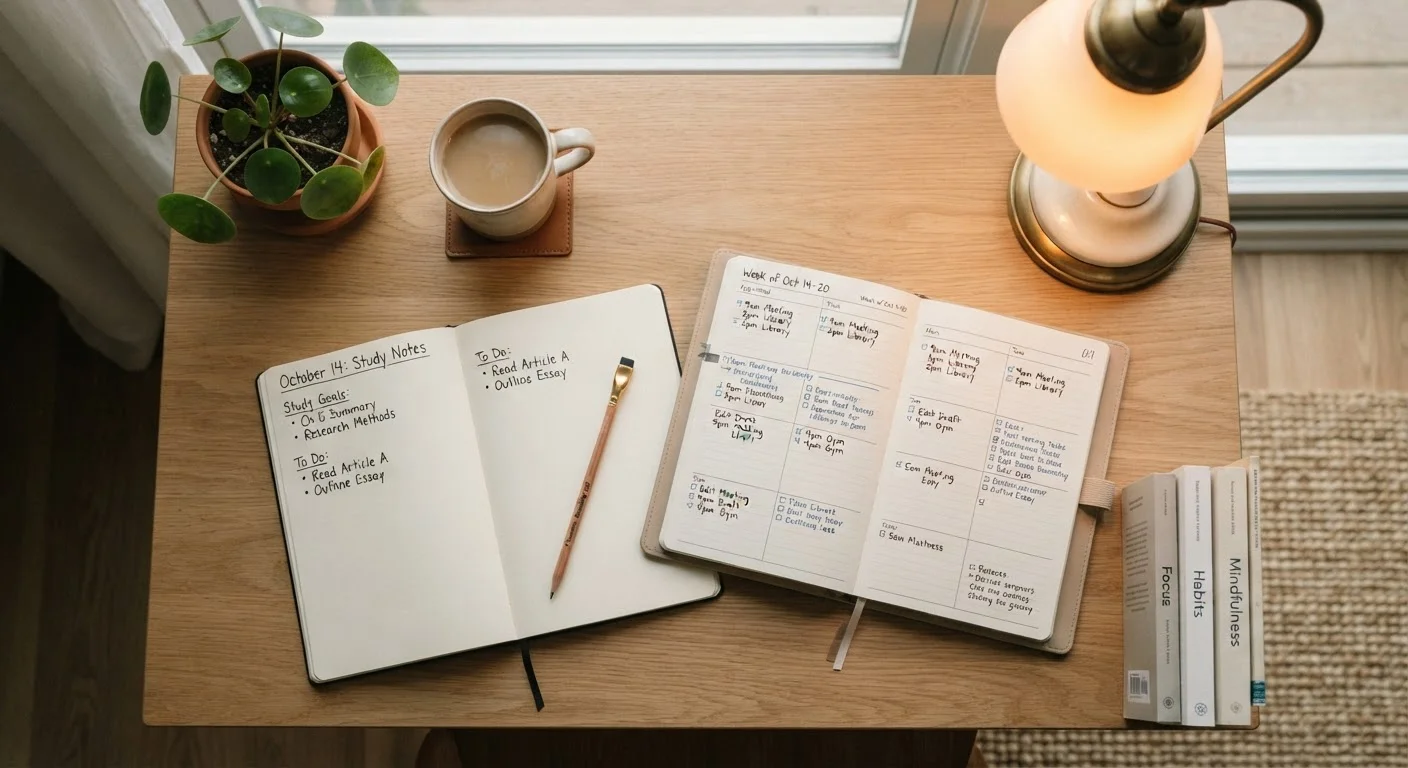
Photo credit: FaqsInsights.com | Stay Informed, Stay Ahead
In this article
A practical walkthrough for designing a consistent, sustainable study schedule grounded in habit-formation principles.
Key Takeaways
- Habit formation, not motivation alone, is what keeps a study routine running long-term.
- Anchoring study sessions to existing daily cues dramatically improves consistency.
- Short, focused sessions repeated daily outperform infrequent marathon study blocks.
- Your environment shapes your behavior - optimizing your study space reduces friction.
- Tracking progress and adjusting regularly prevents stagnation and burnout.
Why Most Study Routines Fail - And What to Do Differently
Most study routines collapse within the first two weeks - not because the learner lacks discipline, but because the routine was built on motivation rather than structure. Motivation fluctuates; well-designed habits do not rely on it.
Research in habit formation suggests that behaviors become automatic when they are consistently paired with a specific cue, performed in a stable context, and followed by a satisfying outcome. A study routine that ignores these mechanisms will feel like a chore every single day. One that uses them starts to run on autopilot.
This guide walks you through how to build that kind of routine from the ground up - whether you're a high school student, a working adult returning to online coursework, or anyone trying to make learning a reliable part of daily life. For a complementary perspective on how physical habits reinforce what you learn, see Sleep, Exercise, and Study: How Physical Habits Shape Memory.
What you will need
What You'll Need Before You Start
Before designing your schedule, gather the inputs below. Skipping this audit is the most common reason routines get abandoned - learners often overestimate available time or underestimate environmental friction.
Weekly calendar or planner
Used to map existing commitments and identify genuine open windows for study sessions.
Timer (phone or dedicated app)
Used to enforce focused work intervals and prevent sessions from bleeding into other responsibilities.
Study log or habit tracker
Used to record completed sessions so you can identify patterns and stay accountable over time.
Noise-canceling headphones or earplugs
Used to reduce auditory distractions in shared or noisy environments during study sessions.
Once you have these inputs, you're ready to follow the steps below. If you're building a routine around a structured online program, Building a Personal Learning Plan for Online Study covers how to align a schedule with course deadlines and learning goals.
Step-by-Step: Designing Your Routine
Follow these steps in order. Each one builds on the last - rushing ahead without completing an earlier step tends to produce a plan that looks good on paper but doesn't survive contact with a real week.
Audit your actual available time
Open your weekly calendar and mark every fixed commitment - classes, work shifts, family responsibilities, and regular appointments. What remains are your candidate windows for study. Be honest: factor in commute recovery, meals, and wind-down time. Most learners discover they have three to six realistic 30-45 minute windows per week, which is a perfectly workable starting point.
Choose an anchor cue for each session
A cue is something that already happens reliably in your day - finishing breakfast, closing a work laptop, arriving home. Pair each planned study session with one of these existing events rather than scheduling it at an arbitrary clock time. This is called habit stacking, and it dramatically reduces the mental effort required to start a session. Write the pairing down explicitly: "After I make my morning coffee, I will open my notes for 30 minutes."
Set up a consistent, low-friction study environment
Your environment is one of the most underestimated drivers of study behavior. Designate a specific location - even a particular chair at the kitchen table - and keep your materials there and ready. The goal is to reduce the number of decisions and setup steps required before you begin. A space that is already organized for studying makes it significantly easier to sit down and start. Consider how home organization principles - like keeping frequently used items visible and accessible - apply directly to a study corner.
Start smaller than feels necessary
New routines almost always fail because the initial commitment is too ambitious. Begin with sessions of 20-25 minutes - short enough to feel achievable on your worst days. Duration can grow naturally as the habit solidifies. The priority in the first two to three weeks is showing up consistently, not covering maximum material. A 20-minute session completed five days running is more valuable than a three-hour session completed once.
Track every session and review weekly
After each session, log it - even just a checkmark in a notebook. This creates a visual record of consistency and provides the data you need for your weekly review. Each week, ask: Which sessions happened? Which didn't? What was the barrier? Use the answers to make one small adjustment - shift a session time, change the location, or shorten the duration. Iteration, not perfection, is what keeps a routine alive.
Pair Study With a Small Reward
Immediately after completing a session, do something briefly enjoyable - make a favorite drink, take a short walk, or spend a few minutes on a hobby. This closes the habit loop with a positive outcome and reinforces the behavior neurologically. The reward doesn't need to be elaborate; it just needs to be consistent and immediate.
For a practical pre-session checklist you can use immediately, see Before Your Next Study Session: A Quick Self-Check.
Sustaining the Routine Over Time
Even a well-designed routine will drift without a maintenance layer. The most common culprit is the subtle accumulation of small avoidance behaviors - what researchers studying Procrastination Patterns That Quietly Derail Long-Term Study Goals describe as low-visibility delays that compound over weeks.
Don't Overhaul Everything at Once
When a week goes poorly, the temptation is to redesign the entire schedule. Resist this. Changing too many variables at once makes it impossible to identify what actually wasn't working. Make one targeted adjustment per week and observe the effect before changing anything else.
Schedule a brief weekly review - five to ten minutes - to look at what sessions you completed, what you skipped, and what got in the way. Adjust session length, timing, or location based on what you observe rather than on what you intended. A routine that adapts is far more durable than one that demands perfection. For techniques with strong empirical backing to use within those sessions, explore Study Strategies That Researchers Have Consistently Endorsed.

Author
Learning & Education Editorial Team
Learning & Education Editorial Team is the collective byline for our editorial team and contributor network. Articles published under this byline or an editorial pen name are researched, written, and reviewed according to our editorial standards for clarity, consistency, and independence before publication.
View all articles →