
Personal Budgeting From the Ground Up
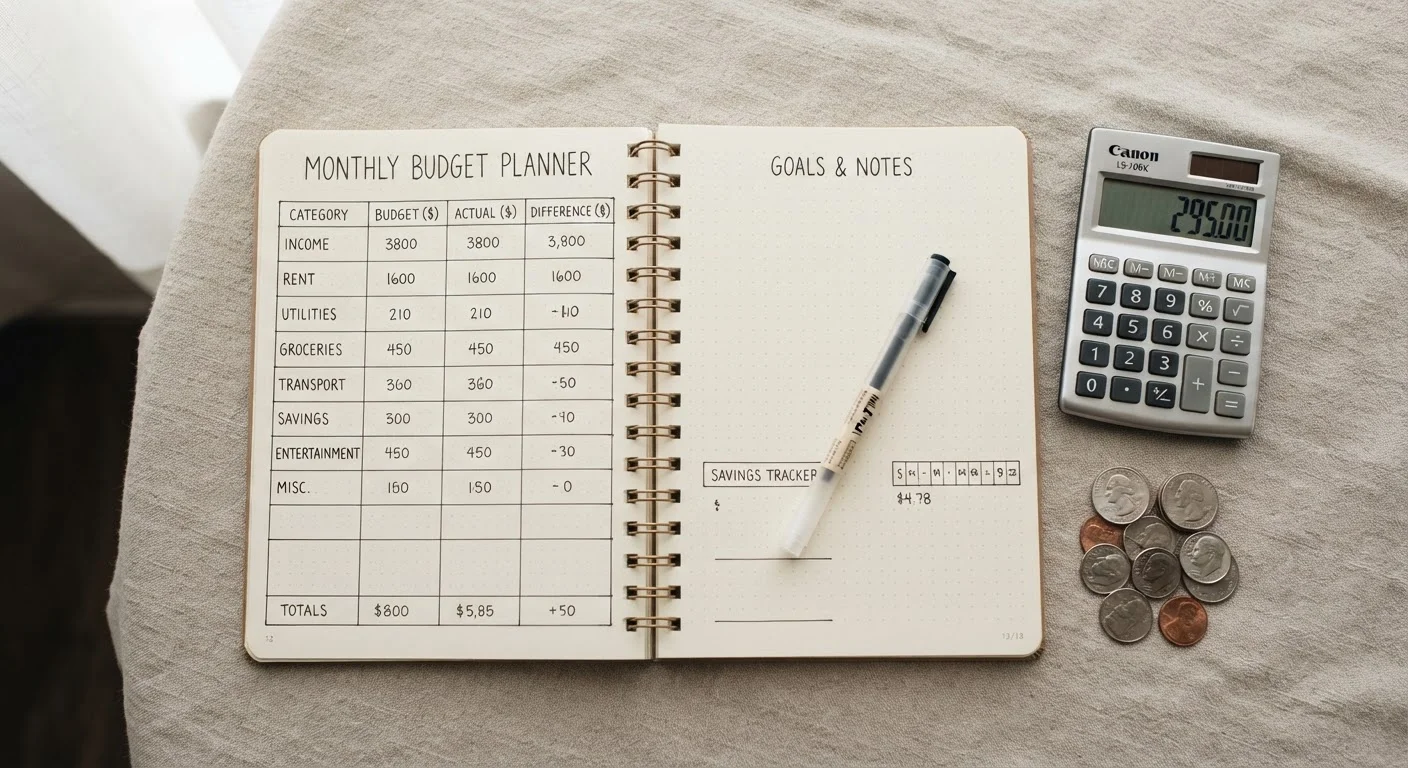
Photo credit: FaqsInsights.com | Stay Informed, Stay Ahead
In this article
New to budgeting? This comprehensive introduction walks through every core concept, from tracking income to setting spending limits that actually stick.
Key Takeaways
- A budget is a spending plan, not a punishment - it gives every dollar a purpose.
- You must know your net (take-home) income before setting any spending limits.
- Fixed and variable expenses behave differently and require different planning approaches.
- Several proven frameworks - like 50/30/20 - can guide how you divide your income.
- Consistency and regular review matter more than starting with a perfect budget.
What a Budget Really Is (and Isn't)
A budget is simply a written plan for how you intend to use your money over a specific period - typically a month. It is not a restriction on your freedom, a sign that you are struggling financially, or a promise that every number will be perfect. If you have heard otherwise, you are not alone. Common budgeting myths lead many people to avoid building a plan at all.
At its core, a budget answers one question: does your spending align with what you actually value? Without a plan, most people spend reactively - covering whatever comes up - and arrive at month's end unsure where the money went. A budget makes that invisible flow visible and gives you the power to redirect it.
Net Income
The amount of money you actually take home after taxes and deductions - the real figure available for spending and saving.
Fixed Expense
A cost that stays the same each month, such as rent, a car loan payment, or a monthly insurance premium.
Variable Expense
A cost that changes month to month, like groceries, gas, or utility bills, and requires ongoing estimation.
Discretionary Spending
Money spent on non-essential wants - dining out, entertainment, hobbies - that can be reduced when needed.
Sinking Fund
Money set aside each month in small amounts to cover a known future expense, such as a vacation or annual car registration.
Zero-Based Budget
A budgeting method where every dollar of income is assigned a specific purpose, leaving no unallocated money at month's end.
Starting simple is always better than not starting. A rough budget built on estimates is more useful than no budget at all. You can add precision over time as you gather real data.
Know Your Income Before Anything Else
Every budget begins with a single, concrete number: your net income - the money that actually lands in your bank account after taxes, insurance premiums, and any other payroll deductions. This is the only figure that matters for planning purposes. Using gross (pre-tax) income inflates your available dollars and leads to a budget that does not reflect reality.
If your income is consistent - a salaried position, for example - this step is straightforward. If your income varies month to month due to hourly work, freelancing, or seasonal employment, use a conservative estimate based on your lowest recent months. It is better to plan on less and have a surplus than to plan on more and come up short.
Use Past Statements, Not Memory
Resist the urge to estimate spending from memory alone - most people significantly undercount what they spend on food, subscriptions, and small purchases. Pull actual bank and credit card statements from the past two to three months to ground your budget in real data. Even a quick 30-minute review will reveal patterns that feel surprising at first.
Once you have your net income figure, you are ready to build the spending side of the equation. For a detailed walkthrough of that process, see our guide to setting up a monthly budget.
Categorizing Your Spending
Not all expenses behave the same way, and understanding that difference changes how you plan for them. Expenses generally fall into two broad types:
- Fixed expenses stay the same each month - rent or mortgage payments, loan installments, and insurance premiums. These are predictable and easy to account for.
- Variable expenses fluctuate - groceries, utilities, gas, and dining out. These require estimates based on past spending and need more frequent monitoring.
A third, often-overlooked category is irregular expenses - costs that are predictable but not monthly, such as annual subscriptions, vehicle registration fees, or holiday gifts. Failing to plan for these is one of the most common reasons budgets fall apart. Our article on spending categories budgets commonly miss covers these in detail.
To build accurate estimates, pull two to three months of bank and credit card statements. Look for patterns - what you spend consistently, what spikes, and what you may have forgotten entirely. Unfamiliar terms like discretionary spending or sinking funds are explained in our budgeting glossary.
Choosing a Budgeting Framework
Once you know your income and have a picture of your spending, you need a structure to organize them. Several frameworks are widely used - each has trade-offs depending on your situation and personality.
- The 50/30/20 Rule
- Allocate 50% of net income to needs (housing, utilities, groceries), 30% to wants (entertainment, dining out, hobbies), and 20% to savings and debt repayment. It is easy to start with and requires minimal category tracking.
- Zero-Based Budgeting
- Every dollar of income is assigned a specific purpose, so income minus all allocations equals zero. This method demands more discipline but creates maximum awareness of spending.
- The Pay-Yourself-First Method
- Savings and financial goals are funded before any other spending. The remainder is spent freely. This approach prioritizes long-term goals and reduces the temptation to spend before saving.
No framework is universally correct. The right choice is the one you will actually use consistently. For context on how budgeting connects to broader financial health - including managing credit and debt or building toward saving and investing goals - consider those areas once your basic budget is in place.
Avoid Building an Overly Rigid Budget
A budget with dozens of hyper-specific categories can become so cumbersome that you stop updating it. If tracking feels like a burden, simplify - broader categories are easier to maintain and still deliver most of the benefit. The goal is a plan you return to regularly, not a perfect accounting system you abandon.
Making Your Budget Stick
The most technically precise budget fails if it is abandoned after the first week. Consistency, not perfection, is the defining factor in whether budgeting works for you.
A few practices help make it durable:
- Schedule a weekly or monthly review. Spending rarely matches estimates exactly. Short, regular check-ins let you catch problems early and adjust categories before small overruns become large ones.
- Separate accounts for separate purposes. Some people maintain distinct accounts for fixed bills, variable spending, and savings. Keeping money visually separated reduces the temptation to spend funds set aside for bills.
- Automate where possible. Setting up automatic transfers to savings on payday removes the decision - and the temptation - entirely.
- Extend the budget beyond the individual. If you share finances with a partner, aligning on spending priorities is essential. Our guide on budgeting as a couple addresses that conversation directly.
Your budget will look different six months from now than it does today - and that is a feature, not a flaw. Treat it as a living document that adapts as your income, goals, and life circumstances change.
This article is for general informational and educational purposes only. It does not constitute personalized financial, tax, or investment advice. For guidance specific to your situation, consult a qualified financial professional.
Frequently Asked Questions

Author
Money & Finance Editorial Team
Money & Finance Editorial Team is the collective byline for our editorial team and contributor network. Articles published under this byline or an editorial pen name are researched, written, and reviewed according to our editorial standards for clarity, consistency, and independence before publication.
View all articles →