
How Credit Scores Are Actually Calculated
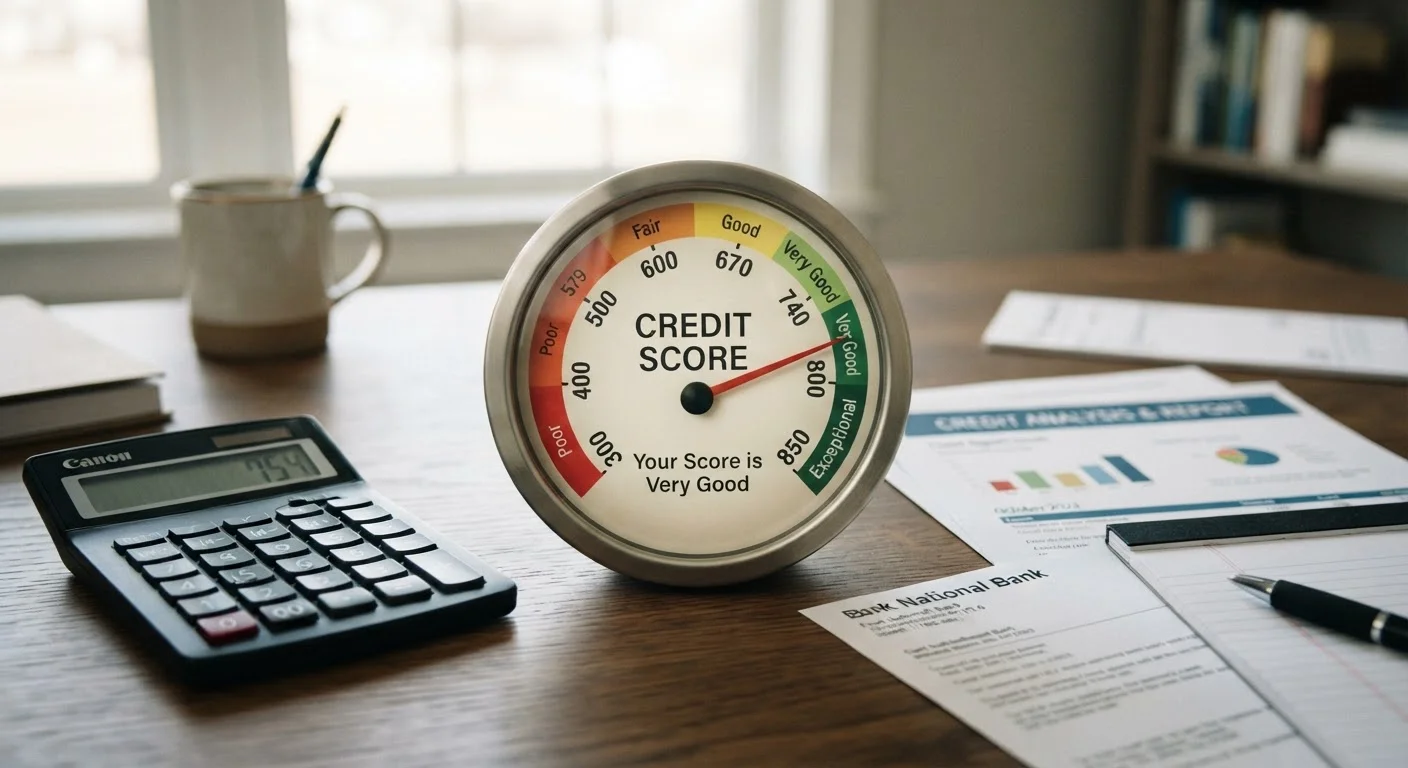
Photo credit: FaqsInsights.com | Stay Informed, Stay Ahead
In this article
Break down the five factors that determine your credit score, how each is weighted, and what really moves the needle.
Key Takeaways
- Payment history is the single largest factor in your credit score, accounting for roughly 35% of FICO calculations.
- Credit utilization - the share of available credit you're using - makes up about 30% and can shift quickly.
- A longer credit history, diverse account types, and fewer recent applications all support a stronger score.
- Negative items like missed payments or collections can remain on your credit report for up to seven years.
- Understanding each factor gives you a clear roadmap for improving your score over time.
The Five Factors Behind Every Credit Score
Your credit score isn't a mysterious judgment - it's a formula. The FICO® Score, which most U.S. lenders rely on, breaks down into five distinct categories. Each carries a specific weight, and knowing those weights tells you exactly where to focus your energy.
- Payment History (35%) - Whether you've paid past accounts on time.
- Amounts Owed / Credit Utilization (30%) - How much of your available credit you're currently using.
- Length of Credit History (15%) - How long your accounts have been open.
- Credit Mix (10%) - The variety of credit types you manage (cards, loans, mortgage, etc.).
- New Credit (10%) - How recently you've applied for or opened new accounts.
Together these five factors paint a picture of your borrowing behavior. The first two - payment history and utilization - account for 65% of your score, which is why they demand the most attention.
35%
Weight of payment history in FICO scoring
According to FICO's publicly disclosed scoring breakdown, payment history is the single most influential factor in the standard FICO® Score model.
30%
Weight of credit utilization in FICO scoring
FICO designates 'amounts owed,' primarily driven by revolving credit utilization, as the second-largest component of the score calculation.
7 years
How long most negative items stay on credit reports
Under the Fair Credit Reporting Act (FCRA), most negative information - including late payments and collections - can remain on a consumer's credit report for up to seven years.
Payment History: The Non-Negotiable Foundation
At 35% of your score, payment history is the most straightforward factor: pay on time, and this pillar stays strong. Even a single payment that is 30 days or more past due can cause a meaningful drop, and the later a payment becomes, the greater the damage. A 90-day late payment is significantly more harmful than a 30-day one.
Negative marks - including late payments, charge-offs, and accounts sent to collections - can linger on your credit report for up to seven years. The good news is that their influence fades over time, especially when you layer in a consistent on-time payment record going forward. Setting up automatic minimum payments is one of the most reliable ways to protect this category.
If you've ever been puzzled by an unexpected score drop, a reporting error or a missed payment on a forgotten account is a frequent culprit. See why your credit score may have dropped for a closer look at common triggers.
Credit Utilization: The Factor You Can Move Quickly
Credit utilization measures what percentage of your total revolving credit limit you're currently using. If you have a combined credit limit of $10,000 across all cards and carry a $3,000 balance, your utilization rate is 30%. Scoring models generally reward keeping this figure below 30%, and scores in the highest tiers often reflect utilization well below 10%.
Unlike payment history, utilization can shift relatively fast - sometimes within a single billing cycle - because balances are typically reported to the bureaus each month. Paying down balances or requesting a credit limit increase (without increasing spending) are two practical levers available to most borrowers.
This factor is nuanced enough to warrant its own deep dive. Our article on the credit utilization ratio explains the mechanics and common misconceptions in detail.
Pay Your Balance Before the Statement Closes
Your credit card issuer typically reports your balance to the bureaus on or around your statement closing date - not your due date. Paying down your balance before the statement closes means a lower balance gets reported, which can reduce your reported utilization rate even if you pay in full each month.
Length, Mix, and New Credit: The Supporting Cast
The remaining three factors each carry a 10-15% weight, but collectively they matter - particularly for people building credit from scratch or managing multiple accounts.
Length of credit history rewards patience. Scoring models consider the age of your oldest account, your newest account, and the average age of all accounts. Closing an old card - even one you rarely use - can shorten your average account age and nudge your score downward.
Credit mix reflects diversity: managing both revolving credit (credit cards) and installment credit (auto loans, student loans, mortgages) signals to lenders that you can handle different types of obligations. You don't need every type of credit, but having only one kind can limit your score's ceiling.
New credit accounts for hard inquiries - the checks lenders run when you formally apply for credit. Each hard inquiry can trim a few points from your score temporarily. Multiple applications within a short window can compound that effect, though mortgage and auto loan inquiries within a focused shopping period are often treated as a single inquiry by scoring models.
For a practical look at how these factors interact before a major borrowing decision, review the credit readiness checklist.
Rate Shopping Is Treated Differently
When you're comparing mortgage or auto loan offers, multiple hard inquiries within a focused window - generally 14 to 45 days depending on the scoring model - are often grouped and treated as a single inquiry. This gives borrowers room to shop for favorable terms without repeatedly penalizing their score. Credit card applications do not receive the same treatment.
Putting It Together: Building a Better Score
Understanding the formula is the first step; acting on it consistently is what drives lasting improvement. Prioritize on-time payments above all else, then work on reducing revolving balances. After those two areas are stable, be strategic about when you apply for new credit and which older accounts you keep open.
Credit improvement is rarely rapid - meaningful gains typically unfold over months, not days. But because the score is recalculated each time it's pulled, positive changes in utilization or payment behavior show up relatively quickly compared with the long tail of negative history. For the habits that sustain a strong profile over years, see our guide on habits that keep your credit score healthy.
This article is for general informational and educational purposes only and does not constitute personalized financial or credit advice. Consult a qualified financial professional for guidance specific to your situation.
Frequently Asked Questions

Author
Money & Finance Editorial Team
Money & Finance Editorial Team is the collective byline for our editorial team and contributor network. Articles published under this byline or an editorial pen name are researched, written, and reviewed according to our editorial standards for clarity, consistency, and independence before publication.
View all articles →