
Index Funds vs. Actively Managed Funds: Understanding the Core Trade-Off
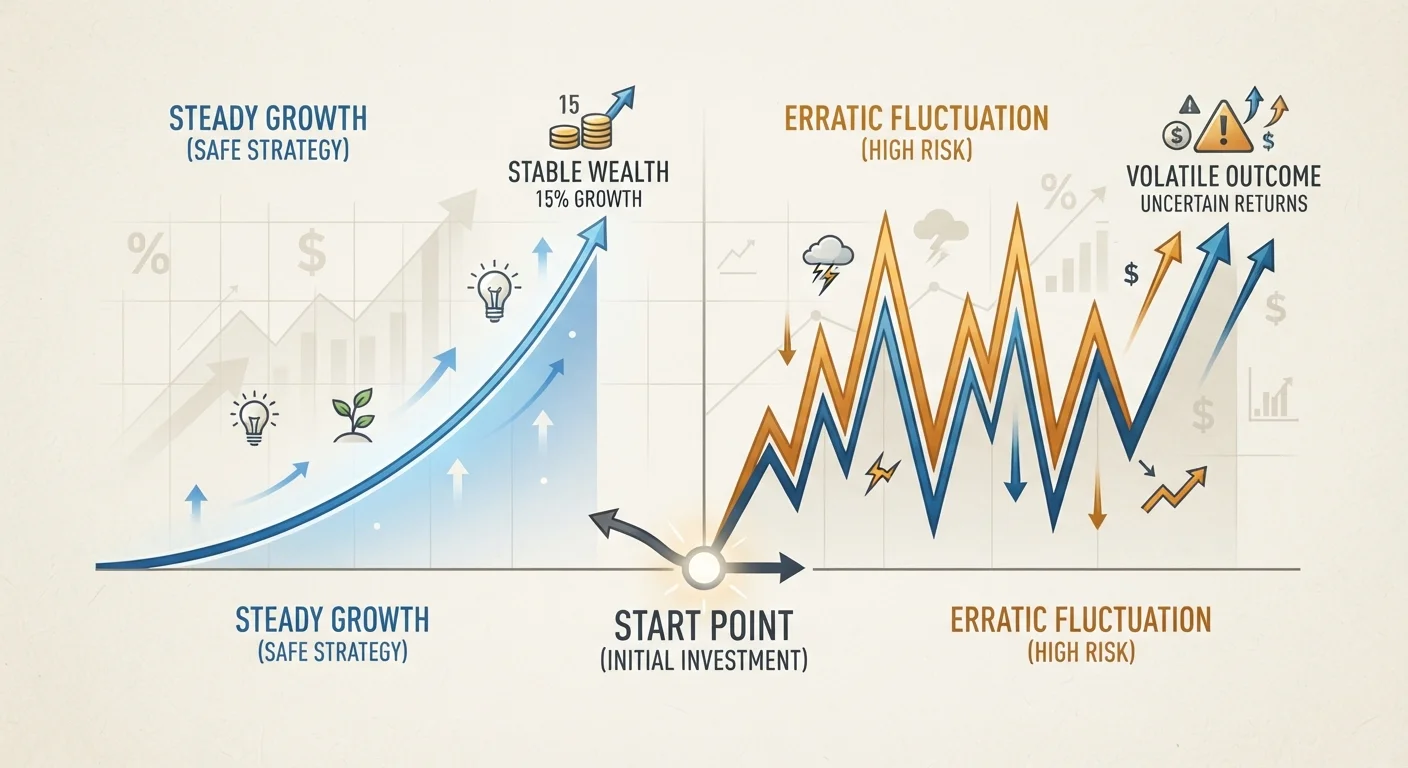
Photo credit: FaqsInsights.com | Stay Informed, Stay Ahead
In this article
Costs, historical performance patterns, and risk profiles of index funds and actively managed funds explained for new investors.
Key Takeaways
- Index funds track a market benchmark passively, while actively managed funds rely on human portfolio managers to select holdings.
- Cost differences between the two fund types are significant and compound meaningfully over time.
- Historical data shows most actively managed funds underperform their benchmark index after fees over long periods.
- Neither fund type eliminates market risk - both can lose value when markets decline.
- Your investment timeline, cost tolerance, and financial goals should guide which approach fits your situation.
How Each Fund Type Works
An index fund is designed to replicate the performance of a specific market benchmark - such as the S&P 500 or the total US stock market - by holding the same securities in the same proportions as that index. Because no manager is making active buy-or-sell decisions, the fund's costs are typically low and its behavior is predictable relative to its benchmark.
An actively managed fund, by contrast, employs a portfolio manager (or a team) whose goal is to outperform a benchmark index by selecting securities they believe will deliver superior returns. This requires ongoing research, analysis, and trading - activities that generate higher operating costs and, in some cases, more frequent taxable events in taxable accounts.
Understanding how diversification works within a portfolio is a useful foundation before choosing between these approaches, since both fund types can hold hundreds of securities but achieve diversification through very different mechanisms.
The Cost Gap and Why It Matters
The most concrete difference between the two approaches is cost, expressed as the expense ratio - the annual percentage of your invested assets charged to run the fund. Index funds typically carry expense ratios well below 0.10% for broad-market options, while actively managed funds often range from 0.50% to over 1.00% annually.
That gap may sound small, but it compounds over decades. On a $50,000 investment growing at 6% annually over 30 years, a 1% annual fee difference can translate to tens of thousands of dollars less in ending wealth - solely due to costs, before any performance difference is considered.
~85%
Active US equity funds underperforming over 15 years
According to S&P Dow Jones Indices SPIVA data, roughly 85% of actively managed US large-cap equity funds underperformed the S&P 500 over a 15-year period after fees.
0.66%
Average asset-weighted expense ratio, active funds
Morningstar's annual fund fee study has reported that the asset-weighted average expense ratio for actively managed funds is substantially higher than for passive index funds.
Beyond expense ratios, actively managed funds may also generate higher portfolio turnover, which can create additional transaction costs and, in taxable accounts, capital gains distributions that create a tax liability even in years you didn't sell any shares.
Historical Performance Patterns
The S&P Indices Versus Active (SPIVA) scorecard, published regularly by S&P Dow Jones Indices, has consistently found that the majority of actively managed US equity funds underperform their benchmark index over periods of 10 and 15 years, after fees are accounted for. This pattern holds across most fund categories and most time periods studied, though there is meaningful variation in specific market segments.
It is important to note that past performance does not guarantee future results. Some active managers do outperform over meaningful time horizons, and identifying them in advance is genuinely difficult. Research in behavioral finance suggests that common investor behaviors - like chasing recent winners - often erode returns further, regardless of fund type.
| Index Funds | Actively Managed Funds | |
|---|---|---|
| Management style | Passive - tracks a benchmark | Active - manager selects holdings |
| Typical expense ratio | Under 0.10% for broad market | 0.50%-1.00%+ annually |
| Historical long-term performance vs. benchmark | Matches benchmark minus fees | Most underperform after fees |
| Portfolio turnover | Low - infrequent trading | Higher - active buying and selling |
| Tax efficiency (taxable accounts) | Generally higher | Generally lower |
| Complexity for new investors | Lower - straightforward structure | Higher - requires evaluating manager |
Risk Profile and Practical Considerations
Both index and actively managed funds carry market risk - the possibility that the value of your investment will decline. Index funds, by design, will fall roughly in line with their benchmark when markets drop; they offer no downside protection. Some actively managed funds pursue strategies specifically intended to reduce volatility or protect against drawdowns, though these strategies also tend to limit upside participation.
Tax efficiency is another practical dimension. Because index funds trade infrequently, they tend to generate fewer taxable capital gains distributions. This can be especially relevant if you hold funds in a taxable brokerage account rather than a tax-advantaged account like a Roth or Traditional IRA. See our comparison of Roth IRA vs. Traditional IRA to understand how account type interacts with fund selection.
Look Beyond the Fund Label
Not all index funds are identical - they track different benchmarks, use different weighting methods, and charge different fees. Similarly, not all actively managed funds take the same level of risk. Before investing in either type, review the fund's prospectus to understand what it actually holds, how it is managed, and what it costs. A financial adviser can help you evaluate whether a specific fund aligns with your goals and risk tolerance.
This article is for general informational and educational purposes only and does not constitute personalized investment, tax, or financial advice. Please consult a qualified, licensed financial professional before making decisions about your own investments.

Author
Money & Finance Editorial Team
Money & Finance Editorial Team is the collective byline for our editorial team and contributor network. Articles published under this byline or an editorial pen name are researched, written, and reviewed according to our editorial standards for clarity, consistency, and independence before publication.
View all articles →