
Currency Exchange Traps at Airports (and Where Rates Are Actually Better)
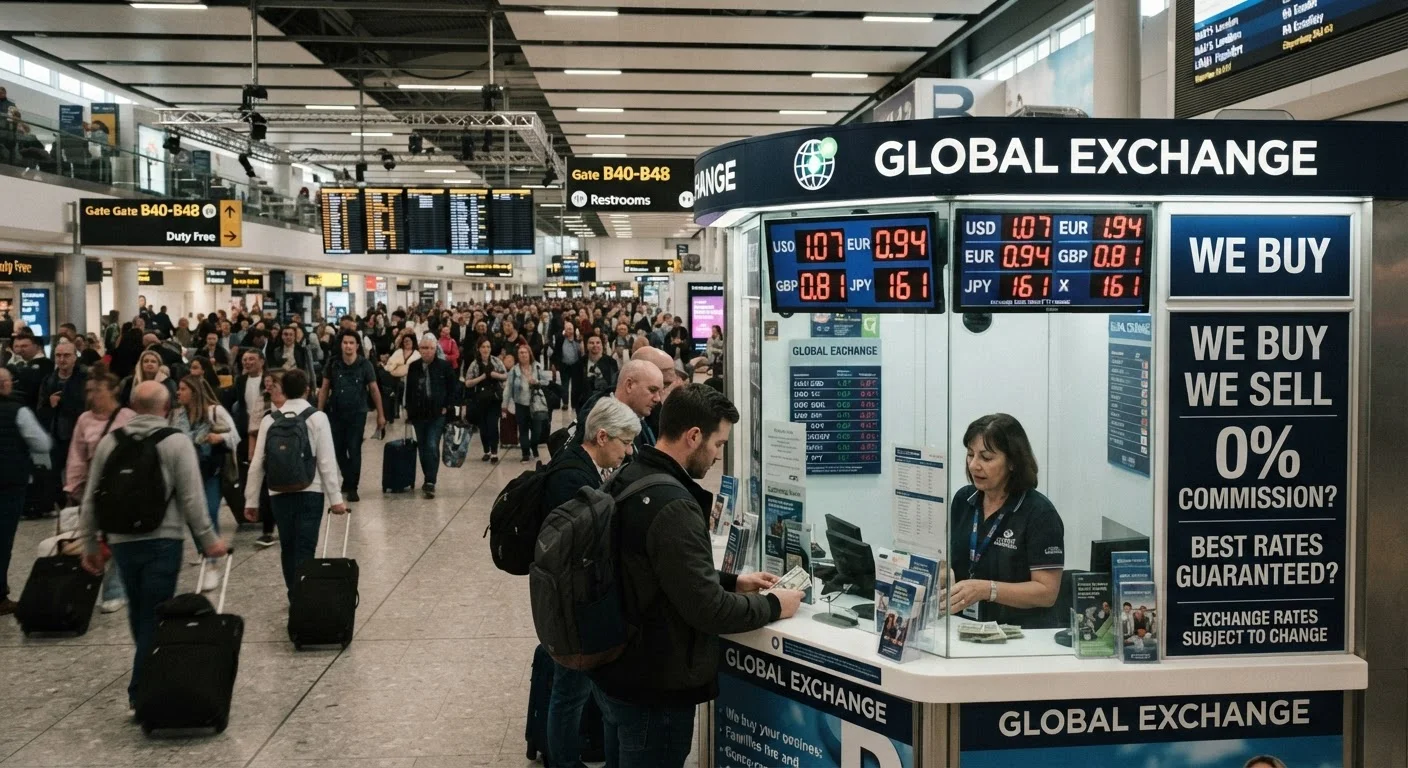
Photo credit: FaqsInsights.com | Stay Informed, Stay Ahead
In this article
Airport kiosks are rarely your friend. Learn how currency exchange actually works and what to look for when converting money abroad.
Key Takeaways
- Airport currency exchange kiosks typically offer the worst exchange rates travelers will encounter.
- ATMs abroad often provide near-interbank rates, but foreign transaction fees can still add up.
- Notify your bank before travel to avoid blocked cards and understand your fee structure.
- Dynamic Currency Conversion (DCC) is a fee trap - always pay in the local currency.
- Exchanging a small emergency cash amount before departure is sensible; exchanging large amounts at airports is not.
Why Airport Exchange Rates Are So Unfavorable
Airport currency exchange counters exist primarily because they can - they occupy high-traffic, low-competition real estate where travelers feel time pressure and unfamiliarity. The result is some of the worst exchange rates you will encounter anywhere on a trip. Markups of 10-15% above the true mid-market rate are not unusual, meaning a traveler converting $500 USD might lose $50-$75 before they've left the terminal.
The mechanics are straightforward: every exchange service builds profit into the spread - the gap between the rate they offer you and the rate at which currencies actually trade between financial institutions. Airport operators also charge kiosk vendors premium rent, and those costs flow directly to the consumer through even wider spreads.
Currency exchange is one element of a broader set of overlooked travel costs. See our guide to hidden travel costs for a fuller picture of what tends to quietly inflate a trip budget.
Up to 15%
Typical airport kiosk markup over mid-market rate
Consumer travel research has found airport currency exchange services can charge margins of 10-15% above the interbank mid-market rate, far exceeding alternatives like local ATMs or bank branches.
3-8%
Average Dynamic Currency Conversion markup
Financial industry analyses suggest DCC transactions routinely carry a conversion markup of 3-8%, a cost that is entirely avoidable by selecting local currency at the terminal.
Common Mistakes Travelers Make - and How to Sidestep Them
The traps travelers fall into around currency exchange are remarkably consistent - and almost entirely avoidable once you know what to watch for. The mistakes below cover the most costly and most common errors, from the moment you land to every card swipe abroad.
Exchanging large amounts of cash at an airport kiosk.
Why it happens: Travelers arrive jetlagged and anxious to have local cash immediately, making the first visible exchange counter seem like the obvious solution.
Ignoring the spread between buy and sell rates when comparing exchange services.
Why it happens: Travelers focus on the headline rate displayed on signage without realizing that the difference between the rate they receive and the true mid-market rate is where the profit is hidden.
Accepting Dynamic Currency Conversion (DCC) at point-of-sale terminals or ATMs.
Why it happens: Screens are designed to make paying in USD look like a convenience or a safety net, and travelers unfamiliar with DCC often assume it's the standard or even the better option.
Using a credit or debit card without checking its foreign transaction fee.
Why it happens: Many travelers assume their everyday card works seamlessly abroad and don't realize a 2-3% foreign transaction fee is applied to every purchase until they review their statement at home.
Carrying all currency in one place or in a single format.
Why it happens: It feels simpler to have one wallet with all your cash and cards, but this creates serious vulnerability if a wallet is lost, stolen, or a card is blocked.
Always Pay in Local Currency Abroad
When a foreign merchant or ATM asks whether you'd like to pay in your home currency (USD) instead of the local currency, always choose local currency. This practice - called Dynamic Currency Conversion - locks in a poor exchange rate chosen by the merchant's bank, not yours. The markup can be 3-8% above the true rate, and it is entirely avoidable simply by saying no.
Where to Actually Get Better Rates
The most reliably competitive option for most travelers is a local ATM in the destination country, drawing funds directly from a home bank account. ATMs connected to major networks typically apply rates close to the interbank rate. The caveat: your home bank and the ATM operator may each charge a flat withdrawal fee, so withdrawing in fewer, larger amounts minimizes the per-dollar cost.
Local bank branches and post office exchange services in many countries offer rates significantly better than airport kiosks. In some destinations, licensed currency exchange offices in city centers - particularly those catering to local businesses rather than tourists - are also competitive. The key is to compare against the mid-market rate before you commit.
Your Home Bank's Debit Card May Block Abroad
Many US banks automatically flag overseas ATM withdrawals as suspicious and freeze your card without warning. Always call or message your bank before departure to place a travel notice on your account. This takes five minutes and can save you from being stranded without accessible funds in an unfamiliar country.
Planning your document and entry requirements carefully is equally important before departure. Our article on common visa requirement mistakes covers the misunderstandings that can derail travel before it even begins.
This article is for general informational purposes only. Exchange rates, fees, and banking policies vary by institution and destination. Verify current rates and your bank's fee structure directly before traveling.

Author
Travel & Trips Editorial Team
Travel & Trips Editorial Team is the collective byline for our editorial team and contributor network. Articles published under this byline or an editorial pen name are researched, written, and reviewed according to our editorial standards for clarity, consistency, and independence before publication.
View all articles →