
How Engine Coolant Actually Works - and Why Neglecting It Is Costly
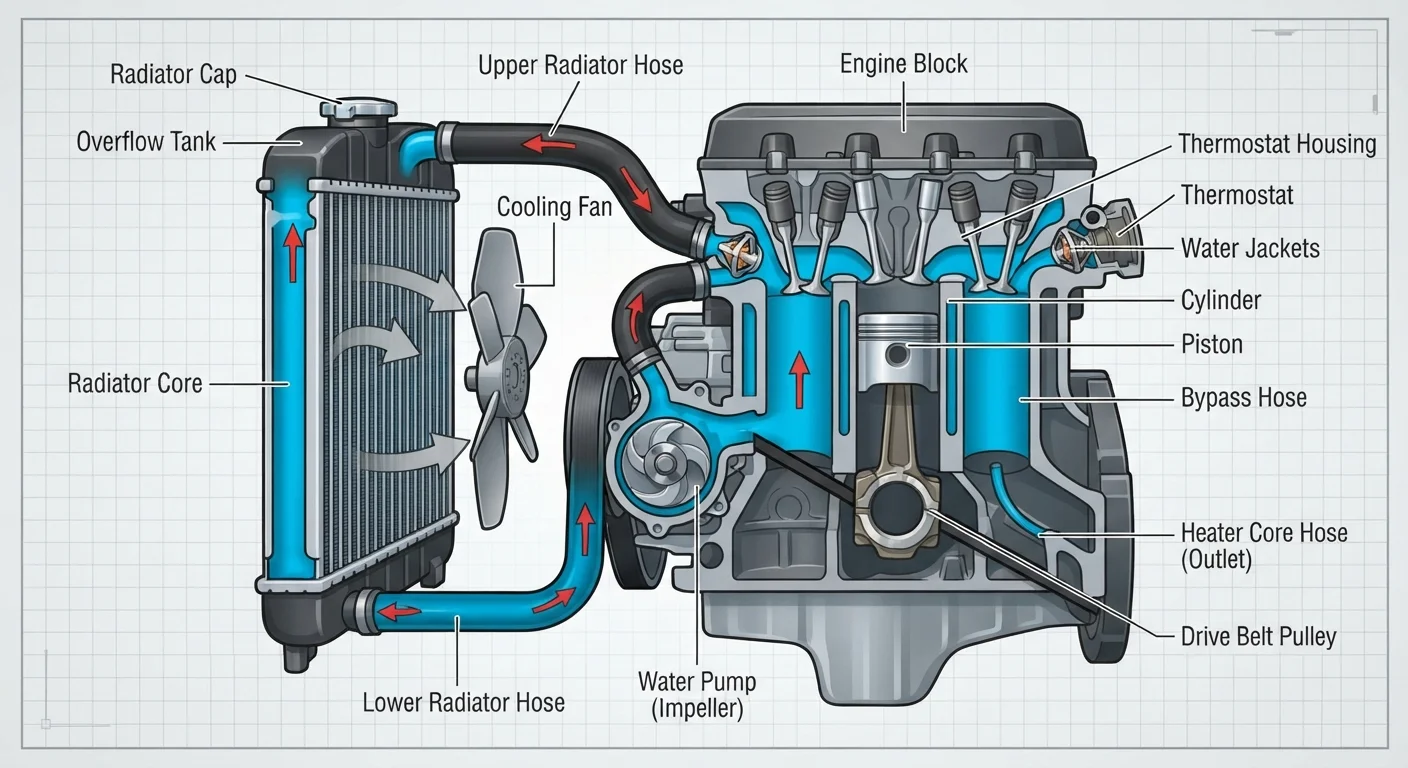
Photo credit: FaqsInsights.com | Stay Informed, Stay Ahead
In this article
Coolant does far more than prevent freezing. Learn how the cooling system protects your engine and what happens when it's overlooked.
Key Takeaways
- Coolant regulates engine temperature in both extreme heat and freezing cold.
- It also prevents internal corrosion of metal cooling system components.
- Coolant degrades over time and must be flushed and replaced on a schedule.
- Low or contaminated coolant can lead to overheating and severe engine damage.
- Checking coolant level and condition is one of the simplest routine maintenance tasks.
What Coolant Actually Does Inside Your Engine
Your engine burns fuel to generate power, and that combustion process produces enormous heat - temperatures inside a cylinder can briefly exceed 4,500°F. Left unmanaged, that heat would destroy engine components within minutes. Coolant is the primary tool your vehicle uses to prevent that from happening.
The coolant system works as a closed loop. A water pump pushes the fluid through channels cast into the engine block and cylinder head, where it absorbs heat directly from the metal. The now-hot coolant travels through the upper radiator hose to the radiator, where thin fins and airflow - assisted by a cooling fan - strip that heat away. The cooled fluid then returns through the lower hose to start the cycle again.
A thermostat regulates this loop. When the engine is cold, the thermostat stays closed, allowing the engine to warm up quickly to its optimal operating temperature. Once that threshold is reached, it opens and lets coolant flow freely to the radiator. This balance is what keeps your engine in its efficient temperature window - typically between 195°F and 220°F.
195°F-220°F
Normal engine operating temperature range
Most passenger vehicle engines are designed to run efficiently within this temperature window, managed by the thermostat and coolant system.
~$150-$200
Typical coolant flush service cost
A routine flush is a fraction of the cost of repairs resulting from a blown head gasket or warped cylinder head, which can exceed $2,000.
50/50
Standard coolant-to-water mix ratio
A 50/50 blend of ethylene glycol antifreeze and distilled water is the widely recommended starting point for most climates and vehicle types.
Beyond Temperature: Corrosion Protection and Freeze Defense
Coolant's role doesn't stop at heat management. The ethylene glycol base lowers the freezing point of the fluid, preventing it from turning solid and cracking the engine block or hoses in freezing temperatures. Equally important, modern coolant formulas contain packages of chemical inhibitors - silicates, phosphates, or organic acids, depending on the type - that coat internal metal surfaces and prevent oxidation and corrosion.
Over time, these inhibitors deplete. As they break down, the fluid becomes acidic and starts attacking the aluminum, steel, and rubber components it was designed to protect. Water pump seals degrade. Radiator fins corrode. Hoses soften or harden. This is why old, neglected coolant can do real damage even when the fluid level appears adequate.
Check Your Coolant When the Engine Is Cold
Never open the radiator cap or coolant reservoir cap when the engine is hot. The system is pressurized, and hot coolant can spray out and cause serious burns. Always wait at least an hour after driving before inspecting or topping off the coolant level.
The Real Cost of Ignoring Your Cooling System
An overheating event is one of the most damaging things that can happen to an engine. When coolant runs critically low or loses its effectiveness, engine temperatures spike. Aluminum cylinder heads can warp. Head gaskets - the seals between the engine block and head - can fail. In severe cases, engine internals score and seize. Repairs at this level can run into thousands of dollars, and in older vehicles may exceed the car's value entirely.
These outcomes are rarely sudden surprises. They typically follow a pattern of deferred maintenance: a slow coolant leak ignored, a flush skipped one too many times, a warning light dismissed. As we detail in our coverage of the hidden costs of skipping routine maintenance, the savings from avoiding a service appointment often pale against the repair bills that follow.
How to Stay on Top of Coolant Maintenance
Monitoring your coolant is straightforward. With the engine cold, locate the translucent overflow reservoir - it's typically marked with MIN and MAX lines. The fluid should be between those lines and appear a clean color: green, orange, pink, or blue depending on the formula your vehicle uses. If it looks brown, rusty, or contains floating particles, it's overdue for service.
Use a coolant test strip - available at most auto parts stores - to check the condition of the inhibitors and the freeze protection level. This takes less than a minute and gives you an accurate read on whether a flush is needed.
For the flush itself, most drivers are better served having a qualified mechanic perform it, especially since proper disposal of used coolant is required - it's toxic to animals and should never be poured down a drain or onto the ground. If you're comfortable with basic mechanical tasks, consult your owner's manual for the correct procedure and coolant specification before attempting it yourself.
The bottom line: coolant is inexpensive, checks are quick, and the maintenance window is measured in years - not weeks. Treating it as an afterthought is one of the most avoidable ways to end up with a serious repair bill.
Frequently Asked Questions

Author
Cars & Driving Editorial Team
Cars & Driving Editorial Team is the collective byline for our editorial team and contributor network. Articles published under this byline or an editorial pen name are researched, written, and reviewed according to our editorial standards for clarity, consistency, and independence before publication.
View all articles →