
Flooring Materials Compared: Hardwood, Engineered Wood, LVP, Laminate, and Tile
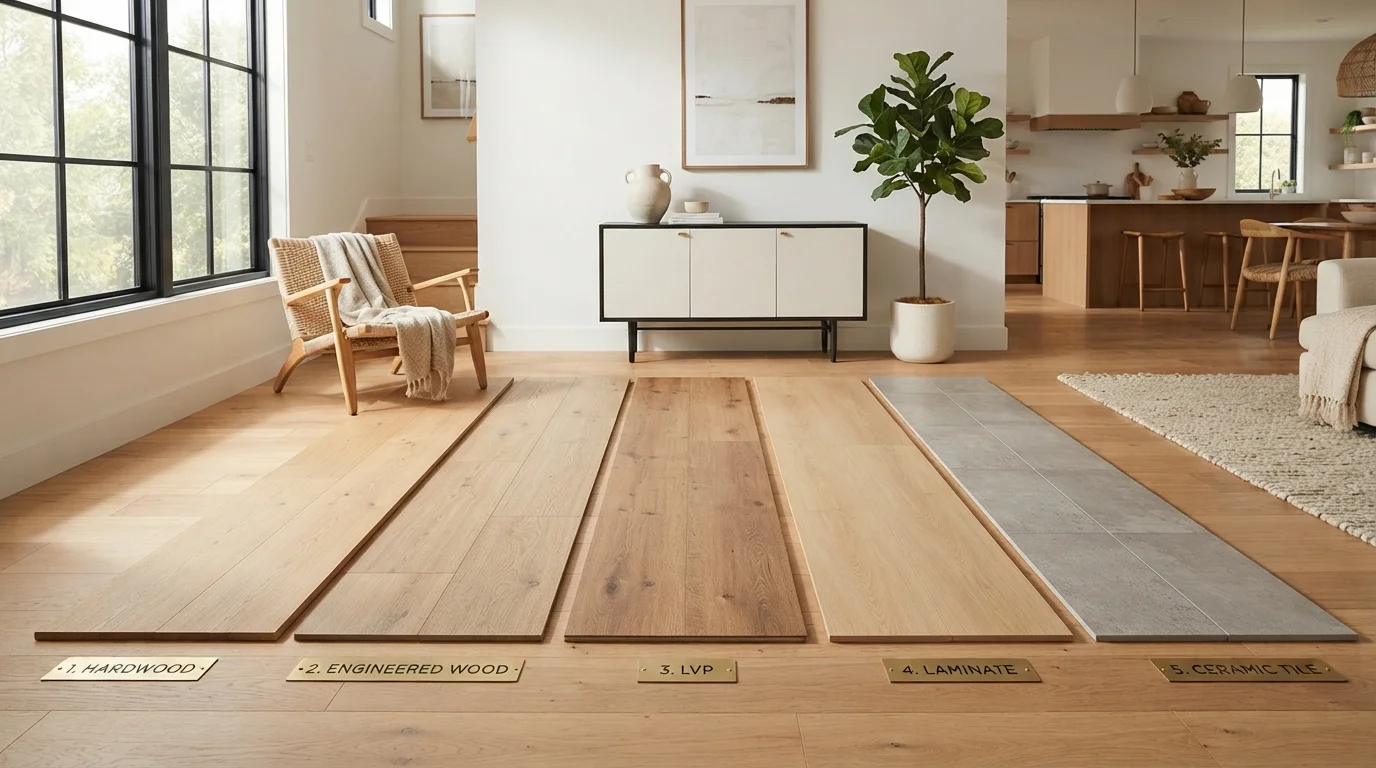
Photo credit: FaqsInsights.com | Stay Informed, Stay Ahead
In this article
Each flooring type performs differently under moisture, foot traffic, and heat. A side-by-side look at durability, maintenance, and suitability by room.
Key Takeaways
- Solid hardwood adds long-term value but is vulnerable to moisture and requires refinishing over time.
- Engineered wood offers real wood aesthetics with better dimensional stability in humid conditions.
- Luxury vinyl plank (LVP) is fully waterproof and well-suited for kitchens, bathrooms, and basements.
- Laminate mimics wood at a lower cost but cannot be refinished and is damaged by standing water.
- Tile is the most durable and moisture-resistant option, though it can feel cold and hard underfoot.
Understanding the Five Main Flooring Types
Choosing a flooring material involves balancing aesthetics, durability, moisture resistance, and budget. Each of the five dominant options - solid hardwood, engineered wood, luxury vinyl plank (LVP), laminate, and tile - is built differently and performs differently depending on where and how it's installed.
Solid hardwood is milled from a single piece of wood, typically ¾ inch thick, and can be sanded and refinished multiple times over decades. Engineered wood pairs a real hardwood veneer with a plywood or HDF core, giving it better resistance to humidity changes. LVP is a synthetic product made primarily from PVC; it's fully waterproof and highly realistic in appearance. Laminate uses a photographic layer over a fiberboard core to replicate wood or stone at a lower price point. Tile - ceramic or porcelain - is a fired material that handles water and wear exceptionally well but requires grout maintenance and can be cold or hard underfoot.
If you're planning a larger layout change, such as opening up rooms, the flooring material you choose will also interact with acoustics and thermal comfort. See our guide to open-plan living trade-offs for context on how flooring choices fit into broader structural decisions.
Side-by-Side Comparison: Durability, Moisture, and Maintenance
The table below compares all five materials across the criteria that matter most for everyday homeowner decisions.
| Solid Hardwood | Engineered Wood | LVP | Laminate | Tile | |
|---|---|---|---|---|---|
| Moisture Resistance | Poor | Moderate | Excellent (waterproof) | Poor to moderate | Excellent |
| Durability / Lifespan | 80-100 years (refinishable) | 30-50 years | 15-25 years | 15-20 years | 50+ years |
| Refinishable | Yes, multiple times | Once or twice | No | No | Grout only |
| Comfort Underfoot | Warm, firm | Warm, firm | Slightly resilient | Hollow feel possible | Hard, cold |
| Relative Cost | High | Moderate to high | Moderate | Low to moderate | Moderate to high |
| DIY-Friendly Install | Moderate | Moderate | High | High | Low |
| Best Rooms | Living rooms, bedrooms | Most rooms except wet | Any room | Dry rooms only | Wet rooms, entryways |
A few patterns stand out. Tile and LVP lead on moisture resistance, making them reliable in kitchens, bathrooms, and below-grade spaces. Solid hardwood offers the highest refinishing potential, extending its lifespan well beyond most other options, but it must be kept dry. Laminate is the most affordable entry point but has the least flexibility - it cannot be refinished, and standing water can cause the core to swell and warp.
Test Subfloor Moisture Before You Commit
Before purchasing any wood-based flooring, use an inexpensive moisture meter to test your subfloor. Concrete slabs can release moisture vapor even when they appear dry, which can buckle or warp flooring over time. For concrete subfloors, a calcium chloride test or relative humidity probe provides the most reliable reading. Most flooring manufacturers specify acceptable moisture levels in their installation guides.
Room-by-Room Suitability Guide
Matching material to room conditions is more useful than picking a single floor for an entire home.
- Living rooms and bedrooms: Solid hardwood or engineered wood performs well here. These spaces have controlled humidity and light to moderate traffic. The warmth and authenticity of real wood is hard to replicate, and refinishing extends the floor's life indefinitely with solid hardwood.
- Kitchens: LVP or tile are the practical choices. Both handle spills, humidity, and heavy foot traffic without damage. Engineered wood can work in kitchens with good ventilation and prompt spill cleanup, but solid hardwood and laminate carry real risk.
- Bathrooms: Tile is the traditional standard for good reason - it is impermeable, easy to clean, and available in slip-resistant finishes. LVP is a newer alternative that performs well if installed with proper seams.
- Basements: Only LVP or tile should be considered below grade, where ground moisture is a persistent concern. All wood-based products - including engineered wood - can be affected by moisture vapor rising from concrete.
- Entryways and mudrooms: Tile wins for sheer durability and ease of cleaning. LVP is a close second.
Cost, Installation, and Longevity Considerations
15 mils
Minimum LVP wear layer for heavy residential use
Flooring industry guidelines generally recommend at least 12-20 mil wear layers for high-traffic residential areas; thinner layers suit lighter use.
¾ inch
Standard thickness of solid hardwood planks
This standard dimension allows for multiple sandings over the floor's lifetime, a key factor in its longevity compared to other materials.
3-5×
Longer tile lifespan vs. laminate in wet rooms
In moisture-prone environments, properly installed tile typically outlasts laminate by a significant margin due to its inherent impermeability.
Material cost varies widely, but installation method and subfloor preparation can significantly affect the total project cost. Solid hardwood requires nailing or stapling to a wood subfloor, while LVP and laminate are often floating installations - meaning they click together without adhesive or fasteners, which can reduce labor costs. Tile requires mortar, grout, and skilled installation for a lasting result.
Longevity depends heavily on maintenance. Hardwood floors in well-maintained homes can last 80-100 years with periodic refinishing. Tile, if properly grouted and sealed, can outlast the home itself. LVP and laminate typically carry manufacturer warranties in the 15-25 year range for residential use, though wear layer thickness (measured in mils for LVP) has a direct impact on how long the surface holds up under traffic.
Common Misconceptions to Avoid
Don't Confuse Visual Similarity With Performance
LVP, laminate, and engineered wood can look nearly identical in showroom displays, but their performance in wet or humid environments differs dramatically. LVP is fully waterproof; laminate is not. Before making a final decision, read the manufacturer's technical specifications - not just the product description - and confirm the material is rated for your intended room type.
One frequent mistake is assuming that all wood-look flooring performs the same way. LVP, engineered wood, laminate, and solid hardwood all look similar in product photos but behave very differently when exposed to water, heat, or subfloor irregularities. Always confirm the actual construction and wear rating before purchasing.
Another common error is skipping subfloor assessment. Flooring performance is directly tied to what lies beneath it. A concrete subfloor with moisture transmission issues will compromise even a well-chosen flooring material. In most cases, it's worth having a professional assess subfloor moisture levels before installation, particularly for engineered wood or laminate.
Finally, installing any flooring in conditions outside the manufacturer's recommended humidity and temperature range can cause gapping, buckling, or adhesion failure. Acclimating planks to room conditions before installation is a standard requirement for wood-based products.

Author
Home & Garden Editorial Team
Home & Garden Editorial Team is the collective byline for our editorial team and contributor network. Articles published under this byline or an editorial pen name are researched, written, and reviewed according to our editorial standards for clarity, consistency, and independence before publication.
View all articles →