
Skill Stacking: The Logic of Combining Complementary Competencies
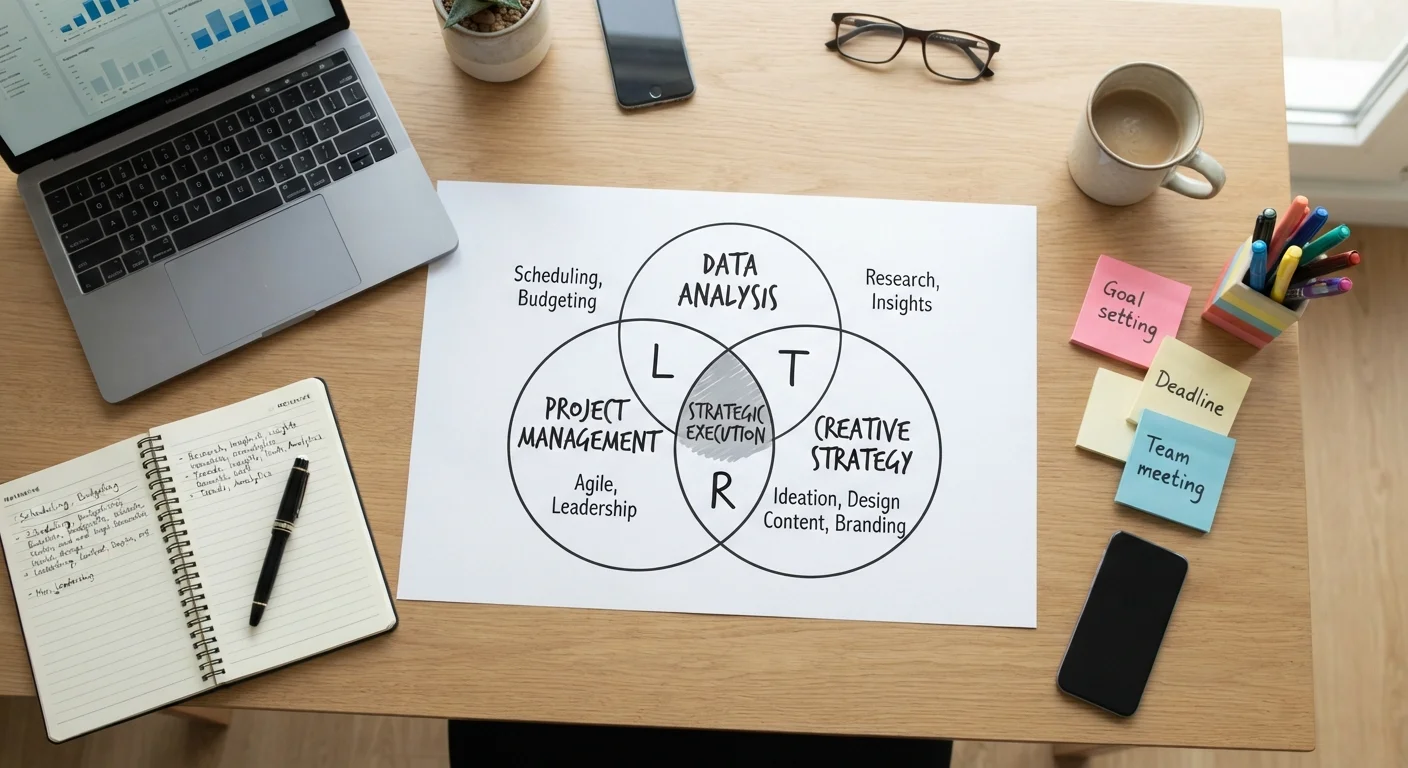
Photo credit: FaqsInsights.com | Stay Informed, Stay Ahead
In this article
Explore how layering related skills creates unique professional value and reduces the pressure to be world-class at any single thing.
Key Takeaways
- You do not need to be the best in the world at any single skill for skill stacking to work.
- Skills become more powerful when they complement and reinforce each other rather than standing alone.
- A well-chosen stack can open niches that specialists and generalists both miss.
- Identifying gaps in your current stack is a critical first step before adding new competencies.
- Skill stacking is a long-term strategy, not a shortcut - breadth without depth has limits.
Why No Single Skill Tells the Whole Story
Most professional advice historically pointed in one direction: find your one thing and pursue mastery relentlessly. That advice still has merit in certain contexts, but modern work - increasingly collaborative, cross-functional, and fast-changing - rewards a different quality as well: the ability to connect ideas and competencies across domains.
Skill stacking reframes the question from "How good am I at this?" to "How does this skill work alongside everything else I know?" A graphic designer with strong written communication skills can concept and pitch their own ideas without a copywriter. A nurse with data literacy can contribute meaningfully to quality improvement projects. In both cases, the combination creates value that neither skill creates alone.
This doesn't mean depth is irrelevant. Skill stacking is not an excuse for dabbling. Each skill in your stack still needs to reach a level of genuine functional competency - not world-class, but genuinely useful. The threshold to clear is: Can I apply this reliably in a real-world context?
Skill Stacking Is Not the Same as Being a Generalist
A generalist has broad but shallow knowledge across many areas. A skill stacker is deliberately selective - choosing competencies that create meaningful overlap and amplify each other. The distinction matters: skill stacking requires strategic thinking about which combinations generate unique value, not simply accumulating diverse experiences.
How to Build a Skill Stack Intentionally
Random skill accumulation is not skill stacking - it's just acquiring things. The difference lies in selection logic. Before adding a new skill to your development plan, it helps to audit what you already have and identify what would amplify it most. See our framework for auditing skill gaps for a practical starting point.
A useful mental model is to think in layers:
- Core skill: The primary competency that anchors your professional identity.
- Amplifying skills: Two or three skills that make the core skill more effective or more applicable in different contexts.
- Communication layer: The ability to explain, present, or teach your work - often underestimated but consistently valuable across industries.
Each layer should be chosen because it solves a real limitation in your current profile, not simply because it sounds impressive. The trade-offs between speed and depth are worth weighing carefully as you plan each addition.
Start With What You Already Have
Before researching what to learn next, inventory your current skills honestly and look for natural adjacencies. The most effective additions to a stack are ones that solve a real gap in your existing profile - not simply skills that look appealing in isolation. Job postings in your target field are a practical source for identifying which combinations the market actually values.
The Compounding Logic Behind Complementary Skills
Skill stacking works because complementary competencies compound. Each new skill doesn't just add to your profile linearly - it multiplies the contexts in which your existing skills can operate. This is why the combination of data analysis and storytelling is more sought-after than either alone, or why project management skills dramatically increase the organizational impact of technical expertise.
Research in learning science offers a related insight: mixing and connecting subjects during study tends to strengthen long-term retention and transfer. For a deeper look at how that works, see our article on interleaved practice and how it sharpens learning.
Top 3
Skill combinations most cited in hybrid job postings
LinkedIn's 2023 Workplace Learning Report identified technical skills paired with communication and collaborative problem-solving as the most frequently requested combinations in multidisciplinary roles.
~50%
Of jobs now require skills from multiple domains
Research from the Brookings Institution found that a growing share of U.S. job postings require competencies from at least two distinct skill domains, reflecting a structural shift toward hybrid roles.
Career stage also shapes which skills make the most logical additions to a stack. Early-career professionals may benefit most from broad amplifying skills that increase their versatility, while mid-career professionals often gain more from skills that deepen their domain authority or open lateral pivots. Our guide on skill development at every career stage covers how those priorities shift over time.
One category of skills deserves particular attention when building a stack: transferable skills. These competencies travel across industries and roles, meaning they retain value even as your career evolves. Understanding what makes a skill transferable helps you choose additions to your stack that will compound over time rather than become obsolete. Learn more in our overview of transferable skills and why they hold cross-industry value.
Frequently Asked Questions

Author
Learning & Education Editorial Team
Learning & Education Editorial Team is the collective byline for our editorial team and contributor network. Articles published under this byline or an editorial pen name are researched, written, and reviewed according to our editorial standards for clarity, consistency, and independence before publication.
View all articles →