
Interleaving: The Counterintuitive Practice That Sharpens Learning
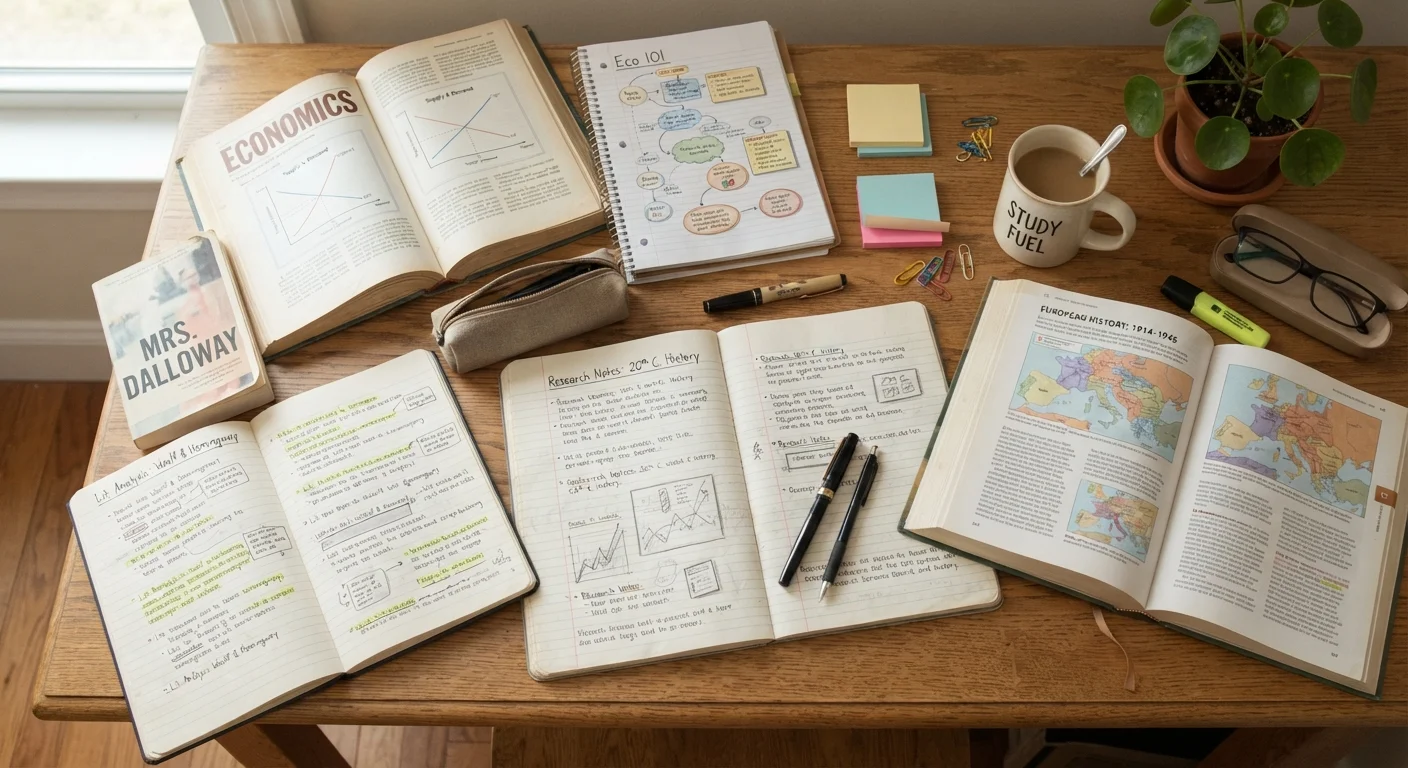
Photo credit: FaqsInsights.com | Stay Informed, Stay Ahead
In this article
Discover what interleaved practice means, why mixing subjects feels harder in the short term, and how it pays off during exams.
Key Takeaways
- Interleaving means mixing different topics or problem types within one study session rather than blocking them.
- The strategy feels harder in the moment, which is a feature, not a flaw - that difficulty drives deeper encoding.
- Research consistently shows interleaved practice leads to better test performance than blocked practice.
- Interleaving works best when learners have at least basic familiarity with each topic being mixed.
- Combining interleaving with spaced repetition can further amplify long-term retention.
The Problem with Studying One Thing at a Time
Most learners instinctively study in blocks: finish chapter three before opening chapter four, master multiplication before touching division, complete one subject before picking up another. This feels logical and organized, and in the short term it produces a satisfying sense of progress. The problem is that this feeling can be misleading.
Blocked practice - the technical term for studying one topic exhaustively before moving on - tends to inflate confidence. When you solve ten algebra problems in a row, you're essentially re-using the same cognitive routine repeatedly. The brain isn't working hard to identify which approach to use; it already knows. That ease doesn't reflect real mastery - it reflects recency.
Decades of cognitive research suggest that what feels easier to study is often weaker for long-term retention. Passive study habits like highlighting share the same flaw: they create a sensation of learning without generating the deeper processing that actually sticks.
~25%
Average test score improvement with interleaving
Multiple studies in mathematics education have found that students who practiced with interleaved problem sets scored roughly 25% higher on delayed tests than those who used blocked practice.
2x
Retention advantage over blocked practice
Research published in cognitive psychology journals has found interleaved learners recall material approximately twice as accurately when tested one week after study sessions.
How Interleaving Changes the Brain's Work
When you interleave - rotating between algebra, geometry, and statistics in the same session - something different happens cognitively. Before solving each problem, your brain must first answer a hidden question: What kind of problem is this, and what strategy does it require? That identification step, forced repeatedly, is what makes interleaving powerful.
Researchers refer to this as discriminative contrast. By placing different problem types side by side, learners strengthen their ability to distinguish between concepts, not just execute them in isolation. This is precisely the skill demanded in real exams and real-world application, where problems don't arrive pre-labeled by category.
“The students who interleaved their practice didn't feel like they were learning as much during the session - but when we tested them a week later, the difference was striking.”
— Robert Bjork, Distinguished Professor of Psychology, UCLA, and researcher in human learning and memory
Interleaving also intersects with the well-documented benefits of retrieval practice. Each time you switch topics and return to one you set aside, you're engaging in a low-stakes form of recall - the kind shown to consolidate memory far more effectively than re-reading. This is why interleaving pairs so naturally with spaced repetition; see the science behind spaced repetition for how both strategies tackle forgetting from different angles.
Who Benefits, and When to Apply It
Interleaving isn't a universal starting point. Learners who have zero exposure to a topic will find it frustrating rather than productive - there's nothing to interleave if no foundational knowledge exists. A reasonable approach is to use blocked practice as a brief introduction to new material, then shift to interleaving once each concept is at least partially understood.
The strategy is particularly well-supported in:
- Mathematics and quantitative subjects, where problem types can be shuffled within practice sets
- Science courses that involve applying distinct formulas or analytical frameworks
- Language learning, where vocabulary, grammar, and listening can be rotated
- Motor skills such as music or sports technique, where varying drills improves adaptability
For learners pursuing self-directed education, interleaving is especially relevant. Online learning platforms often allow learners to customize their study sequences - a significant structural advantage for those who want to implement research-backed methods deliberately.
Start with a Brief Blocked Introduction
If a concept is completely new, spend 10-15 minutes studying it in isolation before mixing it into an interleaved session. This gives your brain enough of a foothold to make the switching productive rather than chaotic. Think of initial blocked study as building the scaffold, and interleaving as the construction work that follows.
Interleaving also complements skill-building strategies that emphasize deliberate variation. The same logic behind why deliberate practice outperforms repetition applies here: challenge, not comfort, drives genuine competence.
Putting Interleaving Into Practice
Implementing interleaving doesn't require a complete overhaul of how you study. A few targeted adjustments can make a meaningful difference:
- Shuffle your problem sets. Instead of completing all problems of one type, manually mix problems from two or three topics into a single practice session.
- Rotate subjects, not chapters. When covering multiple subjects in one sitting, switch topics every 15-25 minutes rather than finishing one entirely.
- Resist the urge to re-block. When interleaving feels difficult or slow - and it will - treat that friction as confirmation the strategy is working, not a sign something is wrong.
- Review without re-reading. After rotating away from a topic, test yourself briefly when you return to it rather than re-reading notes. This compounds the retrieval benefit.
Interleaving sits alongside other evidence-based methods covered in retention techniques worth knowing. Understanding how these methods complement each other is part of building a genuinely effective learning system - one grounded in how memory actually works, not how studying feels in the moment.
Frequently Asked Questions

Author
Learning & Education Editorial Team
Learning & Education Editorial Team is the collective byline for our editorial team and contributor network. Articles published under this byline or an editorial pen name are researched, written, and reviewed according to our editorial standards for clarity, consistency, and independence before publication.
View all articles →