
Credit and Debt: A Complete Guide from Basics to Long-Term Management
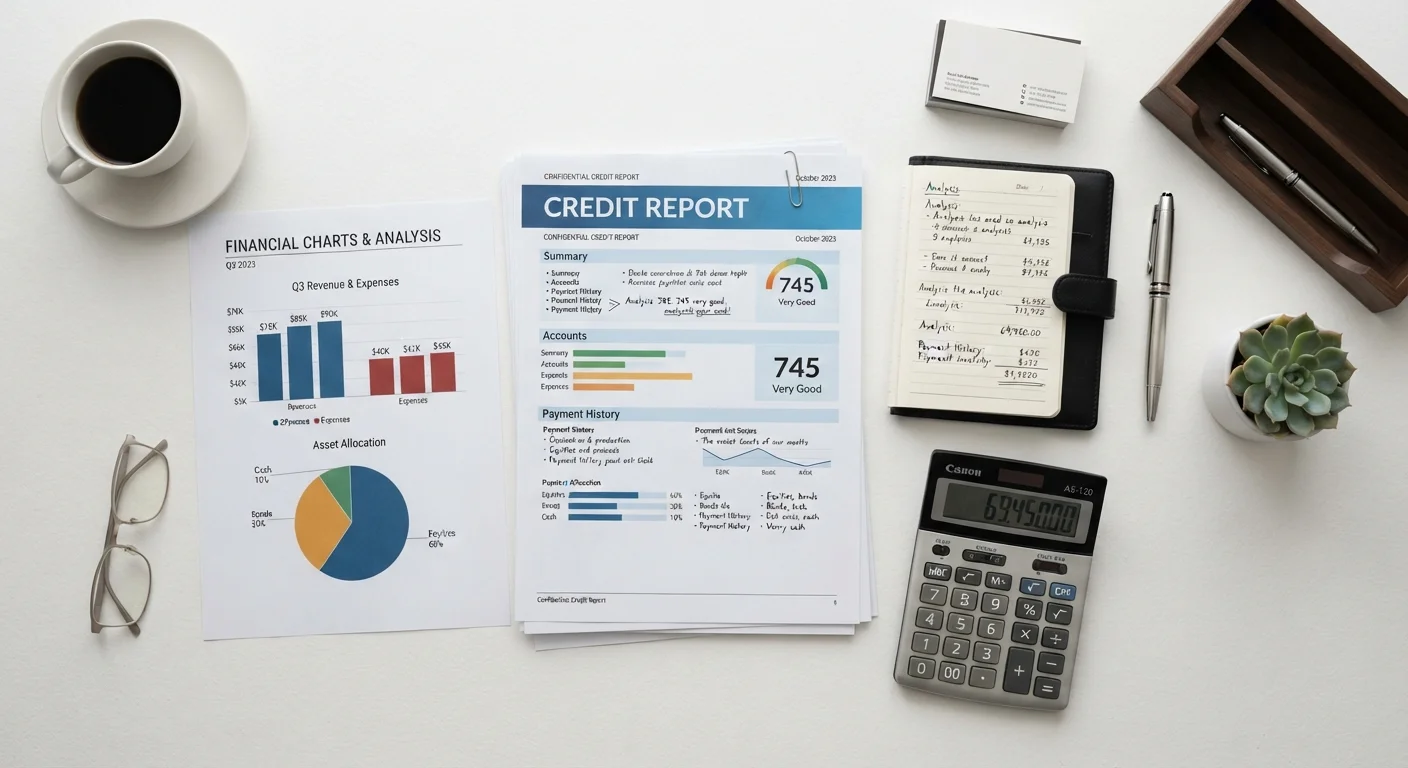
Photo credit: FaqsInsights.com | Stay Informed, Stay Ahead
In this article
From how credit scores work to strategies for paying down debt, this end-to-end guide covers everything you need to navigate the credit system.
Key Takeaways
- Your credit score is calculated from five weighted factors, with payment history carrying the most weight.
- Not all debt is equally costly - interest rates and terms vary significantly across debt types.
- Two structured repayment methods - avalanche and snowball - suit different psychological and financial profiles.
- Regularly reviewing your credit report allows you to catch errors that may be dragging your score down.
- If debt feels unmanageable, nonprofit credit counseling is a legitimate, low-cost resource available to US consumers.
How the Credit System Works
Credit is, at its core, a system of trust: a lender provides money today based on a borrower's promise to repay it later, typically with interest. The infrastructure underpinning this system in the United States involves three major credit bureaus - Equifax, Experian, and TransUnion - which collect financial data reported by lenders, landlords, and other creditors. That data is compiled into a credit report, a detailed record of your borrowing history.
Lenders use this report, along with a calculated credit score, to evaluate how likely you are to repay a new debt. Understanding this process puts you in a far better position to use credit strategically rather than reactively. Before diving deeper, it helps to familiarize yourself with the vocabulary lenders use - our glossary of essential credit and debt terms is a useful starting point.
Credit Reports vs. Credit Scores
Your credit report and your credit score are related but distinct. The report is a detailed record of your credit history; the score is a numerical summary calculated from that data. Checking your own report does not affect your score - this is called a 'soft inquiry.' Only applications for new credit generate 'hard inquiries,' which can have a small, temporary negative effect.
Understanding Your Credit Score
Credit scores in the US most commonly follow the FICO scoring model, which ranges from 300 to 850. A higher score indicates lower perceived risk to a lender. The score is calculated from five factors:
- Payment history (35%): Whether you pay bills on time. A single late payment can have a measurable negative effect.
- Amounts owed (30%): Your credit utilization ratio - the percentage of available revolving credit you're using. Keeping this below 30% is a widely cited guideline.
- Length of credit history (15%): How long your accounts have been open. Older accounts generally help your score.
- Credit mix (10%): The variety of credit types you carry - credit cards, installment loans, mortgages, etc.
- New credit (10%): Recent applications for credit, which generate hard inquiries and can temporarily lower your score.
Request your reports from all three bureaus separately and compare them side by side - creditors don't always report to all three, and errors are bureau-specific.
Because each bureau operates independently, an error at one will not automatically be corrected at the others. Disputing inaccuracies directly with the reporting bureau is required by the Fair Credit Reporting Act.
If you're carrying a high credit card balance, ask your issuer about a credit limit increase before you've paid it down - a higher limit lowers your utilization ratio even if your balance stays the same.
Credit utilization is calculated as balance divided by limit, so increasing the denominator improves the ratio. However, the request may involve a hard inquiry, so weigh the short-term score dip against the utilization benefit.
You are entitled to a free credit report from each bureau once every 12 months through AnnualCreditReport.com, the only federally mandated free source. Reviewing all three reports annually is a sound practice, since errors on one bureau's report may not appear on another's.
35%
Weight of payment history in FICO score
According to FICO's published scoring methodology, payment history is the single largest factor in your credit score calculation.
~1 in 5
Consumers with a credit report error
A Federal Trade Commission study found that approximately one in five consumers had an error on at least one of their three credit reports.
30%
Recommended credit utilization ceiling
Consumer finance guidance widely recommends keeping revolving credit utilization below 30% to avoid negative scoring impacts.
Types of Debt and How They Differ
Not all debt is created equal. Broadly, consumer debt falls into two categories:
- Revolving debt
- Credit cards and lines of credit fall here. The balance fluctuates as you borrow and repay, and you can carry a balance from month to month - though interest accrues on what you don't pay off.
- Installment debt
- Mortgages, auto loans, student loans, and personal loans are installment debts. You borrow a fixed amount and repay it in regular, scheduled payments over a set term.
The key variable that distinguishes one debt from another is the Annual Percentage Rate (APR) - the true yearly cost of borrowing, including fees. Credit cards typically carry significantly higher APRs than secured loans like mortgages. Understanding your APR on every debt you hold is essential before deciding how aggressively to pay each one down. Pair your credit management efforts with a solid spending plan - our personal budgeting guide walks through the fundamentals.
Debt Repayment Strategies
Two structured frameworks dominate personal finance guidance on debt repayment:
The Avalanche Method
You direct extra payments toward the debt with the highest interest rate first, while paying minimums on all others. Once that debt is eliminated, you roll its payment to the next-highest-rate debt. Mathematically, this approach minimizes total interest paid over time.
The Snowball Method
You target the smallest balance first, regardless of interest rate. Paying off a debt entirely generates a psychological win that can sustain momentum, which research in behavioral economics suggests is meaningful for some people.
Neither method is universally superior - the right approach depends on your financial situation and what keeps you motivated. What matters most is choosing a method and following it consistently. A structured budget is what makes either strategy executable in practice; explore budgeting basics to build the financial foundation that supports repayment.
Automate Minimum Payments First
Before applying any extra payments to a target debt, set up automatic minimum payments on every account. This protects your payment history - the most heavily weighted scoring factor - while you execute your chosen repayment strategy. Missing a payment because you were focused on paying down one card early can cost you more in score damage than you gain.
This article is for general informational and educational purposes only and does not constitute personalized financial, tax, or legal advice. Consult a qualified financial professional for guidance specific to your situation.
Protecting and Building Your Credit Over Time
Once you understand the mechanics of credit scoring, the path to a healthier score becomes clearer. The highest-impact habits are straightforward: pay every bill on time, keep revolving balances low relative to your limits, and avoid opening multiple new accounts in a short window. These are durably effective regardless of where your score currently stands.
If you have little or no credit history, the path forward is still accessible. Building credit from scratch typically involves tools like secured credit cards or credit-builder loans - products designed specifically for thin-file borrowers. Once you've established a foundation, maintaining it is an ongoing practice. Our companion piece on habits that sustain a healthy credit score covers the long-game behaviors in detail.
“The best time to build your credit is before you need it. By the time you're applying for a mortgage or a car loan, the habits you've built - or neglected - over years are already baked into your score.”
— Consumer Financial Protection Bureau, US federal agency responsible for consumer financial protection and education
When Debt Becomes Unmanageable
If minimum payments are consuming a large share of your income or you're unable to meet them at all, it's important to act rather than avoid. Options exist on a spectrum of severity:
- Nonprofit credit counseling: Agencies accredited by the National Foundation for Credit Counseling (NFCC) offer free or low-cost budgeting assistance and can negotiate with creditors on your behalf through a Debt Management Plan (DMP).
- Debt negotiation: In some cases, creditors will settle a debt for less than the full balance, though this typically has significant credit score implications and may result in taxable income on the forgiven amount.
- Bankruptcy: A legal process - Chapter 7 or Chapter 13 for individuals - that can discharge or restructure debts. It has serious long-term credit consequences and involves court proceedings. Anyone considering bankruptcy should consult a licensed bankruptcy attorney.
Falling behind on debt does not mean you are out of options. Seeking help early - before accounts go to collections - preserves more choices. Building savings alongside debt repayment, even modestly, also creates a buffer that reduces future reliance on credit. The saving and investing hub provides foundational guidance on growing financial resilience over time.
Act Before Accounts Enter Collections
A debt sent to a collection agency is a significant negative mark on your credit report and can remain there for up to seven years. If you're struggling to make payments, contact your creditor directly before missing one - many have hardship programs that aren't widely advertised. Early outreach almost always preserves more options than waiting until an account is delinquent.

Author
Money & Finance Editorial Team
Money & Finance Editorial Team is the collective byline for our editorial team and contributor network. Articles published under this byline or an editorial pen name are researched, written, and reviewed according to our editorial standards for clarity, consistency, and independence before publication.
View all articles →