
Debt Avalanche vs. Debt Snowball: Which Payoff Strategy Fits Your Situation
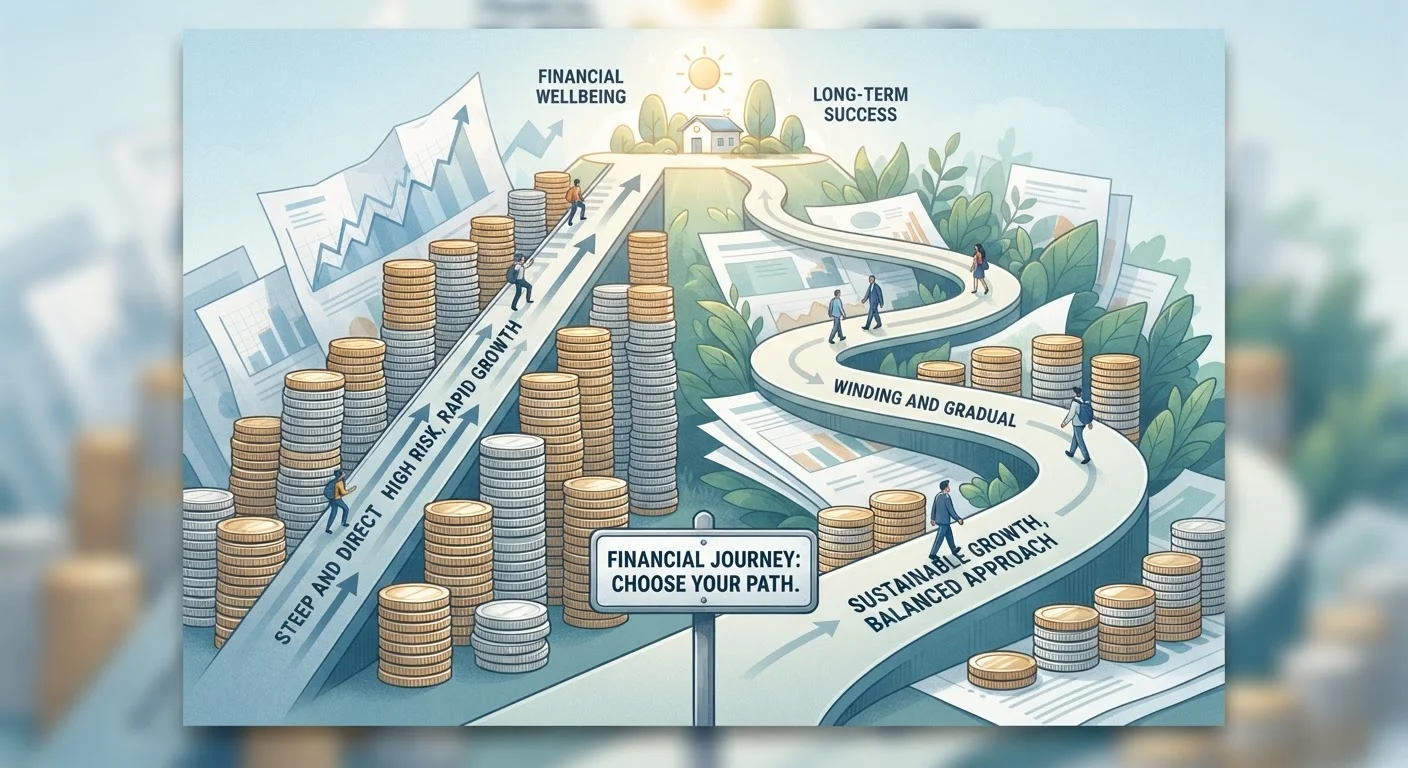
Photo credit: FaqsInsights.com | Stay Informed, Stay Ahead
In this article
Two proven debt payoff methods compared side by side — how each works, the math behind them, and which suits different financial situations.
Key Takeaways
- The debt avalanche targets the highest-interest debt first, reducing the total interest you pay.
- The debt snowball targets the smallest balance first, providing quick psychological wins.
- Both methods require a consistent extra payment beyond the minimum each month.
- Your personality and financial discipline level matter as much as the math.
- Neither method is universally superior - the best strategy is the one you stick with.
How Each Method Works
Both the debt avalanche and debt snowball are structured repayment strategies built on the same core mechanic: you continue paying the minimum on every debt, then direct any extra money toward one specific account at a time. The difference lies entirely in which account you target first.
Debt Avalanche: List all your debts by annual percentage rate (APR - the yearly cost of borrowing, including interest). Direct extra payments to the account with the highest APR. Once that balance reaches zero, roll its full payment amount onto the next-highest-rate debt, and so on. If you're unfamiliar with terms like APR or principal, the key debt vocabulary guide covers them in plain language.
Debt Snowball: List debts by outstanding balance, smallest to largest, regardless of their interest rates. Throw extra payments at the smallest balance until it's gone, then redirect that payment to the next-smallest account. Each eliminated debt frees up more cash for the next one - the "snowball" effect.
| Criterion | Debt Avalanche | Debt Snowball |
|---|---|---|
| Repayment order | Highest APR first | Smallest balance first |
| Total interest paid | Lower (typically) | Higher (typically) |
| Time to first payoff | Potentially longer | Faster initial win |
| Psychological motivation | Driven by data and savings | Driven by visible progress |
| Best rate environment | Wide spread between rates | Similar rates across debts |
| Complexity | Slightly more tracking needed | Simple, intuitive ordering |
Both strategies benefit from a solid monthly budget. The Budgeting Basics hub offers practical frameworks for identifying how much extra you can realistically put toward debt each month.
The Math: Does the Difference in Interest Actually Matter?
In most scenarios, the avalanche method costs less money in total interest paid. The gap can be modest or substantial depending on two factors: how different the interest rates are across your accounts, and how long repayment takes.
~$1,000+
Potential interest savings with avalanche vs. snowball
The exact amount varies by debt balances, rates, and repayment timeline, but higher-rate debts left unprioritized can compound significantly over months or years.
20-29%
Typical APR range on credit card debt in the US
According to Federal Reserve data, average credit card interest rates have risen notably in recent years, making high-rate prioritization increasingly consequential.
~$6,500
Average credit card balance per US cardholder
Industry research tracking US consumer credit patterns consistently shows the average cardholder carrying several thousand dollars in revolving credit card debt.
Consider a simplified example: you have three debts - a $5,000 balance at 22% APR, a $3,000 balance at 12% APR, and a $1,500 balance at 6% APR - and you can apply $300 extra per month. The avalanche method would prioritize the 22% card first, reducing compounding on the costliest debt immediately. The snowball would clear the $1,500 account first, which feels satisfying but leaves the 22% debt accruing interest longer.
The longer your repayment timeline and the wider the spread between your highest and lowest rates, the more financially meaningful the avalanche advantage becomes. For people with relatively uniform interest rates, the mathematical difference shrinks considerably.
It's also worth comparing these strategies against alternatives like consolidation. Debt consolidation can sometimes lower your effective rate across all balances at once - a different approach worth understanding before committing to either method.
Psychology and Consistency: Why Behavior Often Beats Arithmetic
Financial research consistently shows that the "best" debt strategy is the one a person actually follows through to completion. A mathematically superior plan abandoned halfway through leaves you worse off than a slightly less optimal plan executed faithfully.
The snowball's core insight is behavioral: eliminating a debt entirely - even a small one - delivers a concrete sense of accomplishment. That feedback loop can reinforce the habit of making extra payments month after month. For individuals who have previously started repayment plans only to lose momentum, this psychological architecture genuinely matters.
The avalanche demands more patience. Early months may show little visible progress on any individual balance, which can feel discouraging. People who thrive with the avalanche tend to be motivated by data - watching total interest obligations decline on paper is reward enough.
Neither Method Requires a Large Extra Payment
Even an additional $25-$50 per month applied consistently to a target debt accelerates payoff meaningfully. The key is consistency, not the size of the extra payment. If your budget is tight, start small and increase contributions as your income or expenses allow. Avoid skipping months - continuity is more valuable than occasional large lump sums.
This same tension between financial logic and human behavior appears in broader money decisions, such as the trade-offs of paying off debt before investing. Understanding your own tendencies is a legitimate input into financial strategy.
Choosing the Right Strategy for Your Situation
Rather than defaulting to one method universally, consider a few practical questions:
- How different are your interest rates? Large gaps favor the avalanche; similar rates make it nearly irrelevant.
- Do you have one very small balance? Some financial educators suggest a hybrid approach - clear the smallest debt first for a quick win, then switch to avalanche ordering for the remainder.
- What is your track record with sustained financial commitments? Honest self-assessment here is more useful than picking the method that sounds smarter.
- How stable is your income? If extra payment amounts fluctuate, the snowball's quicker account closures can reduce the number of minimum payments you're juggling during lean months.
For a broader grounding in how debt works within personal finance, the complete credit and debt guide covers everything from credit scores to long-term debt management strategies.
This article is for general informational and educational purposes only and does not constitute personalized financial, legal, or tax advice. Readers should consult a qualified financial professional regarding their specific circumstances.

Author
Money & Finance Editorial Team
Money & Finance Editorial Team is the collective byline for our editorial team and contributor network. Articles published under this byline or an editorial pen name are researched, written, and reviewed according to our editorial standards for clarity, consistency, and independence before publication.
View all articles →