
Things People Get Wrong About Closing Old Credit Accounts
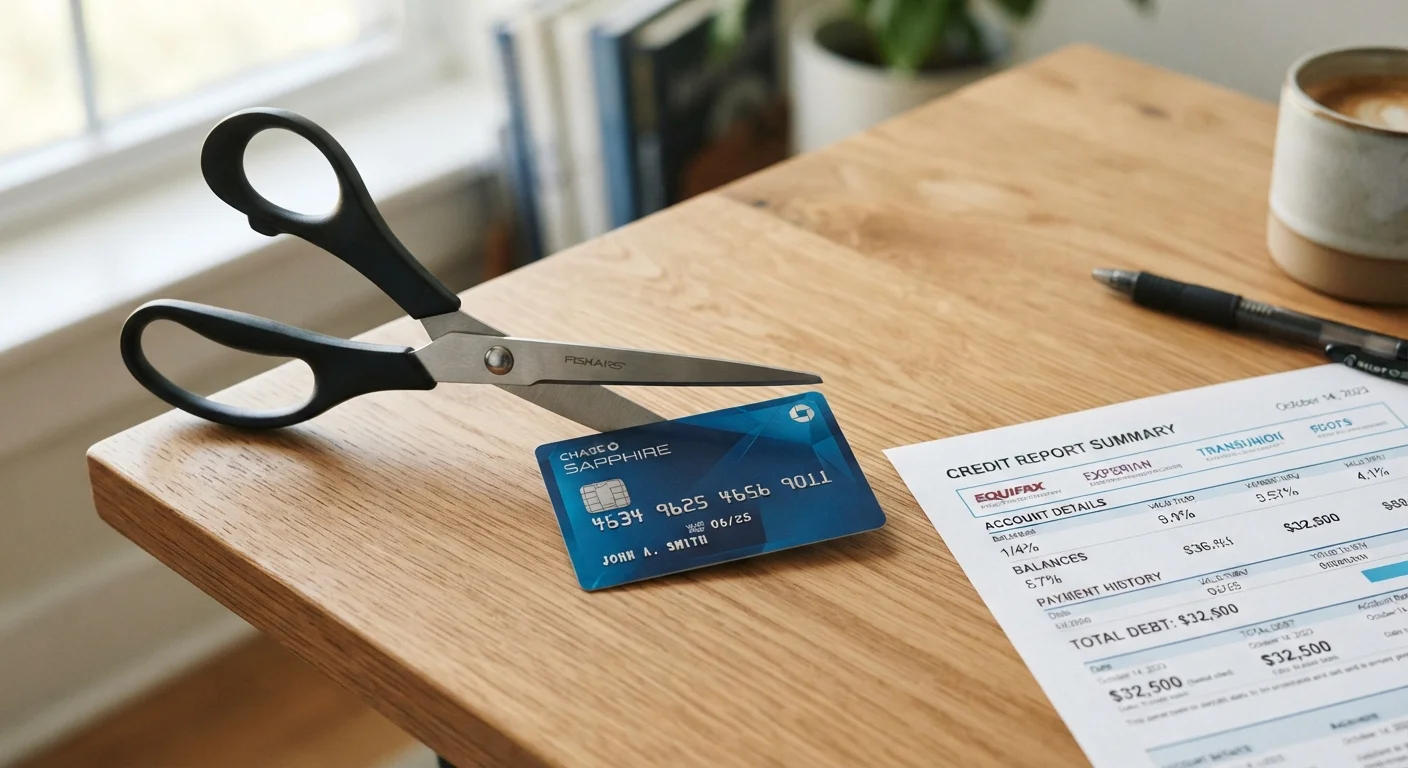
Photo credit: FaqsInsights.com | Stay Informed, Stay Ahead
In this article
Closing a card feels responsible — but it can sometimes backfire. Separate the myths from the facts around shutting down old accounts.
Key Takeaways
- Closing an old credit card can raise your credit utilization ratio and lower your score.
- Paid-off accounts in good standing typically remain on your credit report for up to 10 years.
- Your credit history length is averaged across all accounts, so older cards carry extra weight.
- Closing a card does not erase its payment history - positive records persist for years.
- Annual fees and fraud risk are legitimate reasons to close an account, but the timing matters.
Why Closing Old Accounts Is More Complicated Than It Looks
Closing a credit card you no longer use feels like a tidy financial decision. One less account to track, one less temptation to overspend. But what feels responsible on the surface can quietly undermine the credit score you've worked to build - and the mechanics behind that are widely misunderstood.
The decisions that most affect your credit aren't always the obvious ones. Understanding how account closures interact with credit utilization, history length, and score calculations can help you make choices that align with your actual financial goals rather than assumptions. For a broader framework, our complete guide to credit and debt covers how these factors fit together.
Myth
Closing an old credit card will immediately remove it from my credit report.
Fact
Closed accounts in good standing typically stay on your credit report for up to 10 years.
Many people assume that once they close a card, it vanishes from their credit file. In reality, the three major credit bureaus - Equifax, Experian, and TransUnion - generally keep positive closed accounts on record for about 10 years. This means the on-time payment history you built on that card continues to support your score long after you close it. The account only disappears from your report after that window expires.
Myth
Closing an old account doesn't affect your credit utilization.
Fact
Closing a card reduces your total available credit, which can push your utilization ratio higher.
Credit utilization - the percentage of your available revolving credit that you're using - is one of the most influential factors in your credit score. If you carry a $1,000 balance across cards with a combined $5,000 limit, your utilization is 20%. Close a card with a $2,000 limit and that same $1,000 balance now represents 33% utilization. That jump can meaningfully lower your score, even if your spending habits haven't changed at all.
Myth
Once a card is closed, any negative history on it disappears too.
Fact
Negative information such as late payments typically stays on your report for seven years regardless of account status.
Closing an account does not wipe its history clean. If you had late payments or other derogatory marks on that card, those records follow standard reporting timelines - generally seven years from the date of the original delinquency. Closing the account won't accelerate their removal. Conversely, if the account history is positive, closing it won't strip that away prematurely either.
Myth
Keeping a zero-balance card open is pointless and slightly risky.
Fact
An open, zero-balance card actively helps your utilization ratio and preserves your credit history length.
A dormant card with no balance is quietly working in your favor. It contributes available credit that keeps your utilization low and maintains the age of that account in your credit profile. The fraud risk concern is real but manageable - most issuers offer transaction alerts and robust zero-liability protections. Simply monitoring the account periodically and making an occasional small purchase is usually enough to keep it active and beneficial.
Myth
Closing old accounts won't shorten your credit history.
Fact
Removing older accounts eventually reduces the average age of your credit, which can hurt your score.
Credit scoring models factor in the average age of all your open accounts. While a closed account in good standing remains on your report for years, once it falls off, it no longer contributes to that average. If your oldest card was one you closed a decade ago, when it finally leaves your report your average account age drops - sometimes significantly. This is particularly relevant for people who are newer to credit. For more on building a strong foundation, see building credit from scratch.
Myth
You should always close a card before applying for a major loan.
Fact
Closing accounts just before a loan application can lower your score at exactly the wrong moment.
The logic seems sound - fewer open accounts looks tidier to a lender. But lenders and scoring models don't see it that way. Closing a card right before applying for a mortgage or auto loan can reduce available credit, raise utilization, and temporarily dip your score. If you're planning a major borrowing event, it's generally advisable to make any account changes well in advance or hold off entirely until after approval.
When Closing an Account Actually Makes Sense
None of this means you should never close a credit card. There are legitimate scenarios where closing an account is the right move - but they're more specific than most people assume.
Timing a Closure Around a Loan Application
Closing an account in the weeks or months before applying for a mortgage, auto loan, or other major credit product can reduce your available credit and raise your utilization ratio at a critical moment. Lenders typically pull your credit score during underwriting, so a preventable dip could affect your rate or approval. If you're planning a major borrowing event, consider deferring any account closures until after the loan closes.
High annual fees on cards you rarely use are a reasonable justification, especially if the card's benefits no longer offset the cost. Joint accounts following a separation, or cards tied to financial patterns you're deliberately breaking, may also warrant closure. The key is timing and context: closing one card from a portfolio of several will have a smaller impact than closing your only card or your oldest one.
If you're unsure how a closure might affect your profile, checking your credit report first can help you estimate the impact. Maintaining consistent, long-term habits - like paying on time and keeping utilization low - matters far more than any single account decision. See habits that keep your credit score healthy for a practical breakdown.
30%
Weight of credit utilization in FICO score
According to FICO, amounts owed - which includes utilization - accounts for roughly 30% of a standard FICO credit score calculation.
15%
Weight of credit history length in FICO score
FICO attributes approximately 15% of a score to the length of credit history, making older accounts a meaningful asset worth preserving.
This article is for general informational purposes only and does not constitute personalized financial or credit advice. Consult a qualified financial professional before making decisions based on your individual circumstances.

Author
Money & Finance Editorial Team
Money & Finance Editorial Team is the collective byline for our editorial team and contributor network. Articles published under this byline or an editorial pen name are researched, written, and reviewed according to our editorial standards for clarity, consistency, and independence before publication.
View all articles →