
Raw Diets vs. Commercially Prepared Pet Food: What the Evidence Actually Shows
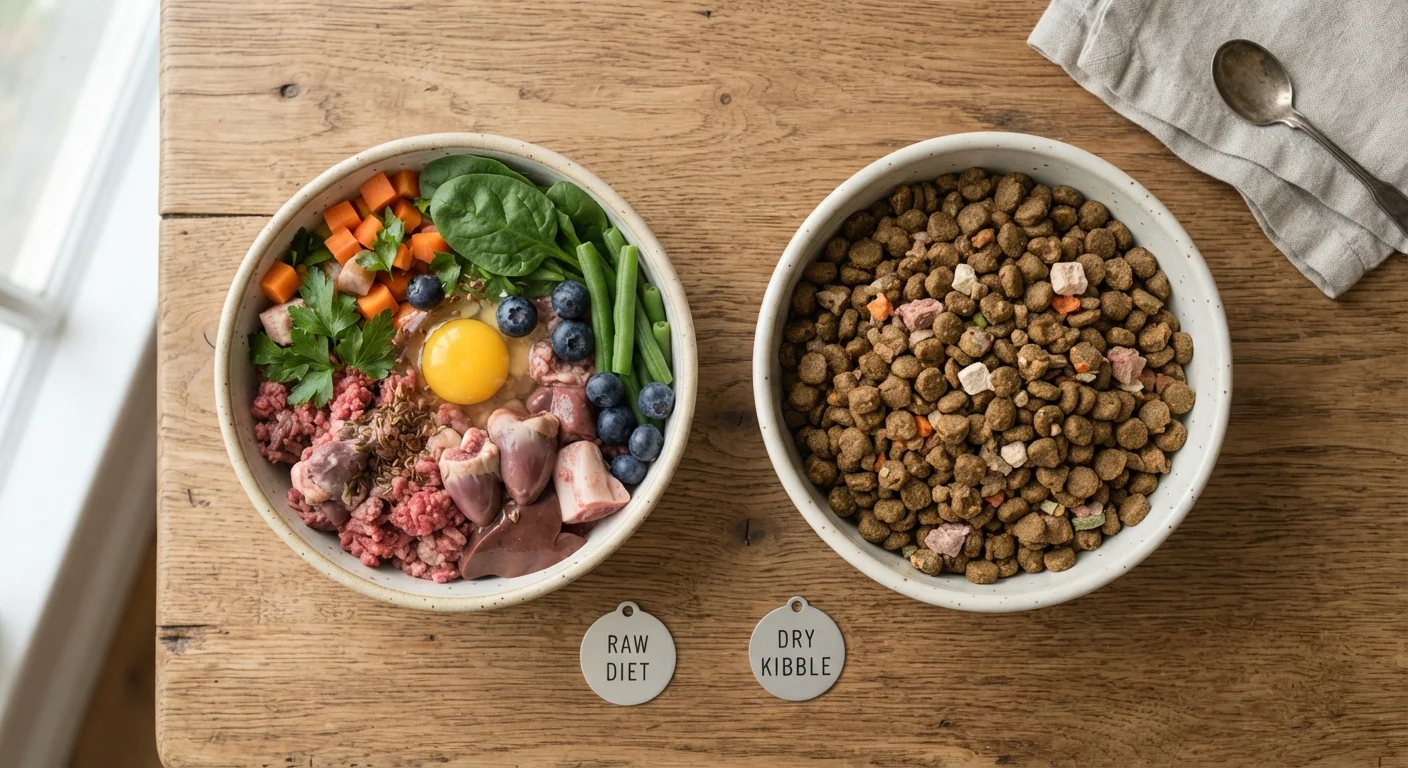
Photo credit: FaqsInsights.com | Stay Informed, Stay Ahead
In this article
The raw feeding debate is loud and often emotional. A look at what veterinary and food-safety research currently says about both approaches.
Key Takeaways
- Raw diets carry documented bacterial contamination risks that can affect both pets and their human households.
- Commercially prepared pet foods must meet AAFCO nutritional standards in the US, providing a regulated baseline of completeness.
- Neither approach is universally superior - individual pet health, owner capacity, and veterinary input all matter.
- Homemade raw diets frequently show nutritional imbalances unless professionally formulated.
- Consult a veterinary nutritionist before switching a pet to any raw or significantly different diet.
Where the Debate Comes From
Raw pet feeding - typically called BARF (Biologically Appropriate Raw Food) or prey-model feeding - operates on the premise that dogs and cats evolved eating uncooked meat, bones, and organs, and that modern processing strips away nutritional value. Commercially prepared diets, by contrast, are formulated to meet nutritional profiles established by the Association of American Feed Control Officials (AAFCO), processed to eliminate pathogens, and shelf-stable for practicality.
The debate between these two camps is genuinely complicated by the fact that long-term, large-scale clinical trials directly comparing health outcomes in pets are limited. Most evidence comes from shorter observational studies, food-safety surveillance, nutrient-analysis audits, and case reports - all of which are useful but incomplete. Understanding what the evidence actually measures helps owners make informed decisions rather than being swayed by anecdote alone.
For a parallel look at how research is applied - and misapplied - to human dietary claims, see our breakdown of common nutrition myths.
Food Safety: The Clearest Difference
Food safety is the area where research most consistently distinguishes the two approaches. Multiple studies, including surveillance work by the FDA and peer-reviewed analyses, have found that raw pet food products show higher rates of contamination with pathogens such as Salmonella, Listeria monocytogenes, and Campylobacter compared with commercially processed alternatives.
Critically, these risks extend beyond the pet. Contaminated raw food can shed bacteria into the home environment through food bowls, preparation surfaces, and the pet's own stool - creating exposure risks for human household members, particularly children under five, elderly adults, and people with compromised immune systems. The CDC and several veterinary organizations have issued guidance on these household transmission risks.
Commercial pet foods are subject to processing steps - cooking, extrusion, or retort sterilization - that substantially reduce pathogen loads. They are also subject to recall systems and regulatory oversight that, while imperfect, provide a safety net absent in home raw preparation.
| Criterion | Raw Pet Diets | Commercially Prepared Pet Food |
|---|---|---|
| Pathogen risk | Higher - Salmonella, Listeria documented | Lower - processing reduces contamination |
| Nutritional completeness | Variable; often incomplete without expert formulation | Regulated baseline via AAFCO standards |
| Preparation time | High - thawing, handling, sourcing required | Low - ready to serve from packaging |
| Household safety | Greater risk to immunocompromised household members | Minimal cross-contamination risk |
| Ingredient transparency | High visibility of whole ingredients | Regulated labeling; quality varies by tier |
| Regulatory oversight | Limited for home-prepared diets | FDA and AAFCO framework applies |
| Cost | Often higher, especially for quality sourcing | Wide range across product categories |
Nutritional Completeness: A More Nuanced Picture
Proponents of raw feeding often cite concerns about the quality of ingredients in processed pet food, and there are legitimate questions worth discussing. However, nutritional audits of homemade raw diets have repeatedly found significant gaps. A frequently cited analysis published in the Journal of Nutritional Science found that the majority of raw recipes reviewed - including those from popular books and websites - did not meet AAFCO minimum requirements for key nutrients such as calcium, zinc, and certain vitamins.
This does not mean raw diets are inherently inadequate, but it does mean that achieving nutritional completeness requires professional formulation - ideally by a board-certified veterinary nutritionist. A diet that looks wholesome based on ingredients alone can still miss critical micronutrients that only become apparent over months or years.
~60%
Raw recipes failing AAFCO minimums
Multiple published nutritional audits have found that roughly 60% or more of homemade raw pet diet recipes do not meet AAFCO minimum nutrient requirements without supplementation.
~7x
Higher Salmonella detection in raw vs. dry food
FDA sampling data has consistently found Salmonella detected at substantially higher rates in raw pet food compared with conventional dry kibble products.
Commercially prepared foods, when labeled "complete and balanced" under AAFCO guidelines, have been formulated and tested to meet defined nutrient profiles. That label carries regulatory meaning in the US, though it does not guarantee ingredient quality or digestibility, which vary across product tiers. To understand what that labeling actually tells you, our guide on reading a pet food label walks through the key terms.
Practical Considerations for Pet Owners
Beyond safety and nutrition, the practicality gap between these approaches is significant. Raw feeding done responsibly requires dedicated freezer space, rigorous thawing protocols, separate food-preparation surfaces, and careful sourcing - ideally from suppliers whose products are tested for pathogens. The time and financial investment is real.
Commercially prepared food, whether dry kibble or wet food, is designed for simplicity. Portion guidance, consistent formulation, and long shelf life reduce the daily decision load. How you structure meal timing around whichever food you choose is also worth considering - our article on feeding schedules for pets covers free-feeding versus portioned meals in detail.
High-Risk Households Need Extra Caution
Homes that include infants, elderly individuals, pregnant people, or anyone with a weakened immune system face heightened risk from raw pet food contamination. The American Veterinary Medical Association (AVMA) discourages the feeding of raw or undercooked animal-source proteins to pets in these settings. If any household member falls into a higher-risk category, discuss this directly with both your physician and your veterinarian before considering raw feeding.
No dietary choice operates in isolation. Dental health, weight management, and age-related needs all interact with what a pet eats. Before making a major dietary change, a conversation with your veterinarian - and ideally a veterinary nutritionist - is the most reliable first step.
This article is for general informational purposes only and does not constitute veterinary or medical advice. Always consult a qualified veterinarian before making significant changes to your pet's diet.

Author
Pets & Animals Editorial Team
Pets & Animals Editorial Team is the collective byline for our editorial team and contributor network. Articles published under this byline or an editorial pen name are researched, written, and reviewed according to our editorial standards for clarity, consistency, and independence before publication.
View all articles →