
Iceland in Summer vs. Iceland in Winter: What Changes and What Stays the Same
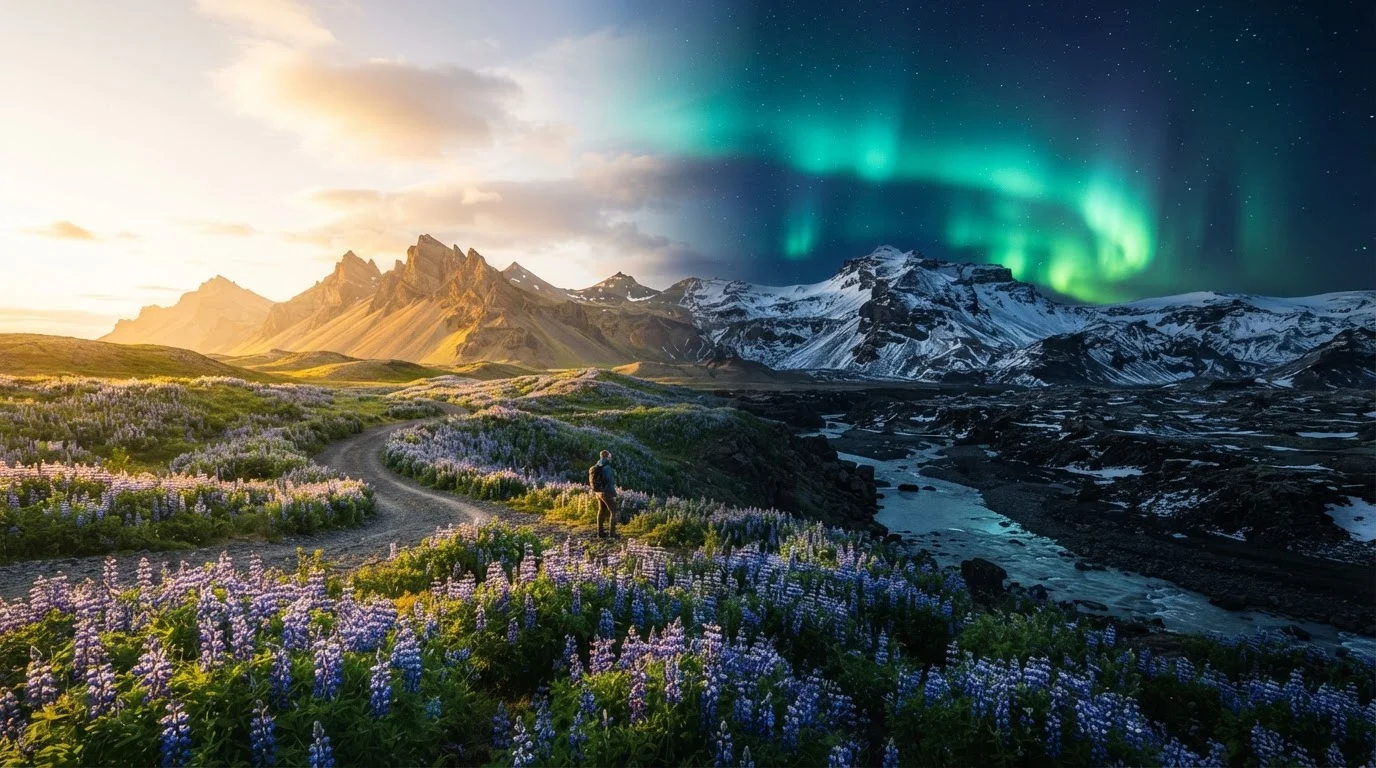
Photo credit: FaqsInsights.com | Stay Informed, Stay Ahead
In this article
Midnight sun or northern lights? Each season transforms Iceland's landscape and logistics. Here's an honest look at both experiences.
Key Takeaways
- Summer brings up to 24 hours of daylight; winter can deliver fewer than five hours of usable light per day.
- Northern lights are only visible in winter when skies are dark enough - typically October through March.
- Summer offers fuller road access, including the Highlands; many interior routes close entirely in winter.
- Prices and crowd levels tend to be higher in summer; winter travel can feel more off-the-beaten-path.
- Iceland's iconic waterfalls, geysers, and geothermal pools are accessible and spectacular in both seasons.
- Weather is unpredictable year-round - layering and flexibility matter regardless of when you visit.
Daylight: The Most Dramatic Difference
Nothing separates Iceland's seasons more starkly than light. Around the summer solstice in late June, the sun barely dips below the horizon - Reykjavik receives roughly 21-24 hours of daylight. For visitors, this means hiking at midnight, photographing waterfalls at 2 a.m., and genuinely losing track of time. It's exhilarating, but it also disrupts sleep if you're not prepared with blackout curtains or an eye mask.
Winter flips the script entirely. By December, Reykjavik sees only about four to five hours of true daylight. This compressed window demands a well-planned itinerary - you'll want to be at your outdoor locations during those precious bright hours. The upside? Those long dark nights are exactly what makes northern lights sightings possible. Iceland's position just south of the Arctic Circle puts it squarely in aurora territory from roughly October through March, provided skies are clear.
| Criterion | Summer (June-August) | Winter (November-March) |
|---|---|---|
| Daylight hours | Up to 24 hours | 4-5 hours at peak winter |
| Northern lights visibility | Not visible | Possible on clear nights |
| Highland F-roads | Open (June-September) | Closed |
| Glacier ice caves | Unsafe / unavailable | Accessible tours available |
| Puffin sightings | May-August | Not present |
| Crowd levels | Peak season, busiest | Quieter, fewer tourists |
| Driving conditions | Generally easier | Ice and snow; 4WD advised |
| Geothermal pools | Excellent year-round | Excellent year-round |
Access, Roads, and What You Can Actually Do
Iceland's road network changes with the seasons in ways that significantly affect trip planning. The famous Ring Road (Route 1) stays open year-round, though winter driving requires care, a suitable vehicle, and an awareness of road closures caused by storms. The interior Highlands - home to dramatic landscapes like Landmannalaugar and Þórsmörk - are a different story entirely. F-roads in the interior typically open between late May and early September, then close as snow and ice make them impassable. If the Highlands are on your list, summer is your only realistic window.
Winter compensates with its own exclusive experiences. Crystal ice cave tours inside Vatnajökull, Europe's largest glacier, run only when temperatures are cold enough to keep the ice stable - generally November through March. Snowmobile excursions, dog sledding in certain areas, and ski touring also open up. Meanwhile, Iceland's geothermal attractions - the Blue Lagoon, Mývatn Nature Baths, and countless hot springs - are genuinely magical in both seasons, though soaking in an outdoor pool while snow falls around you is a particular winter highlight.
~2.3M
Annual international visitors to Iceland
Iceland Tourism figures show the vast majority of international arrivals occur between May and September, reflecting strong summer demand.
4-5 hrs
Daylight hours in Reykjavik in December
At the winter solstice, Reykjavik experiences some of the shortest days of any European capital, making efficient itinerary planning essential.
~8,000 km²
Area of Vatnajökull glacier
Vatnajökull is the largest glacier in Europe by volume and hosts the ice caves that are exclusively accessible to visitors during winter months.
Wildlife, Crowds, and the Honest Trade-offs
Summer is prime time for wildlife enthusiasts. Puffins nest along Iceland's coastal cliffs from May through August, drawing birdwatchers from around the world. Whale watching tours operate throughout the year, but sightings of humpbacks and minkes are most reliable from April through October. The Westfjords and Snæfellsnes Peninsula feel truly alive with migratory birds and sea life during the warmer months.
On the crowd front, summer's appeal comes at a cost. Iceland's tourism has grown substantially over the past decade, and popular sites like Seljalandsfoss waterfall, Geysir, and the Diamond Beach can feel very busy from June through August. Winter visitors often find the same locations noticeably quieter - a meaningful difference at places where solitude is part of the appeal. Just as different Greek islands suit entirely different traveler personalities (see our breakdown of what sets each Greek island apart), Iceland itself wears two very different personalities depending on the season - and knowing which one fits your travel style is the most important planning decision you'll make.
Iceland's Weather Is Unpredictable in Any Season
The Icelandic saying 'If you don't like the weather, wait five minutes' reflects a genuine reality. Summer can bring cold rain and wind; winter can surprise with crisp, calm days. Regardless of when you visit, layered waterproof clothing and flexibility in your schedule are essential. Always check road conditions at road.is and weather forecasts from the Icelandic Meteorological Office before heading out, particularly for rural or coastal routes.

Author
Travel & Trips Editorial Team
Travel & Trips Editorial Team is the collective byline for our editorial team and contributor network. Articles published under this byline or an editorial pen name are researched, written, and reviewed according to our editorial standards for clarity, consistency, and independence before publication.
View all articles →