
The Greek Islands Are Not All the Same - A Practical Breakdown
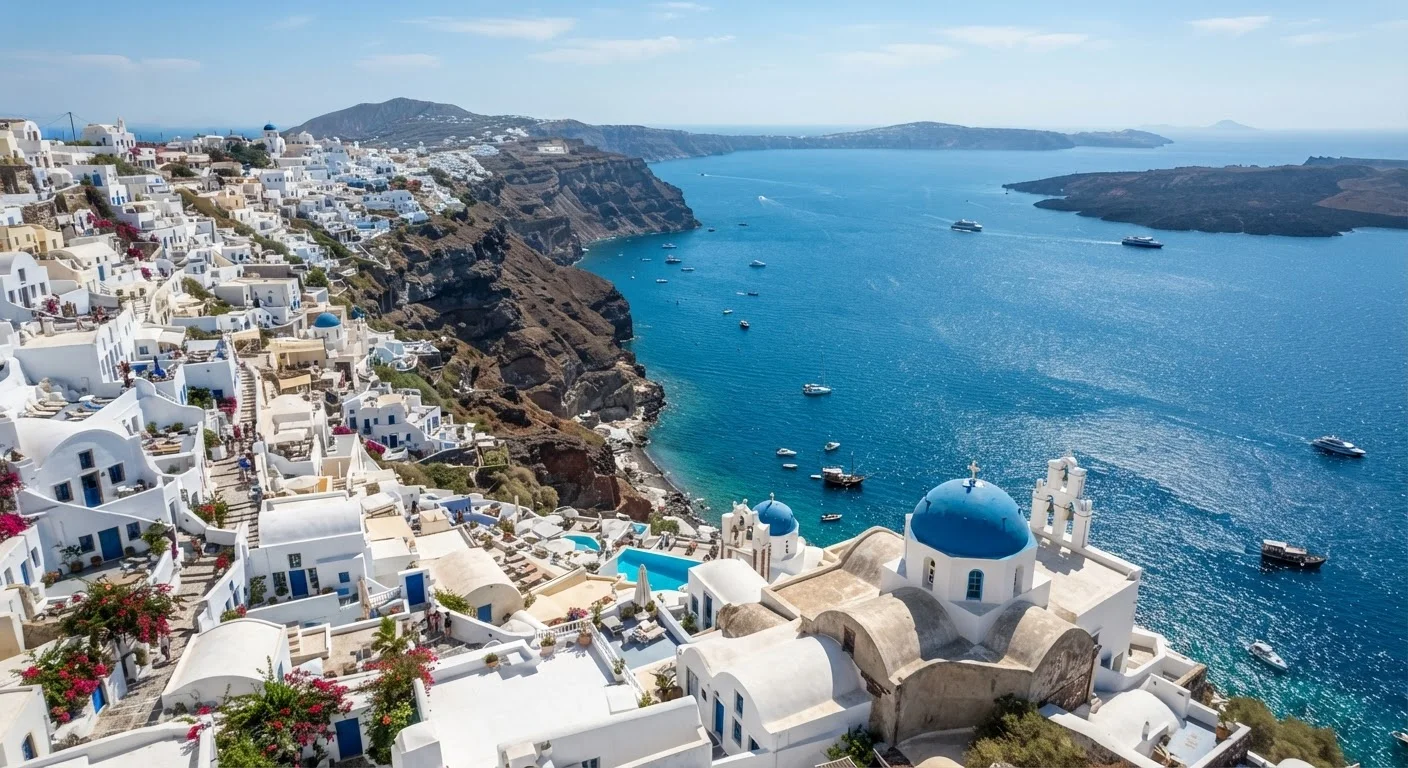
Photo credit: FaqsInsights.com | Stay Informed, Stay Ahead
In this article
Santorini, Crete, Rhodes, and Corfu each attract different travelers for different reasons. This guide clarifies what sets each island apart.
Key Takeaways
- Santorini suits couples and photographers drawn to dramatic caldera views and upscale dining.
- Crete is Greece's largest island and rewards travelers who want history, hiking, and beach variety.
- Rhodes blends medieval Old Town architecture with lively beach resort energy.
- Corfu offers lush greenery, Venetian charm, and a more laid-back pace than the Cyclades.
- Peak-season crowds and prices vary significantly between islands - timing matters.
- Island-hopping works well logistically but requires realistic planning around ferry schedules.
Why the Differences Actually Matter
Most people arrive in Greece with a single mental image: blue domes, white walls, turquoise water. That image is real - but it describes only a narrow slice of what the Greek Islands actually deliver. The archipelago spans over 200 inhabited islands across several distinct groups, and lumping them together leads to mismatched expectations.
Santorini and Crete attract vastly different travelers. Rhodes and Corfu feel like separate countries to anyone who's visited both. Getting this right before you book saves a lot of mid-trip disappointment. For a broader look at how destination choices shape your overall trip experience, see how distinct coastal destinations compare in our Yucatán guide - the framework applies here too.
| Santorini | Crete | Rhodes | Corfu | |
|---|---|---|---|---|
| Primary appeal | Caldera views, romance | History, variety, hiking | Medieval culture, nightlife | Venetian charm, greenery |
| Beach type | Volcanic black/red sand | White sand and varied coves | Sandy resort beaches | Pebble and sand mix |
| Best for | Couples, photographers | History buffs, active travelers | Culture seekers, party crowd | Families, slow travelers |
| Crowd intensity (peak season) | Very high | Moderate to high | High (north) | Moderate |
| Accessibility from Athens | Frequent flights/ferry | Frequent flights/long ferry | Frequent flights | Flight or mainland ferry |
| Shoulder season value | Strong in May/Sept | Strong in May/Oct | Good in June/Sept | Good in May/June |
Santorini: The View Island
Santorini is built on the rim of a submerged volcanic caldera, and that geological drama shapes everything about it. The iconic villages of Oia and Fira cascade down steep cliffs, offering sunset views that photographers have chased for decades. It's genuinely breathtaking - and genuinely crowded from June through September.
Expect polished restaurants, boutique hotels carved into cliff faces, and prices that reflect the island's global fame. Santorini rewards couples, honeymooners, and anyone prioritizing atmosphere and aesthetics over beach quality - the beaches here are volcanic black or red sand, which is striking but not the soft white variety found elsewhere.
Time Your Santorini Visit Carefully
Santorini's famous sunset at Oia draws enormous crowds in summer - arriving at the viewpoint an hour early is common advice, and it still may feel packed. Visiting in late May or early October typically offers the same views with noticeably fewer people and lower accommodation rates. Consider basing yourself in Fira or Imerovigli for more flexibility than Oia provides.
Crete: The Island That Has Everything
Greece's largest island is practically a country within a country. Crete has its own dialect, cuisine traditions, and cultural identity that pre-date classical Greece. The Palace of Knossos - the center of ancient Minoan civilization - sits just outside Heraklion and is one of the most significant archaeological sites in Europe.
Beyond history, Crete offers a striking range of landscapes: the Samaria Gorge is one of Europe's longest ravines, the beach at Elafonissi features pink-tinged sand, and the eastern region of Lasithi feels worlds away from the tourist centers in the north. Travelers who want depth over a single aesthetic will find Crete endlessly rewarding. A well-structured itinerary helps here - see what every good travel plan needs before you go.
Rhodes and Corfu: Two Very Different Personalities
Rhodes sits in the Dodecanese group near the Turkish coast. Its medieval Old Town - still surrounded by intact 14th-century walls built by the Knights of St. John - is a UNESCO World Heritage Site and genuinely one of the most impressive walled cities in the Mediterranean. The northern resort strip around Faliraki caters to a livelier, party-oriented crowd, giving Rhodes a split personality that suits travelers who want cultural depth by day and active nightlife by evening.
Corfu, in the Ionian Sea off Greece's northwest coast, feels markedly different. Seven centuries of Venetian rule left behind pastel-painted arcaded streets, a cuisine influenced by Italy, and a landscape unusually green for a Greek island. It's more relaxed than Santorini and more manageable in scale than Crete. Families and travelers seeking a slower pace tend to find Corfu fits them well.
Whichever island you choose, avoid the common planning trap of over-scheduling. Common trip planning myths - including the idea that more stops equal a richer trip - apply just as much to Greek island-hopping as anywhere else.
Practical Considerations Before You Book
Ferry connections between islands vary considerably. Santorini and Mykonos are well-served from Piraeus (Athens' main port), while reaching Corfu typically requires flying or taking a longer ferry from the mainland. Inter-island ferries between the Ionian and Aegean groups are not direct, so island-hopping across both clusters in a single trip adds significant logistics.
Peak season (July-August) brings heat, maximum crowds, and higher accommodation costs across all four islands - though Santorini and Mykonos feel this most acutely. May-June and September are generally considered shoulder season: weather remains reliably warm and sunny while crowds thin noticeably. Always verify current ferry schedules, entry requirements, and any relevant travel advisories through official sources before finalizing plans.
For travelers weighing a shorter trip against an extended stay, the real trade-offs between short and extended travel are worth reading before committing. And for ongoing smart travel tips, our Travel Tips hub has practical guidance for every stage of the journey.

Author
Travel & Trips Editorial Team
Travel & Trips Editorial Team is the collective byline for our editorial team and contributor network. Articles published under this byline or an editorial pen name are researched, written, and reviewed according to our editorial standards for clarity, consistency, and independence before publication.
View all articles →