
Packing for Two Weeks in One Personal Item
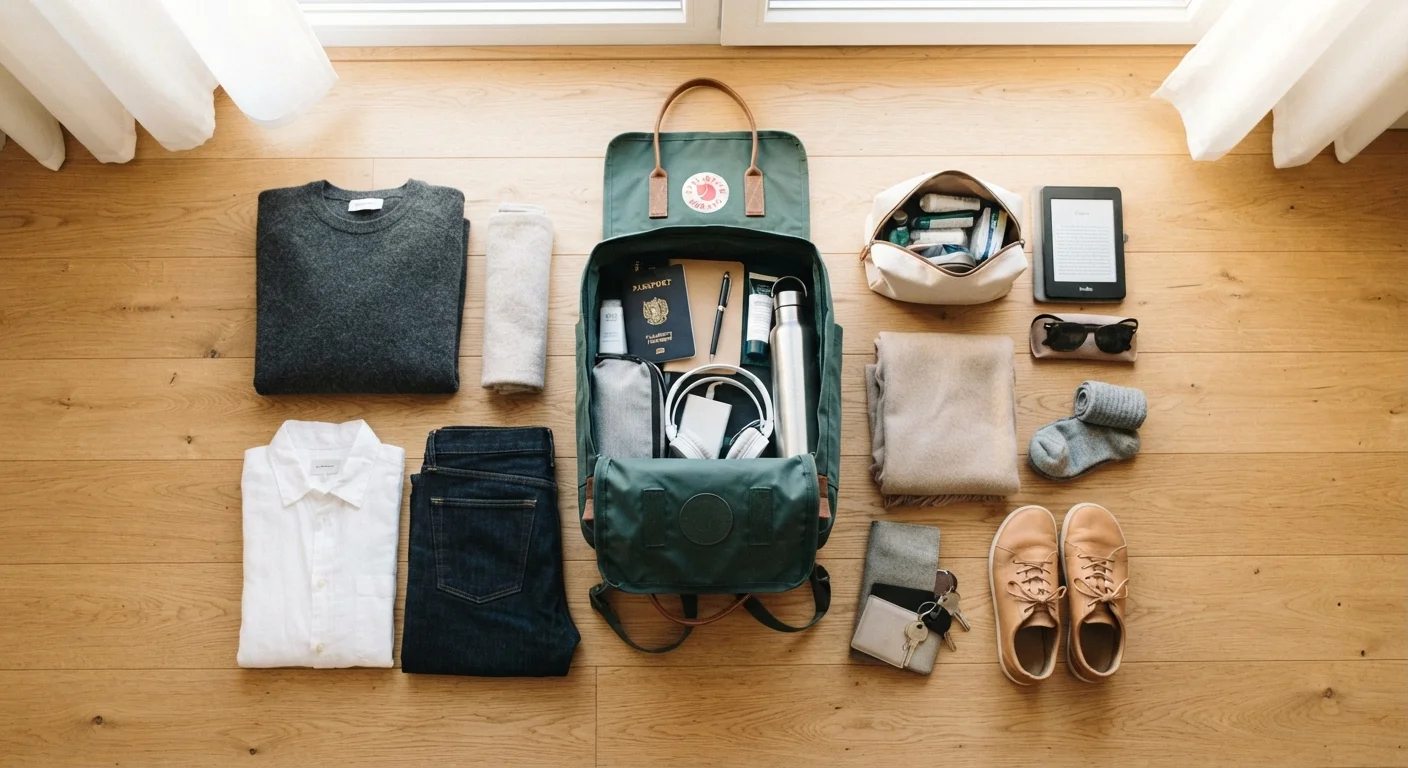
Photo credit: FaqsInsights.com | Stay Informed, Stay Ahead
A practical, tested approach to ultralight travel — what to bring, what to skip, and how the laundry-on-the-road mindset actually works.
Key Takeaways
- A personal item can realistically carry two weeks of clothing when you apply a laundry-on-the-road strategy.
- Choosing versatile, quick-dry fabrics is the single most important packing decision you'll make.
- The 'one-week wardrobe, washed twice' formula keeps your load light and your options flexible.
- Toiletries, electronics, and documents are the biggest space traps — ruthless editing is essential.
- Skipping checked bags and carry-ons with a personal item can meaningfully reduce trip costs.
Why the Personal Item Constraint Is Actually a Gift
Most travelers pack for the worst possible day — the formal dinner, the cold snap, the unexpected hike — and end up hauling the anxiety of every scenario through airports, train stations, and cobblestone streets. The personal item constraint forces a different question: what do I actually need?
The honest answer is almost always less than you'd expect. A personal item bag (typically around 18" x 14" x 8", though dimensions vary by airline — see how sizes compare to carry-ons) eliminates overhead bin competition, speeds up boarding and deplaning, and fits under the seat in front of you. For trips that involve multiple flights or frequent city changes, those advantages compound quickly.
The laundry-on-the-road mindset is the engine behind this approach. Rather than packing enough clothes for every day of travel, you pack for roughly one week and plan one mid-trip wash. This isn't roughing it — hotels, hostels, laundromats, and even supermarkets across most of the world offer accessible washing options. The pace of your itinerary affects how easily you can fit in a laundry day, so it's worth factoring in before you commit.
Check Your Airline's Personal Item Rules
Personal item size limits vary by airline and can differ even between fare classes on the same carrier. Before packing, verify the exact dimensions and weight limits for your specific ticket. Bags that pass on one airline may be gate-checked on another. Always confirm via the airline's official website, not third-party sources.
Before diving into the steps below, gather your tools and confirm your bag meets airline specs.
Lightweight packing cubes
Organize clothing categories within the bag and prevent contents from shifting during transit.
Small laundry bag or dry sack
Keeps worn clothing separated from clean items while on the road.
Travel-size laundry soap or soap sheets
Enables sink washing at any accommodation with minimal bulk.
TSA-approved toiletry bottles (3.4 oz or under)
Keeps liquids compliant with security rules and minimizes toiletry weight.
Slim document wallet
Holds passport, cards, and tickets flat against the bag's interior panel without adding bulk.
With prerequisites in place, here's how to do it.
What you will need
Step-by-Step: From Closet to Curb
Follow these steps in order — skipping the audit phase and jumping straight to packing is the most common reason travelers end up overpacked or missing essentials.
Audit Your Itinerary Before You Touch a Single Item
Pull up your confirmed plans and ask three questions: What's the climate range? What's the most formal thing I'll do? What physical activities are on the agenda? Your answers define the ceiling for every category. A two-week city-and-coast trip in a warm climate needs completely different anchors than a mountain-and-capital combination. Write down your activity types and the dress code for each before opening your closet.
Build a One-Week Wardrobe, Not a Two-Week One
The core formula: 5 tops, 2 bottoms, 1 dress or versatile layer, 5–6 pairs of socks and underwear, and 1 light jacket or cardigan. You'll wash this set approximately once during the trip, wearing each piece twice. Bottoms can stretch further between washes if you choose darker colors. Every item must pair with at least two others in the set — if it only works as one outfit, it doesn't earn its space.
Apply the Quick-Dry Fabric Filter
Go through every item in your provisional wardrobe pile and check the fabric content label. Eliminate anything that requires dry cleaning, takes more than 12 hours to air dry, or wrinkles severely when hand-washed. Merino wool, nylon, and polyester-blend fabrics are your workhorses. Linen and cotton are acceptable in small quantities for warm-weather trips but add drying risk. Denim almost always fails this filter — it's heavy, slow to dry, and inflexible as a packing piece.
Cut Toiletries to a Strict 3-4-1 Set
Decant everything into containers of 3.4 oz or under and commit to a maximum of four liquid or semi-liquid products: a cleanser that doubles as shampoo, a moisturizer with SPF, a toothpaste, and one other product you genuinely can't skip. Solid alternatives — bar shampoo, solid sunscreen, toothpaste tablets — eliminate the liquids bag entirely and free up meaningful space. For anything you've forgotten, pharmacies at your destination are a reliable fallback. See the full pre-trip checklist for a complete health and documents review before you leave.
Pack Electronics With a Single-Cable Rule
Lay out every electronic item you're considering and its associated cable. If two devices can share one cable and one charging brick, they travel together. If a device requires its own proprietary cable and you can't consolidate, question whether the device is necessary. A phone, earbuds, and an e-reader can often run off a single USB-C brick with two ports. A camera adds one cable maximum. A laptop is worth including only if your trip genuinely requires it — a phone or tablet covers most travel needs.
Do a Full Test Pack — Then Remove 20%
Pack everything into your bag exactly as you intend to travel. If it closes without forcing and weighs under 15–17 lbs, you're in a workable range. If not, remove items by category priority: first reduce clothing back-ups, then non-essential electronics, then toiletries. As a final discipline, remove one more item after the bag closes successfully. Most travelers discover they packed a "just in case" item that occupies valuable space for something that will never be used. This last cut is where ultralight travel is actually made.
Roll, Don't Fold — Then Compress
Rolling clothes tightly rather than folding them reduces wrinkles and makes contents immediately visible. Pairing rolling with lightweight packing cubes (not compression sacks, which add bulk) helps segment your bag and prevents the dreaded unpack-everything search. Keep your most-reached-for items at the top.
Laundry Access Is Never Guaranteed
The laundry-on-the-road strategy depends on finding reliable washing options — hotel sinks, laundromats, or accommodation facilities. In remote areas or densely packed itineraries, that access may be limited. Build buffer days into your schedule and research laundry options at each destination before you go.
Once you've done this process once, it becomes faster. Most seasoned one-bag travelers report that their second trip takes half the time to pack as the first. For a deeper look at how extended travel changes your relationship with gear and planning, the trade-offs between short and long trips are worth understanding before you book. And if budget management is part of your planning, pairing light packing with a fixed-budget approach can stretch your travel further than almost any other single decision.

Author
Travel & Trips Editorial Team
Travel & Trips Editorial Team is the collective byline for our editorial team and contributor network. Articles published under this byline or an editorial pen name are researched, written, and reviewed according to our editorial standards for clarity, consistency, and independence before publication.
View all articles →