
Carry-On Packing: What Actually Fits and What Doesn't
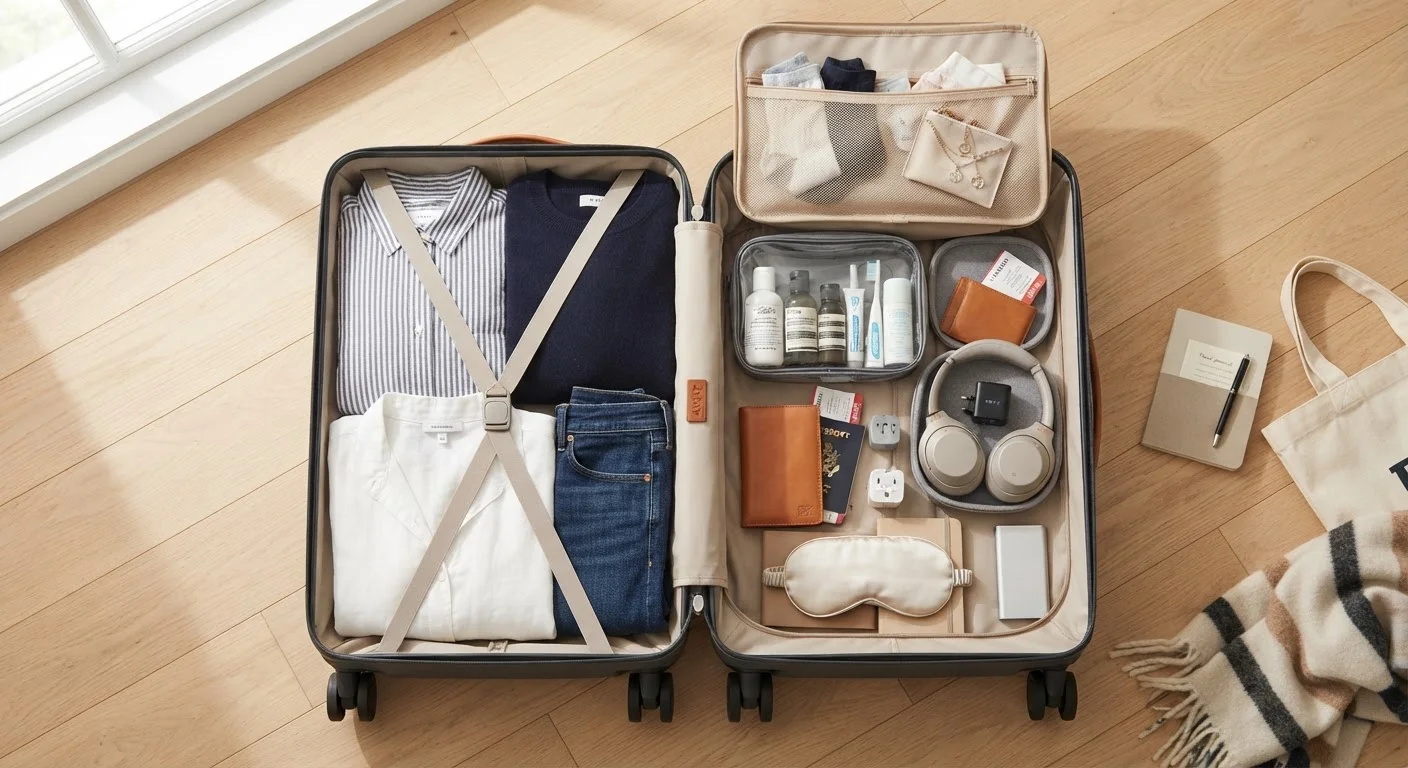
Photo credit: FaqsInsights.com | Stay Informed, Stay Ahead
In this article
Airline size rules, real-world bag dimensions, and the packing strategies that let you travel light without leaving essentials behind.
The Size Rules That Actually Govern Your Bag
Every U.S. major carrier publishes a carry-on size limit, and they don't all agree. The most common standard is 22 × 14 × 9 inches (including wheels and handles), but budget carriers often enforce tighter limits - sometimes as small as 18 × 14 × 8 inches for "free" cabin bags. International legs on codeshare itineraries can apply the more restrictive partner airline's rules even if you booked through a domestic carrier.
The practical takeaway: measure your bag with its wheels and handles extended before you travel, and check the specific size policy for each carrier on a multi-leg trip. A bag that clears Delta's gate may get checked - at a fee - on a connecting Ryanair segment. These surprise charges are exactly the kind of cost detailed in this breakdown of overlooked travel expenses.
| Most common U.S. carry-on limit | 22 × 14 × 9 inches (incl. wheels & handles) (Major U.S. carriers' published policies) |
| Typical carry-on interior volume | 35-45 liters |
| TSA liquid container max | 3.4 oz / 100 ml per container (TSA.gov) |
| Max lithium battery (carry-on) | 100 Wh without airline approval; 160 Wh absolute max (FAA hazardous materials rules) |
| Budget airline cabin bag (common minimum) | 18 × 14 × 8 inches (Representative budget carrier policies; verify per airline) |
| Portable chargers | Carry-on only - banned from checked bags (FAA / TSA guidance) |
What Airlines Actually Measure (and When They Do It)
Gate agents measure bags inconsistently. Enforcement tends to tighten during peak travel periods, on full flights, and on airlines that charge for checked bags - because overhead bin space is genuinely scarce. Soft-sided bags often squeeze into the sizer box even when they technically exceed dimensions; rigid hardshell bags at exactly the limit may fail if an agent wants to make the point.
Weight limits for carry-ons are a separate issue. Most U.S. carriers don't enforce a carry-on weight cap at the gate, but international carriers frequently do - sometimes as low as 15 lbs (7 kg). If you're connecting internationally, weigh your packed bag at home.
International Flights: Different Rules Apply
If your itinerary includes a non-U.S. carrier or a foreign airport security checkpoint, liquid rules and prohibited items may differ from TSA standards. Some countries ban certain electronics or require separate scanning of food items. Always check the security authority of each country you're transiting through, not just your departure airport.
TSA's 3-1-1 liquids rule (containers of 3.4 oz / 100 ml or less, all fitting in one quart-sized clear bag) applies to all carry-on bags regardless of airline. Oversized liquids are confiscated at the checkpoint, not at the gate. If you're carrying prescription medications, general guidance on documentation and storage is worth reviewing - see traveling with medications across borders.
Packing Strategies That Maximize Real Space
The interior volume of a regulation carry-on typically runs between 35 and 45 liters. Here's how experienced travelers use that space:
- Roll, don't fold - rolling clothes reduces wrinkles and fills cylindrical gaps that flat-folding wastes.
- Use packing cubes - they compress soft items and let you extract one category without unpacking everything.
- Wear your bulkiest items - boots, a heavy jacket, and thick jeans worn on the plane don't count toward bag volume.
- Rethink toiletries - solid shampoo, bar soap, and toothpaste tablets eliminate most of your liquid restrictions and weigh less.
- Shoes go in first - place them sole-to-sole at the bottom of the bag; stuff socks inside them.
If you want to push further and skip the carry-on entirely, packing two weeks into a single personal item is a tested strategy worth exploring.
Linear inches
The sum of a bag's length, width, and height measurements. Some airlines use this figure instead of (or in addition to) per-dimension limits to define size eligibility.
Personal item
A smaller secondary bag - typically a backpack, tote, or purse - that stows under the seat in front of you. Most carriers allow one personal item in addition to a carry-on, but size limits vary.
3-1-1 rule
The TSA standard requiring liquids in carry-on bags to be in containers of 3.4 oz (100 ml) or less, all placed in a single quart-sized transparent zip-top bag, with one such bag per traveler.
Packing cube
A lightweight, zippered fabric organizer used to group and compress clothing or accessories within a suitcase, reducing bulk and keeping contents orderly.
Gate check
When a carry-on bag is tagged at the boarding gate and transported in the aircraft hold rather than the cabin - typically because overhead bins are full. This may or may not incur a checked-bag fee depending on the carrier.
What Won't Make It Through - and What Surprises Travelers
Beyond liquids, several categories catch travelers off guard at security:
- Snow globes - treated as liquids regardless of size.
- Gel-filled shoe insoles - may be flagged; standard foam insoles are fine.
- Lithium batteries above 100 Wh - must be carry-on only (not checked), and anything over 160 Wh is generally prohibited on passenger aircraft entirely.
- Portable chargers - must stay in carry-on; they cannot go in checked luggage.
- Full-size aerosols (including dry shampoo cans over 3.4 oz) - confiscated at the checkpoint.
TSA maintains a searchable What Can I Bring? database at tsa.gov - it's the authoritative source and updates more frequently than most travel blogs. Always verify before packing anything you're uncertain about.
For a full pre-departure rundown that covers documents, logistics, and packing alongside each other, the complete pre-trip checklist is a reliable starting point.
$150+
Typical gate-check fee on budget carriers
Some low-cost carriers charge fees at the gate that significantly exceed standard checked-bag rates booked in advance.
15 lbs
Common international carry-on weight cap
Many non-U.S. carriers enforce a 7 kg (15 lb) carry-on weight limit; enforcement varies by route and aircraft type.
3.4 oz
Max liquid container size in carry-on
The TSA's 3-1-1 rule has been in effect since 2006 and applies at all U.S. airport security checkpoints.

Author
Travel & Trips Editorial Team
Travel & Trips Editorial Team is the collective byline for our editorial team and contributor network. Articles published under this byline or an editorial pen name are researched, written, and reviewed according to our editorial standards for clarity, consistency, and independence before publication.
View all articles →