
Traveling with Medications: What Customs, Carriers, and Clinics Actually Require
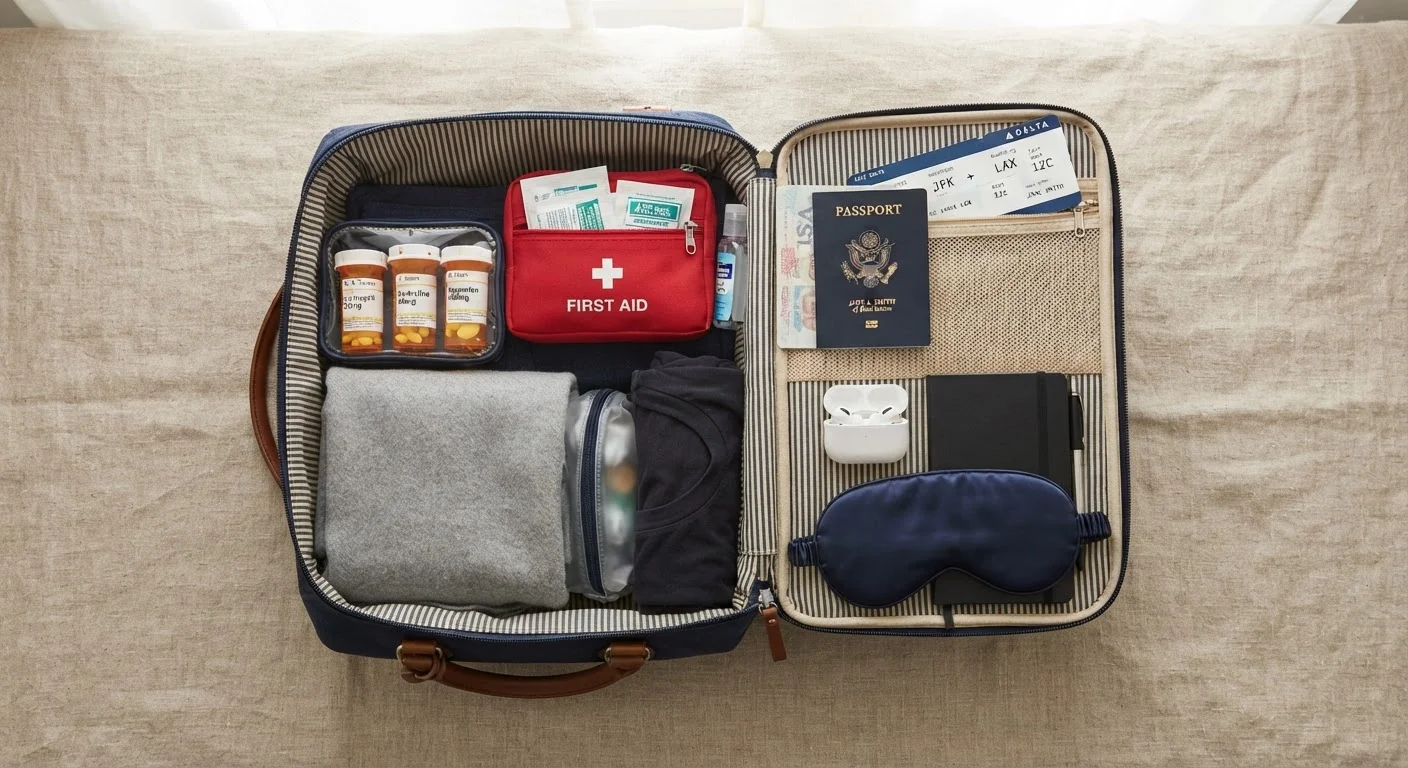
Photo credit: FaqsInsights.com | Stay Informed, Stay Ahead
In this article
General guidance on documentation, storage, and country-specific rules for bringing prescription or over-the-counter medications across borders.
Key Takeaways
- Every destination has its own rules about which medications are permitted, restricted, or outright banned — verify before you pack.
- Original packaging and a doctor's letter are the two documents most likely to smooth any customs inspection.
- TSA allows most liquid medications in carry-on bags beyond the standard 3.4 oz limit, but documentation helps.
- Some common over-the-counter drugs in the US are controlled substances in other countries.
- Temperature-sensitive medications require advance planning for storage during flights and at your destination.
Why Medication Rules Catch Travelers Off Guard
Most travelers focus on visas and vaccines before an international trip — but the medications already in their cabinet can create just as many complications at the border. A painkiller routinely sold at US pharmacies may be a controlled substance requiring advance permits in Japan, the UAE, or Indonesia. A month's supply of a common antidepressant might trigger questions in countries where that drug is restricted. And carrying insulin or injectable biologics introduces a whole separate set of storage, labeling, and documentation concerns.
The frustrating part? The rules aren't uniform. Customs agencies, airlines, and in-country clinics (if you need a refill abroad) each have their own requirements, and they don't always communicate with each other. What satisfies TSA won't necessarily satisfy a border officer in Singapore. What your airline permits in carry-on may still require a declaration form at your destination.
This checklist is designed to help you work through every layer — documentation, packing, storage, and country-specific rules — so you arrive prepared rather than scrambling. For a broader look at what else to verify before landing, see what to verify beyond the visa.
Documentation
Country-Specific Research
Packing and Carry-On Strategy
Storage and Temperature Control
Needles, Devices, and Special Categories
Tools and Resources You'll Need
Before you work through the checklist, gather the resources below. Having these in place turns a potentially stressful process into a straightforward pre-trip task.
Destination country customs or health ministry website
Primary source for confirming which medications are permitted, restricted, or require import permits at your destination.
Clinician's medication letter
A signed, dated letter from your prescribing provider listing each medication, dosage, and diagnosis — the single most universally accepted document at border crossings.
Insulated medication travel case
Maintains safe temperatures for insulin, biologics, or other temperature-sensitive medications during transit.
Secure cloud storage or travel document app
Stores digital copies of prescriptions, clinician letters, and customs permits so they're accessible even if your bag is lost.
Sharps disposal container
Required for safe disposal of needles and syringes in many countries and strongly recommended regardless of destination.
Key Risks to Keep in Mind
Even experienced travelers get tripped up in a few predictable ways. The guidance below addresses the highest-stakes scenarios — situations where being underprepared can mean confiscated medication, missed doses, or significant delays at the border.
Some Common US Medications Are Banned Abroad
Medications that are freely available over the counter in the United States — including certain ADHD drugs, opioid-combination painkillers, and some stimulants — are classified as controlled or prohibited substances in countries including Japan, the UAE, Thailand, and several others. Carrying these without advance authorization can result in confiscation, fines, or detention regardless of your valid US prescription. Always verify the legal status of every medication in your destination country through that country's official channels before you pack.
Don't Rely on Airline Rules Alone
TSA and your carrier's carry-on policy cover what's allowed onto the aircraft — they do not determine what a foreign customs officer will permit you to bring into the country. These are two entirely separate regulatory systems. A medication cleared by TSA can still be seized at the destination border if it lacks proper documentation or exceeds quantity limits set by the destination country.
Supply Gaps Are Hard to Fill Internationally
Brand names and formulations differ significantly across countries, and some medications simply aren't available abroad. Even if a generic equivalent exists, foreign clinics and pharmacies may be unable or unwilling to prescribe or dispense it to a foreign visitor without extensive documentation. Always bring more than you think you'll need, and explore travel insurance options that cover emergency medication assistance.
If you're also thinking through what else fits in your carry-on alongside medications, the carry-on packing guide covers airline size rules and real-world strategies for keeping essentials accessible. And if you want a single master checklist that incorporates medication prep alongside documents, finances, and logistics, the pre-departure checklist is a solid starting point.
This article provides general travel information only and is not medical or legal advice. Medication regulations change frequently — always verify current requirements with official government sources, your prescribing clinician, and your airline before you travel.

Author
Travel & Trips Editorial Team
Travel & Trips Editorial Team is the collective byline for our editorial team and contributor network. Articles published under this byline or an editorial pen name are researched, written, and reviewed according to our editorial standards for clarity, consistency, and independence before publication.
View all articles →