
Digital Tools vs. Paper Planning: How Different Travelers Organize Their Trips
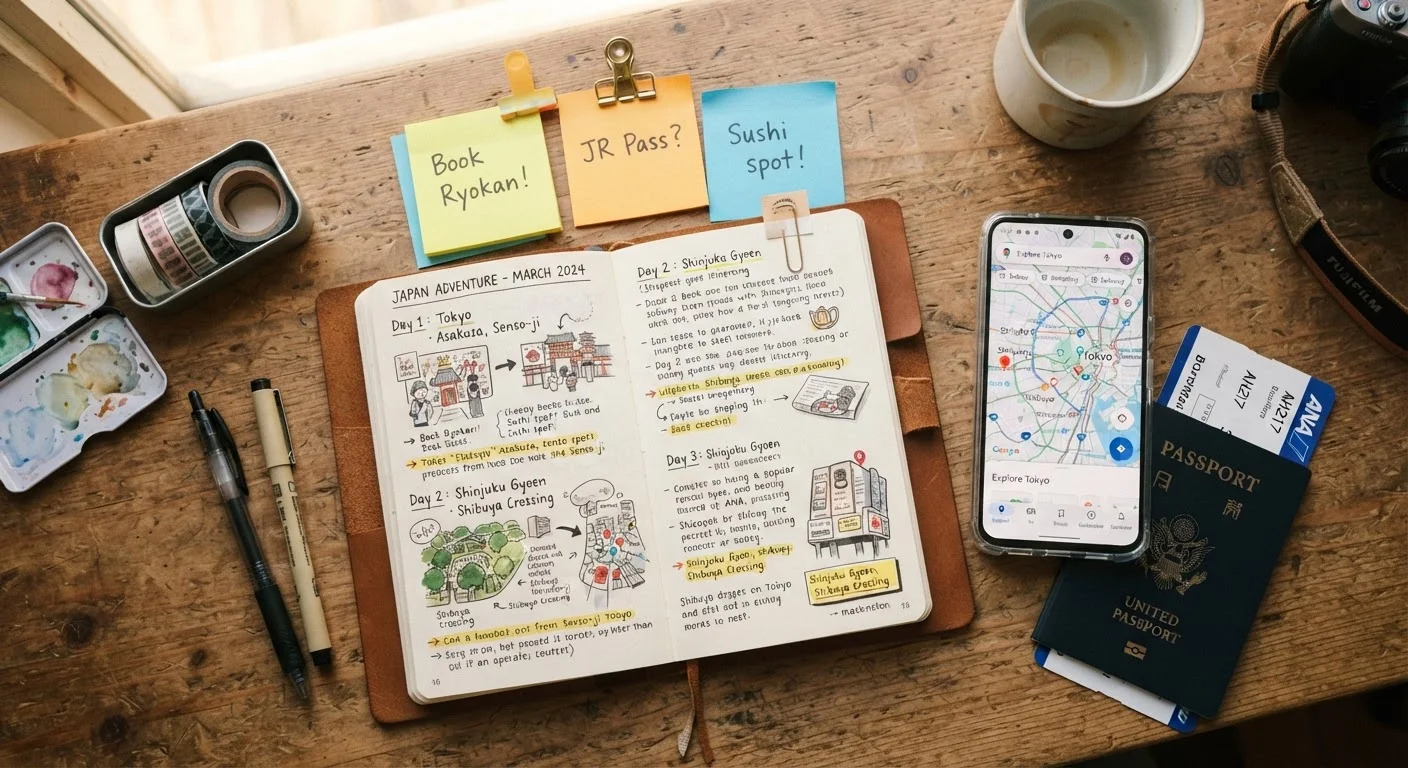
Photo credit: FaqsInsights.com | Stay Informed, Stay Ahead
In this article
A look at the tradeoffs between app-based itinerary tools and analog planning methods, so you can build a system that actually sticks.
Key Takeaways
- Digital tools excel at real-time updates, sharing, and consolidating bookings in one place.
- Paper planning supports deeper creative thinking and works anywhere — no battery required.
- Most experienced travelers blend both approaches rather than committing exclusively to one.
- Your planning style should match your travel complexity, group size, and personal workflow.
- Offline access is a critical factor regardless of which system you choose.
Why Your Planning System Matters More Than You Think
The difference between a trip that flows effortlessly and one that constantly feels like damage control often traces back to how it was planned — not just what was planned. A misplaced confirmation email, a dead phone battery, or a notebook left at home can send even a well-researched itinerary sideways. Choosing a planning system that matches your habits isn't a minor preference — it's a foundational decision.
The core question isn't which format is objectively better. It's which one you'll actually use consistently before, during, and after travel. As our guide to building a solid travel itinerary explains, the structure of your plan matters enormously — and your chosen medium shapes how easily you can build and maintain that structure.
| Digital Tools | Paper Planning | |
|---|---|---|
| Offline reliability | Requires prep (downloads) | Always available |
| Real-time updates | Instant syncing | Manual rewriting required |
| Group sharing | Easy shared access | Cumbersome to distribute |
| Scales with complexity | Handles multi-stop trips well | Unwieldy for complex itineraries |
| Battery dependency | High — needs charging | None |
| Creative engagement | Functional but screen-based | Tactile, keepsake-friendly |
| Risk of loss | Backed up to cloud | Single point of failure |
The Case for Digital Planning Tools
App-based and cloud-based planning tools have matured significantly, and their advantages are hard to dismiss. Real-time syncing means your entire travel party sees the same up-to-date information. When a flight time changes or a restaurant closes unexpectedly, digital itineraries can be updated in seconds from anywhere with a signal.
Consolidation is another major asset. Many travelers juggle airline confirmations, hotel bookings, rental agreements, and activity reservations across a dozen different emails. Tools that aggregate these into a single timeline — parsing confirmation numbers automatically — dramatically reduce the cognitive load of keeping everything straight. For complex, multi-destination trips, this kind of centralized organization is genuinely difficult to replicate on paper.
Digital tools also integrate maps, currency converters, translation features, and local transit data, reducing the number of separate apps you need open at once. For group travel in particular, shared access eliminates the "who has the address?" scramble. See our group travel planning guide for more on coordinating logistics across multiple people.
Always Build an Offline Backup
Regardless of your primary planning method, save critical information — hotel addresses, confirmation codes, emergency contacts, and a simplified daily schedule — somewhere accessible without internet. A screenshot folder, downloaded PDF, or a single printed page can be the difference between a minor hiccup and a genuine travel crisis. Think of your offline backup as travel insurance for your itinerary.
The key limitation: digital tools require power and connectivity. Travelers heading to remote destinations or countries with expensive data roaming should always download offline versions of maps and documents before departure.
The Case for Paper Planning
Paper has a quiet resilience that no app can fully replicate. A printed itinerary works at 30,000 feet with airplane mode engaged, in a country where your SIM card doesn't work, and when your phone is stolen or dead. That reliability is not trivial — it's a genuine safety net.
There's also a cognitive dimension worth acknowledging. Research in educational contexts has suggested that handwriting engages memory and comprehension differently than typing. While travel planning isn't a classroom exercise, many travelers report that writing out their plans by hand helps them internalize the details — distances between stops, neighborhood names, timing — in a way that skimming a populated app does not. Our related look at what studies say about digital vs. paper notes explores this dynamic in a learning context, but the principle carries over.
Paper also invites a different kind of creativity. Sketching rough maps, color-coding days, taping in ticket stubs or postcards — a physical travel journal becomes both a planning tool and a keepsake. For travelers whose trips are as much about the experience of anticipation as the journey itself, paper offers something genuinely satisfying that no interface can match.
Where Each Approach Tends to Break Down
Digital tools can create a false sense of preparedness. A beautifully organized app itinerary does nothing for you when your battery hits zero at a foreign train station. Over-reliance on connectivity is a recurring pitfall, and it's one of the underrated details that quietly derail well-planned trips. Notifications, social media, and other apps also compete for your attention on the same device, which can fragment focus during planning sessions.
Paper planning, meanwhile, scales poorly with complexity. Managing 12 days across four countries with multiple travelers using only a notebook is an exercise in frustration. Updates require rewriting, sharing requires photography or photocopying, and there's no search function when you can't remember which page has the hostel address. Paper planners who don't maintain a digital backup also face total loss if the notebook goes missing.
Don't Mistake Organization for Preparation
A polished digital itinerary or a meticulously written planner only helps if the information inside it is accurate and accessible when you need it. Verify confirmation details directly with providers before travel, and never assume that having a plan documented means the plan is correct. Cross-check key logistics — especially transport connections and accommodation check-in times — close to your departure date.
Building a Hybrid System That Actually Works
The most practical approach for most travelers isn't a binary choice — it's a deliberate combination. Use digital tools to gather and organize raw information: import confirmation emails, build a day-by-day timeline, and share access with travel companions. Then distill the essentials onto paper: a one-page daily schedule, key addresses, emergency contacts, and reservation numbers. This paper extract is your offline lifeline.
Before departure, download offline maps for every destination, save PDF copies of all confirmations to your phone's local storage, and send a copy of your full itinerary to someone at home. These small redundancies take minutes and have rescued countless trips. For more on avoiding the planning mistakes that create in-trip chaos, our piece on why plans fall apart on the road is worth a read before you finalize anything.
The goal of any planning system is confidence — the feeling that you know what's happening next and have a fallback if something goes sideways. Whether that confidence comes from a color-coded app or a handwritten Moleskine is entirely up to you.

Author
Travel & Trips Editorial Team
Travel & Trips Editorial Team is the collective byline for our editorial team and contributor network. Articles published under this byline or an editorial pen name are researched, written, and reviewed according to our editorial standards for clarity, consistency, and independence before publication.
View all articles →