
Trade-In or Private Sale: The Honest Comparison
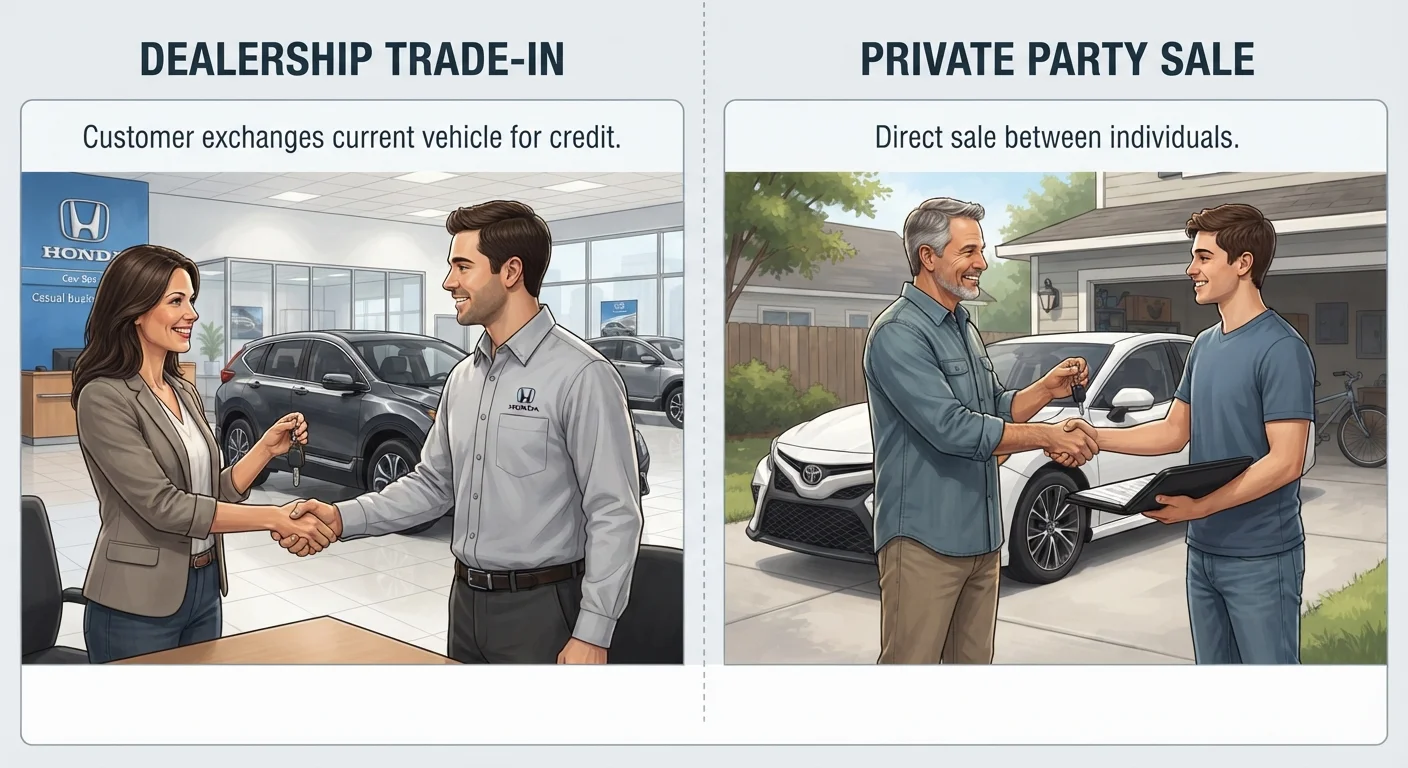
Photo credit: FaqsInsights.com | Stay Informed, Stay Ahead
In this article
Trading in your old car is convenient; selling privately often nets more. Here's what each approach genuinely involves.
Key Takeaways
- Trade-ins are faster and simpler but typically return less money than a private sale.
- Private sales generally yield a higher price but require more time, effort, and personal vetting of buyers.
- A dealership trade-in may reduce your taxable purchase amount in most U.S. states, which is a genuine financial benefit.
- Your vehicle's condition, how urgently you need to sell, and your risk tolerance all factor into which option makes sense.
- Getting independent valuations before either route helps you negotiate from an informed position.
What a Trade-In Actually Involves
Trading in your vehicle at a dealership means accepting the dealer's offer for your current car and applying that value as a credit toward your next purchase. The entire process typically happens in a single visit: the dealer inspects your vehicle, produces an offer, and folds the credit into your deal paperwork.
The convenience is genuine. You avoid advertising, fielding inquiries, scheduling test drives, accepting payment from strangers, and handling title transfer on your own. The dealership manages that paperwork.
However, dealers build a margin into trade-in offers because they need room to recondition the vehicle and resell it profitably. That means the offer you receive will generally be below private-market value - sometimes significantly so. Researching your vehicle's estimated value through independent sources before walking in gives you a realistic baseline and strengthens your negotiating position. For a fuller picture of how the trade-in step fits into purchasing your next vehicle, see our walkthrough of the car-buying process.
One frequently overlooked benefit: in most U.S. states, the trade-in value is subtracted from the taxable price of your new vehicle before sales tax is calculated. On a high-value trade, that tax savings can partially offset the price difference between a trade-in and a private sale.
What a Private Sale Actually Involves
Selling your vehicle privately means listing it yourself - through online marketplaces or local platforms - and managing the full transaction from inquiry to title transfer. Done well, it typically returns a higher sale price than a dealer offer, because you're selling directly to someone who wants the vehicle for personal use rather than to a business reselling it for profit.
The trade-off is time and effort. Expect to spend time preparing and photographing the vehicle, writing a clear listing, responding to inquiries (including low offers and no-shows), vetting buyers, accompanying test drives, verifying payment, and completing title transfer paperwork with your state's DMV requirements in mind.
Protect Yourself on Payment and Safety
Fraudulent payment methods are a real risk in private vehicle sales. Never release the title until payment is fully verified and cleared. Avoid accepting personal checks; if using a cashier's check, confirm authenticity with the issuing bank before the handover. Consider conducting the final transaction at a bank branch or police department's designated safe-exchange zone.
Payment safety is a genuine concern. Cashier's checks can be counterfeited; cash in large amounts carries its own risks. Many sellers and buyers now use verified electronic transfers, but confirm the funds have cleared before signing over the title. Meeting in a public, well-lit location for the handoff is a widely recommended precaution.
A private sale also requires that your vehicle be available - and that you remain without its replacement - until the deal closes, which can complicate timing if you're simultaneously shopping for another car.
Key Differences at a Glance
The table below summarizes how the two approaches compare across the criteria that matter most to most sellers.
| Trade-In | Private Sale | |
|---|---|---|
| Typical return | Below private-market value | Closer to full market value |
| Time to complete | Same day or next day | Days to several weeks |
| Effort required | Minimal - dealer handles logistics | High - seller manages all steps |
| Sales tax benefit | Yes, in most U.S. states | None - buyer pays tax separately |
| Payment risk | Very low - credit applied directly | Moderate - payment vetting needed |
| Timing flexibility | Limited to your purchase timeline | Seller controls timing |
| Title transfer | Dealer handles paperwork | Seller responsible for DMV process |
Keep in mind that these comparisons reflect general patterns, not universal outcomes. A dealer who specifically wants your vehicle model for their lot may offer more than you expect; a private sale can close quickly if demand is high in your area.
Making the Right Call for Your Situation
Before committing to either route, get at least one independent value estimate from a recognized appraisal tool or a competing dealer. That gives you an honest anchor point rather than accepting the first number offered.
Get Multiple Valuations Before You Decide
Before choosing a route, request appraisals from at least two sources - such as a competing dealer and an independent appraisal service. This gives you a realistic range for your vehicle's worth and takes the guesswork out of evaluating any offer you receive, whether from a dealer or a private buyer.
If you're buying your next vehicle at a dealership, consider whether the tax advantage of a trade-in - combined with the time saved - narrows the net financial gap enough to make trade-in the pragmatic choice. In some states, on higher-value vehicles, the tax differential alone can be several hundred dollars.
If your vehicle is in strong condition and there's demonstrated demand for it in your market, a private sale is likely to put more money in your pocket. But factor in the realistic time cost: preparation, listing, and the sale itself may take several weeks.
For context on decisions that run alongside your vehicle sale - such as how you finance the next purchase - our comparison of dealership financing vs. bank loans covers that territory in detail. And once your sale approach is settled, negotiating your next car's price is the logical next step.

Author
Cars & Driving Editorial Team
Cars & Driving Editorial Team is the collective byline for our editorial team and contributor network. Articles published under this byline or an editorial pen name are researched, written, and reviewed according to our editorial standards for clarity, consistency, and independence before publication.
View all articles →