
Keeping Records: Why a Vehicle Maintenance Log Pays Off
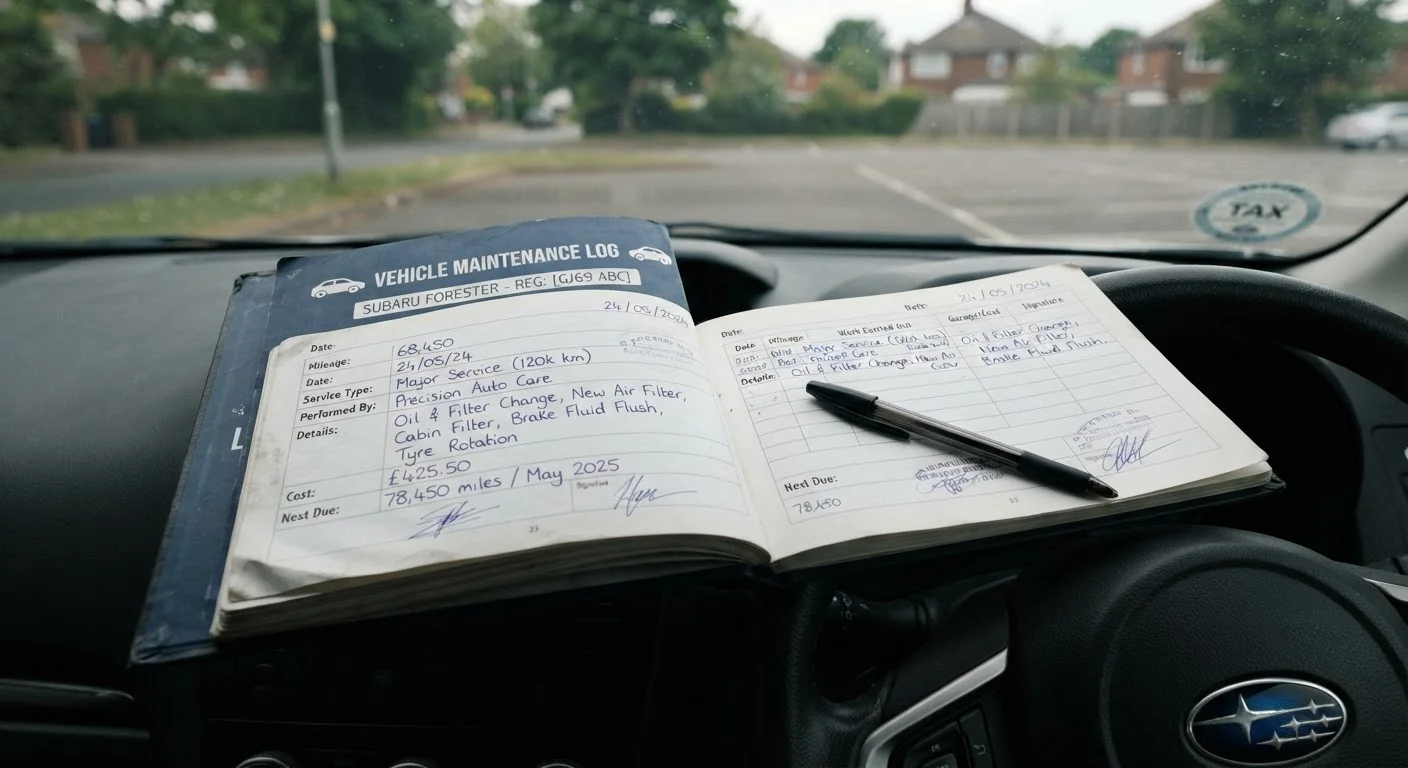
Photo credit: FaqsInsights.com | Stay Informed, Stay Ahead
In this article
Consistent maintenance records protect resale value, simplify diagnostics, and keep service intervals on track. Here's how to build a reliable log.
Key Takeaways
- A maintenance log creates a verifiable service history that directly supports resale value.
- Tracking intervals prevents both missed services and unnecessary early replacements.
- A log helps mechanics diagnose problems faster, potentially reducing labor costs.
- Digital and paper formats both work - consistency matters more than the medium.
Why Most Drivers Skip the Log - And Why That's Costly
Most drivers rely on memory, dealership stickers, or vague guesses to track oil changes and tire rotations. That approach works until it doesn't - and the consequences range from a missed service interval to a failed pre-sale inspection that knocks hundreds off a vehicle's asking price.
A maintenance log is a running record of every service performed on your vehicle: what was done, when, at what mileage, and by whom. It requires minimal effort to maintain but pays measurable dividends when you sell the car, visit a new mechanic, or try to trace the source of an unfamiliar noise.
If you're new to the concept of structured vehicle upkeep, our guide to car maintenance for new drivers covers the essential tasks your log should be tracking from day one.
What to Include in Every Log Entry
An effective log entry doesn't need to be elaborate. Each entry should capture:
- Date of the service
- Odometer reading at the time
- Service performed (e.g., oil and filter change, tire rotation, brake inspection)
- Parts or fluids used, including specification where relevant (e.g., 5W-30 full synthetic)
- Who performed the work - shop name or "self-service"
- Cost, if you want to track spending over time
- Next service due (mileage or date)
That last item is the one most people omit - and it's arguably the most valuable. Logging when the next service is due converts your record into a forward-looking maintenance schedule, not just a backward-looking diary.
Use the 'Next Due' Field Every Time
The single highest-value habit in log-keeping is recording the next service milestone at the end of each entry. Whether it's mileage-based or calendar-based, that forward-looking note transforms your log from a passive record into an active maintenance scheduler. Set a phone reminder to match, and you'll rarely miss a service interval again.
Best Practices for Building a Reliable Log
Log every service immediately after it's performed, not days later from memory.
Details like exact mileage, fluid specifications, and parts numbers are easy to misremember. Recording at the time of service ensures accuracy and prevents gaps that undermine the log's credibility.
Store physical receipts alongside your log or attach digital scans to each entry.
A log entry is a summary; the original receipt is the supporting document. When selling a vehicle or disputing a warranty claim, receipts provide third-party verification that a service actually occurred.
Note every service, including those you perform yourself - not just shop visits.
DIY maintenance like checking tire pressure, topping off fluids, or replacing wiper blades is real upkeep that affects your vehicle's condition. Omitting self-performed work creates a misleading picture of care history.
Review the log before every scheduled service appointment.
Arriving at a shop with your maintenance history lets the technician quickly identify what's due, what's been recently done, and what's been deferred. This reduces the likelihood of redundant services and keeps the conversation grounded in facts.
Flag deferred or skipped services with a note explaining why.
Life circumstances sometimes mean a service gets pushed. Noting a deferral - rather than leaving a blank - keeps the log honest and prompts you to reschedule, rather than simply forgetting the service was ever due.
How a Log Supports Resale Value and Diagnostics
When selling a privately owned vehicle, documented service history is one of the few tangible ways to justify your asking price. Buyers - and dealerships evaluating a trade-in - view a complete log as evidence of responsible ownership. Without it, they have no way to verify claims about recent work, which often leads to lowball offers.
Up to $500+
Potential resale value lost without service records
Industry appraisers and consumer advocates consistently note that undocumented maintenance history depresses private-sale and trade-in offers, with gaps often cited as justification for price reductions.
30-40%
Of used-car buyers who request service history
Surveys of private used-car buyers regularly find that a substantial portion consider documented maintenance history a significant factor in purchase decisions and price negotiation.
On the diagnostic side, a log gives mechanics a factual starting point. Instead of estimating when components were last serviced, a technician can see exactly what's been done - and what hasn't. This is especially valuable for intermittent problems that may be tied to a specific service or parts batch.
Note that a private log complements but doesn't replace a formal vehicle history report. As our article on what a vehicle history report does and doesn't tell you explains, commercial reports draw on different data sources and may capture events your personal log won't reflect - like accident records or title changes.
Quick Ways to Start (or Restart) Your Log Today
Whether you're starting fresh or catching up on years of service records, the best time to begin is now. Gather any receipts, invoices, or dealership records you have and enter them retroactively - even an incomplete history is better than none.
For ongoing tire-specific entries, our tire maintenance guide outlines rotation intervals, pressure checks, and alignment timelines worth adding to your log schedule. And if you're concerned about habits that erode vehicle health over time, see our piece on habits that quietly shorten your car's lifespan for context on what your log should help you avoid.

Author
Cars & Driving Editorial Team
Cars & Driving Editorial Team is the collective byline for our editorial team and contributor network. Articles published under this byline or an editorial pen name are researched, written, and reviewed according to our editorial standards for clarity, consistency, and independence before publication.
View all articles →