
Tire Maintenance from the Ground Up
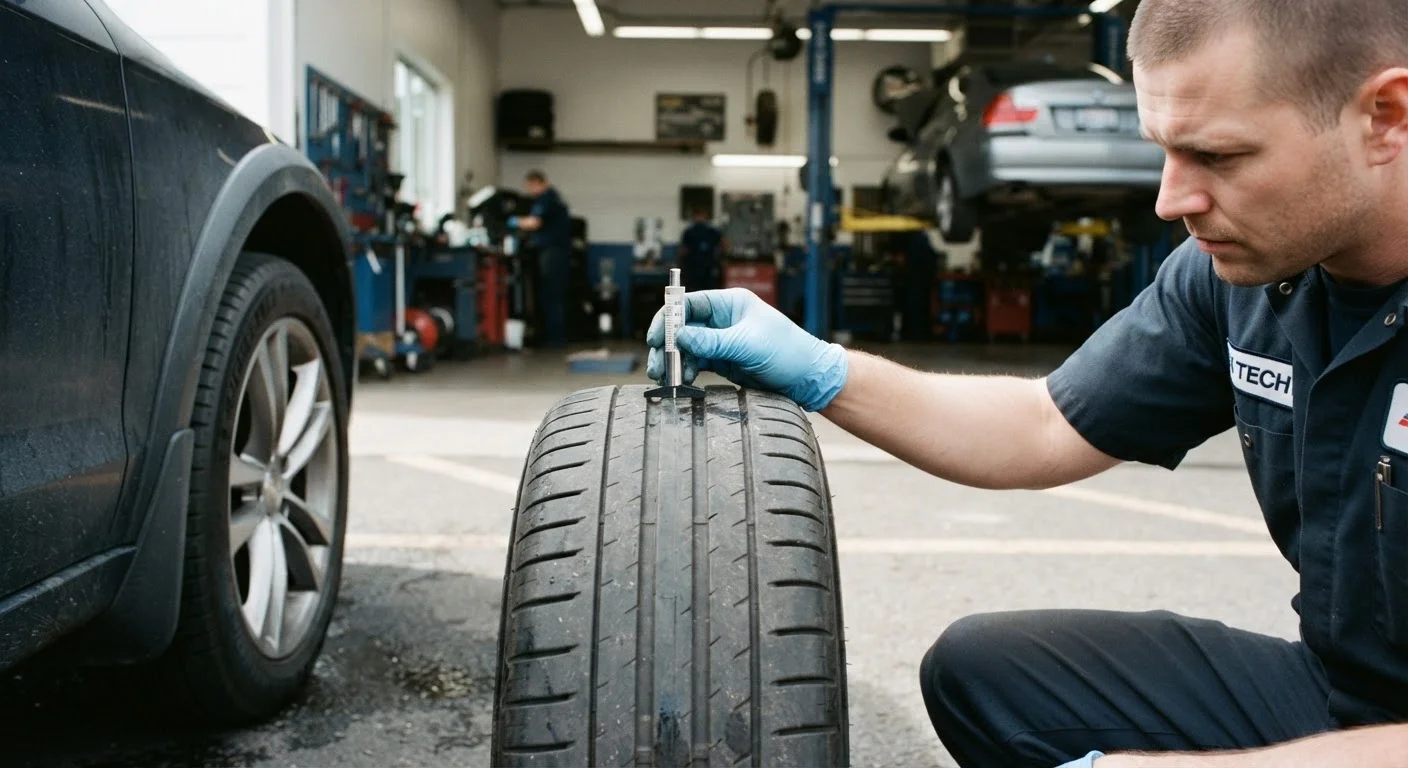
Photo credit: FaqsInsights.com | Stay Informed, Stay Ahead
In this article
Pressure, tread depth, rotation, and alignment — a thorough look at keeping your tires safe, even-wearing, and fuel-efficient.
Key Takeaways
- Check tire pressure monthly and before long trips - always when tires are cold.
- A tread depth below 2/32 of an inch means the tire must be replaced immediately.
- Rotating tires every 5,000-7,500 miles prevents uneven wear and extends tire life.
- Misaligned wheels cause rapid, uneven tread loss and compromise vehicle handling.
- Your spare tire needs the same pressure and inspection attention as your road tires.
Why Tire Maintenance Matters
Your tires are the only part of your vehicle that contacts the road. Everything - braking, steering, acceleration, and cornering - depends on four palm-sized patches of rubber gripping the pavement. When tires are neglected, those patches lose their effectiveness, and the safety consequences can be serious.
Beyond safety, proper tire care pays off financially. Underinflated or misaligned tires wear faster, reduce fuel economy, and can cause premature damage to suspension components. As explored in our guide to the hidden costs of deferred maintenance, small oversights compound into expensive repairs. Tire maintenance is one of the highest-return habits any driver can build.
11,000+
Annual crashes linked to tire failure
The National Highway Traffic Safety Administration (NHTSA) attributes thousands of crashes each year to tire-related factors including underinflation and worn tread.
~0.3%
Fuel economy loss per PSI underinflation
The U.S. Department of Energy estimates fuel economy drops roughly 0.2-0.3% for every 1 PSI below the recommended level across all four tires.
4/32"
Tread depth at which wet-weather risk rises sharply
Many tire safety organizations recommend planning for tire replacement when tread reaches 4/32 inch, especially for drivers in wet or snowy climates.
Tire Pressure: The Foundation of Safe Driving
Tire pressure is measured in PSI and affects ride quality, fuel efficiency, handling, and tread wear. The correct pressure for your vehicle is listed on a sticker inside the driver's door jamb or in your owner's manual - not on the tire sidewall, which shows the maximum pressure the tire can hold, not the recommended operating pressure.
Check pressure monthly and before any long drive. Always measure when tires are cold - meaning the car has been parked for at least three hours - because driving heats the air inside and raises pressure readings by several PSI. A basic digital pressure gauge costs only a few dollars and removes all guesswork.
Check Pressure When Tires Are Cold
Always check tire pressure before you've driven more than a mile or two. Heat from driving expands the air inside tires and inflates readings artificially, which can mask actual underinflation. Morning checks - before the first drive of the day - give the most accurate results.
If your dashboard illuminates a TPMS warning light, that signals pressure has dropped roughly 25% below recommended levels - well into unsafe territory. Our article on what dashboard warning lights mean covers this and other alerts in detail.
Tread Depth: Knowing When to Replace
Tire tread channels water away from the contact patch, maintaining grip on wet roads. As tread wears down, wet-weather stopping distances increase significantly. The legal minimum tread depth in most U.S. states is 2/32 of an inch, but many safety experts recommend considering replacement at 4/32 inch, particularly in regions with frequent rain or snow.
The quickest field test: insert a penny into a tread groove with Lincoln's head pointing down. If you can see all of Lincoln's head, the tread is at or below 2/32 inch and the tire should be replaced. A quarter gives you the 4/32-inch warning threshold - if Washington's head is fully visible, it's time to start planning for new tires.
Also inspect tires visually for sidewall bulges, cracking, or embedded objects. Any of these warrant a professional evaluation before driving further. For context on how driving habits accelerate wear, see our piece on habits that quietly shorten your car's lifespan.
Replace Tires at or Before the Legal Minimum
Driving on tires at or below 2/32-inch tread depth is both unsafe and, in most U.S. states, illegal. Wet-weather stopping distances increase dramatically below this threshold. Don't wait for a tire to fail - inspect tread depth regularly and plan replacement before you reach the legal limit.
Tire Rotation: Extending Even Wear
Front and rear tires wear at different rates. On front-wheel-drive vehicles, the front tires handle both steering and power delivery, so they wear faster. On rear-wheel-drive vehicles, the rear tires bear the brunt of acceleration forces. Rotating tires - moving them to different positions on the vehicle - evens out these wear patterns and extends the usable life of the full set.
Most vehicle manufacturers recommend rotation every 5,000 to 7,500 miles, which conveniently aligns with many oil-change intervals. Your owner's manual will specify the recommended rotation pattern (front-to-rear, cross-rotation, or a directional pattern for asymmetric tires).
When booking a tire rotation, ask the shop to perform a visual inspection of sidewalls and valve stems at the same time - it adds nothing to the cost and can catch slow leaks or damage before they become roadside problems.
Valve stems and sidewalls are common failure points that go unnoticed until pressure drops unexpectedly. Combining checks with rotation maximizes the value of each service visit.
Keep a small digital pressure gauge in your glove box rather than relying on gas station air pump gauges, which are often inaccurate due to damage or calibration drift.
Studies have found that many publicly available air gauges at service stations read inaccurately, making a personal gauge a reliable low-cost investment for accurate monthly checks.
If you're weighing which tasks to handle yourself versus taking to a shop, our DIY vs. shop decision guide can help you draw the right line.
Wheel Alignment and Balancing
Alignment refers to the angles at which your tires meet the road. When alignment is off - often caused by hitting a pothole, curb, or other road hazard - tires scrub against the pavement at a slight angle rather than rolling straight. This produces rapid, uneven tread wear and forces the driver to constantly correct the steering to go straight.
Balancing addresses the distribution of weight around each tire-and-wheel assembly. An imbalanced wheel causes vibration, usually felt through the steering wheel or seat at highway speeds, and leads to cupped or scalloped wear patterns on the tire.
Signs you may need alignment service include the vehicle pulling to one side, a steering wheel that's off-center when driving straight, or unusually rapid wear on one tire edge. Uneven brake wear can also be a related symptom - our article on why brake pads wear unevenly covers how alignment problems and brake issues can intersect. Alignment should be checked annually or any time a wheel takes a significant impact.
Don't Ignore a Pulling Steering Wheel
A vehicle that drifts to one side without steering input is a clear signal that alignment may be off. Continuing to drive in this condition accelerates tire wear rapidly and can compromise your ability to control the vehicle in an emergency. Have the alignment checked promptly by a qualified technician.
Seasonal Considerations and Spare Tire Readiness
Temperature has a direct effect on tire pressure: for every 10°F drop in ambient temperature, tires typically lose about 1 PSI. This makes fall and winter especially important times to monitor inflation. Drivers in snow-prone regions should understand the traction limitations of all-season tires compared to dedicated winter tires, particularly on ice.
Your spare tire deserves the same attention as your road tires. Check its pressure every time you check the others. A compact spare (sometimes called a donut) is typically rated for limited speed and distance - usually no more than 50 mph and 50-70 miles - and is not a long-term substitute for a full-size tire. If your vehicle uses a full-size matching spare, rotate it into service periodically so it ages evenly with the rest of the set.
Before any extended drive, a complete tire walkthrough should be part of your pre-departure routine. Our pre-road-trip safety walkthrough provides a structured checklist to catch what's easy to overlook. For those newer to vehicle ownership overall, our guide for new drivers lays out the broader maintenance picture.

Author
Cars & Driving Editorial Team
Cars & Driving Editorial Team is the collective byline for our editorial team and contributor network. Articles published under this byline or an editorial pen name are researched, written, and reviewed according to our editorial standards for clarity, consistency, and independence before publication.
View all articles →