
Hidden Storage Spots Most Homes Already Have
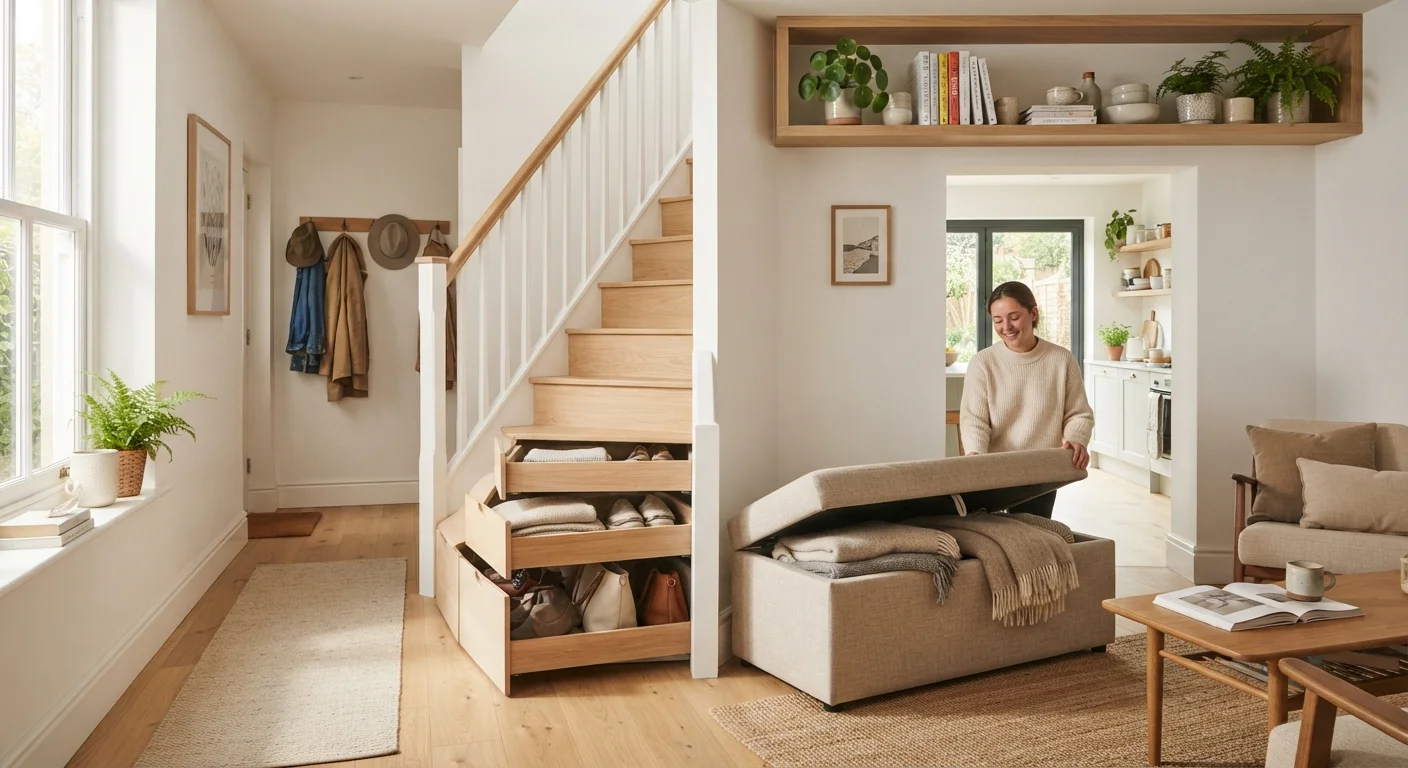
Photo credit: FaqsInsights.com | Stay Informed, Stay Ahead
In this article
Under stairs, above door frames, inside ottomans—most homes contain unused storage potential that costs nothing to activate.
Key Takeaways
- Many homes have untapped storage capacity in structural gaps, furniture, and overlooked vertical zones.
- Activating hidden storage often requires no renovation - just a few low-cost inserts or organizers.
- Matching storage zones to the items stored nearby reduces clutter without adding visible bulk.
- Under stairs, over doors, and inside hollow furniture are among the most consistently overlooked areas.
Your Home Has More Storage Than You Think
Clutter rarely means you need more square footage - it usually means the storage you already have isn't being fully used. Most homes contain a surprising number of structural gaps, hollow furniture pieces, and overlooked surfaces that can hold far more than they currently do, without any major renovation or expense.
The seven spots below are consistent across a wide variety of home styles and sizes. Some can be activated with nothing more than a bin or a hook; others benefit from a modest retrofit. Either way, these are the places worth examining before investing in additional furniture or a larger space.
Start With a Storage Audit First
Walk through your home with fresh eyes and note every gap, cavity, or hollow surface you currently ignore. Taking photos helps - what looks normal in person often reveals obvious missed opportunities in a photograph. Prioritize spots closest to where clutter tends to accumulate for the fastest impact.
Seven Hidden Storage Opportunities Worth Exploring
The Space Beneath the Stairs
The triangular cavity under a staircase is one of the largest unused volumes in many homes. Depending on your staircase's construction, this space can accommodate pull-out drawers built into the risers, a small closet with a hinged door, open shelving for books or bins, or even a compact home office nook.
Before assuming a renovation is required, check whether the drywall under your stairs is simply covering open framing - in many cases, a contractor can open it up relatively affordably. For renters or those preferring a no-cut approach, deep storage baskets pushed into the alcove beneath an open staircase work equally well.
The staircase cavity is one of the largest unused volumes in many homes.
Above Door Frames
The 12 to 18 inches of wall space above interior door frames is almost universally ignored. A simple floating shelf installed at this height is ideal for items you need occasionally but don't reach for daily - extra linens, board games, seasonal décor, or book overflow.
Because it sits above sightlines when you're standing in the doorway, the shelf stays visually unobtrusive. Use labeled baskets or uniform bins to keep the area tidy and prevent the space from becoming a visual jumble.
Shelves above door frames stay below most sightlines, hiding clutter in plain sight.
Inside Ottomans and Bench Seats
Upholstered ottomans and entryway bench seats frequently have hollow interiors designed for storage - yet many households use them purely as footrests or seating. Blankets, throw pillows, remote controls, children's toys, and shoe-care supplies all fit neatly inside.
If your current ottoman is solid, consider swapping it for a lift-top version. For built-in bench seats (common in mudrooms and breakfast nooks), make sure the hinged lid hardware is functioning properly so the space gets used regularly rather than forgotten.
A lift-top ottoman can replace an entire bin or basket dedicated to living-room overflow.
The Toe-Kick Beneath Cabinets
Kitchen and bathroom base cabinets typically have a recessed toe-kick - the 3-to-4-inch strip at floor level - that conceals a shallow but surprisingly useful cavity. Specialty toe-kick drawer systems can be retrofitted into this space to hold flat items like baking sheets, cutting boards, placemats, or bathroom towels.
Installation generally involves removing the existing toe-kick panel and fitting shallow drawer boxes in its place. It's a low-disruption upgrade that adds storage without touching counter space or wall area.
Toe-kick drawers add flat storage without consuming a single inch of counter or cabinet space.
Inside Hollow Bed Frames
Platform bed frames with built-in drawers or lift-top mechanisms make the under-bed zone both accessible and dust-free. If your current bed lacks storage, bed risers can elevate a standard frame enough to slide flat storage bins underneath - suitable for off-season clothing, extra bedding, or luggage.
For the best outcome, use breathable fabric storage bags for clothing and bedding to prevent mustiness, and opt for bins with wheels if you'll be accessing the space regularly.
The under-bed zone is one of the most storage-dense square footages in any bedroom.
The Back of Cabinet and Closet Doors
The inside face of a cabinet or closet door is a flat vertical surface capable of holding organizers for a wide range of items. Over-the-door hooks and racks are available in configurations sized for everything from spice jars to cleaning supplies, shoes, gift wrap, and pantry staples.
This approach works especially well in tight kitchens, small bathrooms, and under-sink cabinets. Because the door swings out of sight when the cabinet is open, the storage looks intentional rather than improvised. See our guide to vertical storage for more ways to use height across every room.
Over-the-door organizers turn wasted door backs into purpose-built storage zones.
Dead-End Corners and Alcoves
Architectural quirks - an awkward corner, a shallow alcove beside a chimney breast, or a bump-out between wall studs - represent storage opportunities that standard furniture can't serve. Floating corner shelves, narrow built-in shelving between studs, or a slim rolling cart can fill these gaps with minimal effort.
If you're working with a small apartment or studio, these micro-zones become especially valuable. Our small apartment storage strategies article explores this further.
Architectural quirks that feel like wasted space are often the easiest wins for added storage.
Before You Install Anything Permanent
Floating shelves and built-in drawer systems anchored to walls or cabinetry may require wall anchors, stud-finding, and - in some cases - permits if the work is load-bearing or structural. Renters should always review their lease before making any wall modifications. When in doubt about structural elements, consult a qualified contractor.
Once you've activated these spots, the logical next step is deciding what belongs where. Seasonal rotation - moving infrequently used items to harder-to-reach zones and keeping daily-use items accessible - makes any storage system more efficient. Our seasonal storage rotation guide walks through exactly how to build that habit. If your garage is also bursting at the seams, garage organization from the ground up covers zoning and sorting strategies for that often-overlooked space.

Author
Home & Garden Editorial Team
Home & Garden Editorial Team is the collective byline for our editorial team and contributor network. Articles published under this byline or an editorial pen name are researched, written, and reviewed according to our editorial standards for clarity, consistency, and independence before publication.
View all articles →