
Garage Organization From the Ground Up
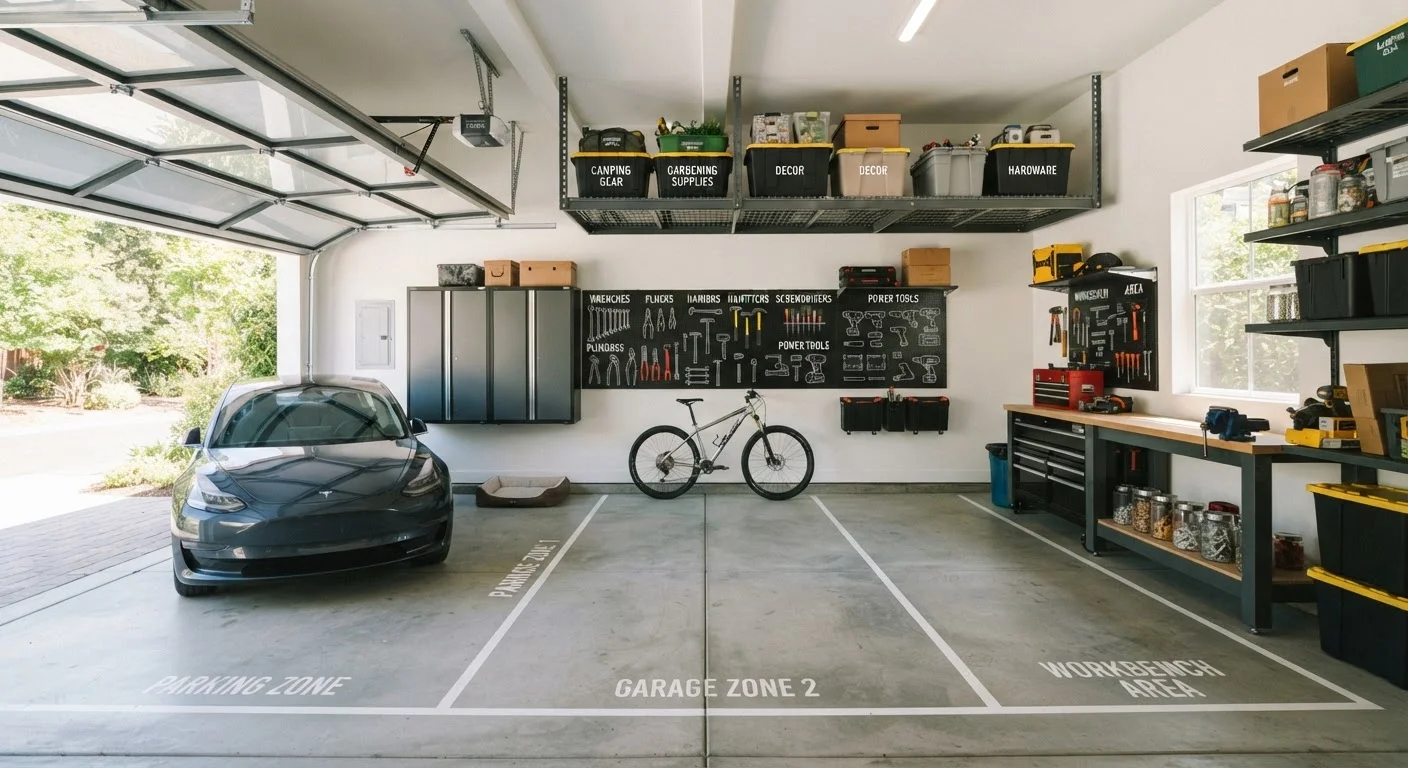
Photo credit: FaqsInsights.com | Stay Informed, Stay Ahead
In this article
A comprehensive look at how to zone, sort, and store everything in a garage—from seasonal gear to tools to sporting equipment.
Key Takeaways
- Empty the garage completely before reorganizing - sorting in place leads to missed opportunities.
- Dividing the space into distinct functional zones prevents items from migrating back into chaos.
- Wall-mounted and overhead storage dramatically increases usable floor area.
- Seasonal rotation keeps frequently needed items accessible and protects rarely used gear.
- Shared household buy-in is the single most important factor in keeping any system working long-term.
Why Garages Fall Into Chaos (and How to Break the Cycle)
The garage is the room with the lowest barrier to entry and the highest tolerance for disorder. Because it sits outside the home's main living areas, clutter tends to accumulate there invisibly - bikes lean against half-empty paint cans, holiday bins block the lawnmower, and garden tools compete with sports equipment for the same narrow strip of floor.
The core problem is rarely a shortage of space. Most garages have generous square footage and ceiling height. The problem is a lack of intentional structure. Without clearly defined zones and a routine for returning things to their proper place, the garage becomes a catch-all by default - much like the junk drawer dynamic that plagues other areas of the home.
Breaking the cycle begins with a single commitment: treat the garage as a room with purpose, not a room-sized bin. Everything that follows flows from that shift in perspective.
25%
Households that can't fit a car in garage
According to a U.S. Department of Energy study, approximately one in four households with a garage cannot park a vehicle inside due to clutter and storage overflow.
3rd
Most common room for clutter accumulation
Home organization surveys consistently rank the garage third (after the basement and attic) for unresolved clutter among US homeowners.
2x
Storage capacity gained with wall-mounted systems
Home improvement experts generally estimate that moving storage off the floor and onto walls can effectively double usable storage capacity in a standard two-car garage.
Start With a Full Purge
Before a single shelf goes up or a single bin is labeled, move everything out of the garage entirely. Sorting in place allows clutter to hide behind other clutter. A full empty-out forces honest decisions.
Sort items into four piles: Keep, Donate or Sell, Trash or Recycle, and Belongs Elsewhere. Be especially critical of duplicates, broken tools, and items you genuinely haven't touched in two or more years. Many households find that 20-30% of garage contents can be removed outright before a single storage solution is purchased.
Don't Trash Hazardous Materials
Paint, pesticides, motor oil, and solvents cannot go in regular household trash or recycling. Improper disposal can contaminate groundwater and violates most municipal regulations. Search your local government or waste management provider's website for hazardous waste collection options in your area.
Hazardous materials - old paints, pesticides, motor oil, solvents - require proper disposal through your municipality's hazardous waste program. Do not simply throw them in the trash. Check your local government's website for scheduled drop-off events or permanent collection sites.
Once the keep pile is clean, group items by category before bringing them back in. This is the foundation of zone planning.
Create Functional Zones
Zoning means assigning specific areas of the garage to specific categories of use. A well-zoned garage might include a Workshop Zone near an outlet and good lighting, a Garden and Outdoor Zone near the exterior door, a Sports and Recreation Zone along one wall, and a Seasonal Storage Zone in the least-accessible overhead or back-wall space.
Sketch a rough floor plan before moving things in. Factor in the car footprint, walking paths, and door clearances. Items used daily or weekly should live closest to the entry points. Items used seasonally can occupy higher shelves or harder-to-reach areas.
Design your zones around movement, not just categories. Think about the path you naturally walk when you come home or head into the yard - storage that aligns with that path gets used; storage that fights it gets ignored.
Behavioral research on habit formation consistently shows that reducing friction (the number of steps between intention and action) dramatically increases follow-through on routine tasks.
Before buying any storage hardware, spend one week taking photos of how the garage naturally fills up after use. The patterns will show you where your real zones already want to be.
Observing actual usage patterns before imposing structure prevents a common mistake: building a beautiful system that doesn't match how the household actually behaves.
For gardening supplies and outdoor equipment, proximity to the yard matters. If you store composting tools or kitchen scrap bins, keep them in a zone that gives you a clear path to the backyard - you'll actually use the system if it doesn't require navigating a maze.
Label every zone visibly, at eye level. Labels aren't just for children - they eliminate the mental effort of deciding where to put something after a weekend project, which is exactly when things end up in the wrong spot.
Use Color-Coded Bins by Zone
Assign a consistent bin or label color to each functional zone - red for automotive, green for garden, blue for sports, for example. This makes returning items fast and intuitive, even for household members who weren't involved in the original setup. Color coding works especially well for multi-person households with children.
Maximize Vertical and Overhead Space
Floor space in a garage is valuable - especially if a vehicle needs to fit. The solution is almost always to go vertical. Wall-mounted pegboards, slatwall panels, and French cleats allow tools and gear to live off the floor without requiring permanent cabinetry. Adjustable shelving units along the perimeter can store bins, containers, and equipment at varying heights.
Overhead ceiling storage - suspended metal racks or platform shelves - is ideal for large seasonal items: camping gear, holiday decorations, roof cargo carriers, or roof-top sports equipment. Anything stored overhead should be in a clearly labeled, sealed container to protect against dust and pests, and should weigh no more than the rack's rated capacity. Always follow the manufacturer's load specifications and, for any ceiling-mounted installation, ensure you're anchoring into joists, not just drywall.
For smaller garages or shared utility spaces, the strategies from hidden storage approaches - like the space above door frames or inside wall cavities - can apply here too.
“Vertical space is the most underused resource in residential storage. Most homeowners think in terms of floor plans - but in a garage, the walls and ceiling are where the real capacity lives.”
— A professional organizer specializing in residential spaces, Certified Professional Organizer, residential storage consultant
Seasonal Storage and Long-Term Maintenance
A garage organized once and never revisited will revert to chaos within one season. The antidote is a simple rotation rhythm: twice a year (spring and fall work well for most US climates), reassess what's accessible and what should be archived.
Move summer gear - lawn equipment, garden tools, camp chairs, sprinklers - forward in spring. Move winter gear - snow blowers, sleds, ice melt, holiday bins - to the back or overhead. This isn't just about convenience; rotating storage protects items from temperature and moisture damage by ensuring they're properly sealed and stored when not in use. Our guide to seasonal storage rotation goes deeper on how to build that rhythm reliably.
Schedule a 20-minute monthly sweep to catch drift before it compounds. Walk the space, return misplaced items, and note anything that has accumulated without a home. Address it then, not later.
Climate and Garage Storage
Extreme heat or cold can damage electronics, paints, adhesives, and certain plastics stored in an uninsulated garage. If your garage experiences wide temperature swings, avoid storing sensitive items there year-round. Insulated storage bins provide a modest buffer, but for truly temperature-sensitive items, interior home storage is a safer choice.
Getting the Household to Maintain the System
The most thoughtfully designed garage system will fail if only one person maintains it. Shared spaces require shared norms. That means making the system intuitive enough that family members don't have to ask where things go - the answer should be visually obvious.
Low zones with picture labels work well for children. Consistent hook placement for frequently used items (bikes, backpacks, sports bags) reduces the decision friction that leads to things being dropped on the floor. A simple rule - if you used it, you return it before you leave the garage - prevents the slow accumulation that undoes a good system.
For deeper strategies on building shared habits across different ages and personalities, see our guide on getting the whole household on board.
The garage, organized well, stops being a source of friction and becomes one of the most genuinely useful rooms in the home. The investment of a single focused weekend - followed by small, consistent habits - is usually all it takes.

Author
Home & Garden Editorial Team
Home & Garden Editorial Team is the collective byline for our editorial team and contributor network. Articles published under this byline or an editorial pen name are researched, written, and reviewed according to our editorial standards for clarity, consistency, and independence before publication.
View all articles →