
Getting the Whole Household On Board With Staying Organized
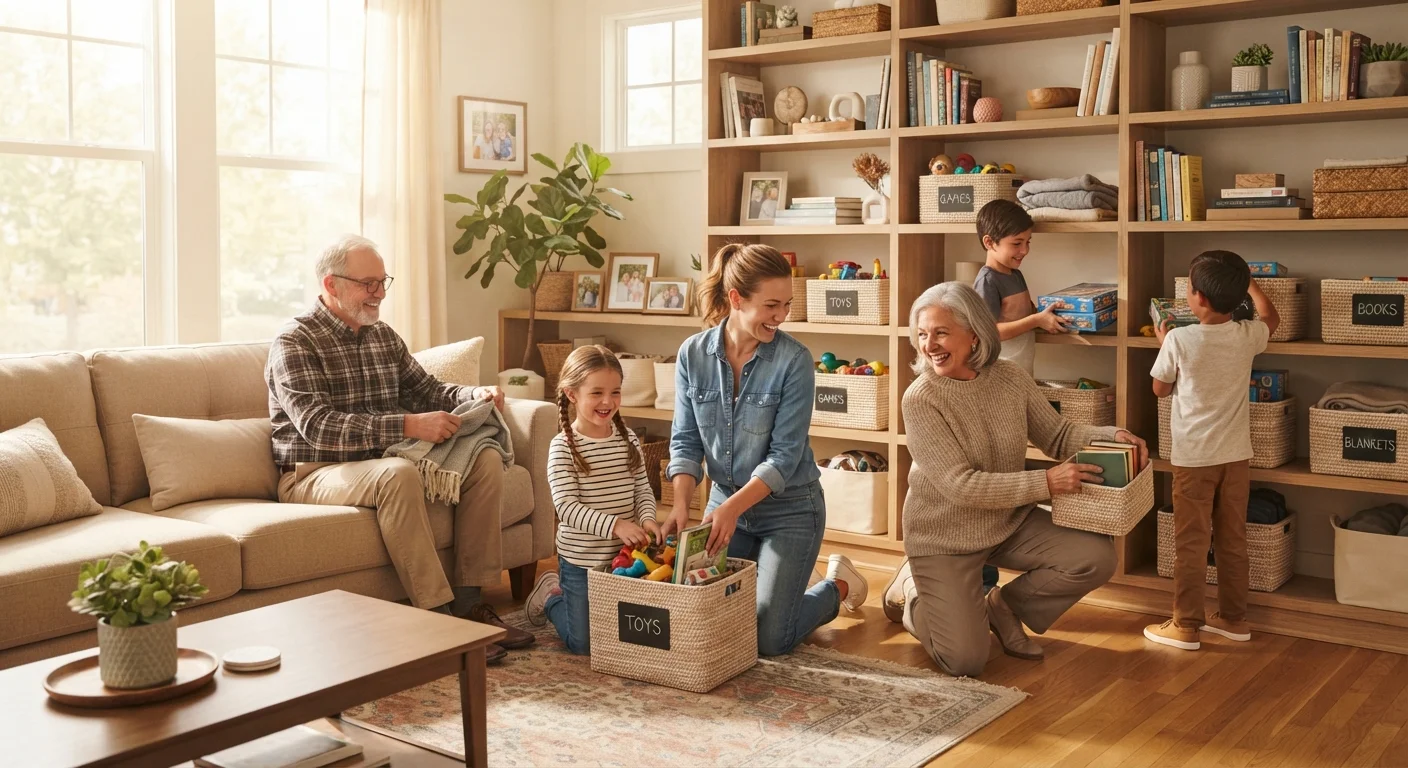
Photo credit: FaqsInsights.com | Stay Informed, Stay Ahead
In this article
Organization rarely sticks when only one person maintains it. Explore strategies for building shared habits across different ages and personalities.
Key Takeaways
- Organization systems fail when only one person maintains them - shared ownership is essential.
- Age-appropriate responsibilities help children and adults contribute without feeling overwhelmed.
- Clear visual systems and labeling reduce friction and remove the need to ask where things go.
- Regular, brief household check-ins keep systems from quietly falling apart over time.
- Consistency matters more than perfection - build habits gradually and celebrate small wins.
Why Single-Person Systems Always Break Down
Most household organization attempts start with one motivated person - usually the one most bothered by the disorder - who designs a system, labels the containers, and reorganizes the shelves. Within weeks, the system starts slipping. Items return to the wrong places, piles re-form, and the original architect is left maintaining order alone or giving up entirely.
The problem isn't the system. It's the lack of shared ownership. When other household members didn't participate in designing the structure, they have no mental model of where things belong or why. They're not being careless; they're operating without the information the organizer has internalized.
Research in habit formation consistently shows that routines stick when they're tied to social accountability and environmental cues - not willpower alone. The same principle applies at home. Organization becomes durable when it's a shared agreement, not a solo performance.
Avoid Assigning Blame for Disorder
Framing disorganization as one person's fault creates resentment and shuts down cooperation. Approach the conversation as a shared challenge the household is solving together - not a critique of any individual's habits or personality.
If you're also thinking about how these principles apply to study or work habits, the same habit-formation logic explored in our study routine guide applies here: small, consistent structures beat ambitious one-time overhauls.
Tools and Setup Before You Begin
Getting the household aligned doesn't require an expensive overhaul. The most effective setups rely on simple tools that reduce decision fatigue and make the right action the easiest one.
Labeled storage bins or baskets
Provide clearly designated homes for frequently used items so every household member knows where things belong.
Whiteboard or chore chart
Visually tracks rotating responsibilities so no single person carries the organizational load.
Color-coded labels or tape
Helps younger children or visual learners identify their own zones and belongings without reading.
Timer or phone reminder
Structures brief daily or weekly reset routines so tidying becomes a predictable habit rather than a reactive chore.
Before moving into the steps, confirm you have the prerequisites in place:
What you will need
Step-by-Step: Building a Shared Organization System
Don't Redesign Everything at Once
Introducing too many new systems simultaneously is one of the most common reasons household organization efforts stall. When people feel overwhelmed by change, they disengage. Start with one shared space or one new habit, let it settle for a few weeks, then build from there.
Hold an honest household conversation
Before rearranging a single drawer, gather everyone who lives in the space - including children old enough to participate - and talk openly about what isn't working. Ask each person to name one or two spots in the home that consistently frustrate them. This accomplishes two things: it surfaces problems you may not have noticed, and it gives everyone a stake in fixing them.
Keep the tone solution-focused. Understanding why clutter creates stress can help frame the conversation around wellbeing rather than fault.
Map zones and assign ownership
Walk through your home and designate zones - kitchen, entryway, living room, kids' rooms, shared bathroom - then discuss who is responsible for maintaining each one. Ownership doesn't mean one person does everything in that space; it means one person notices when it needs attention and initiates the fix.
For shared spaces, rotate responsibility monthly. A simple whiteboard chart works well and keeps expectations visible without relying on anyone's memory.
Build age-appropriate responsibilities
Children as young as three can return toys to a labeled bin. School-age kids can manage their own backpacks, shoes, and bedroom surfaces. Teenagers can handle laundry cycles or kitchen clean-up. Matching tasks to capability prevents frustration and builds genuine confidence.
Pairing a labeling system suited to your household - such as picture labels for young children or color codes for visual learners - reduces the need to ask where things go and lowers the barrier for everyone.
Establish a daily reset routine
Choose a consistent time each day - many households find 10 minutes before dinner or just before bed works well - when everyone does a brief reset of their zone. The goal isn't deep cleaning; it's returning items to their designated homes so the space starts fresh the next day.
Use a timer to keep it low-pressure. When tidying has a defined end point, it feels manageable rather than open-ended. This daily rhythm is the backbone of any shared organizational system.
Schedule regular system check-ins
Every four to six weeks, hold a short household check-in (10-15 minutes is enough) to evaluate what's working and what isn't. Systems that made sense in September may not fit December's different routines. Allow the group to propose adjustments without treating changes as failures.
Applying rules like one-in, one-out during these check-ins helps prevent gradual accumulation from quietly undoing all your earlier work. You might also consider whether seasonal storage rotation could reduce everyday clutter between check-ins.
Make the Default Action the Easy Action
The most effective organizational systems reduce effort rather than add it. Place bins, hooks, and trays exactly where people already tend to drop things. When putting something away is easier than leaving it out, compliance rises naturally across all age groups.
Keeping the Momentum Going Long-Term
The hardest part of household organization isn't the initial setup - it's sustaining the system through seasons, life changes, and shifting routines. A few principles help.
Celebrate consistency, not perfection. When a household member returns something to the right place, notices and names it positively. Positive reinforcement shapes behavior more reliably than criticism of lapses.
Adapt without abandoning. A system that worked for a family with a toddler will need adjustment when that child starts school, or when a new roommate arrives, or when work schedules change. Flexibility isn't a sign of failure; it's how good systems stay alive.
Expand gradually. Once shared habits take hold in one area, introduce them to another. Tackling the garage, for example, becomes far more tractable once the household has already internalized the zone-and-label approach indoors.
If digital disorder is contributing to the household's overall sense of chaos, extending your organizational thinking there can help too - see our guide on organizing digital files and inboxes at home for a practical starting framework.

Author
Home & Garden Editorial Team
Home & Garden Editorial Team is the collective byline for our editorial team and contributor network. Articles published under this byline or an editorial pen name are researched, written, and reviewed according to our editorial standards for clarity, consistency, and independence before publication.
View all articles →