
Seasonal Storage Rotation: What to Keep Accessible and What to Archive
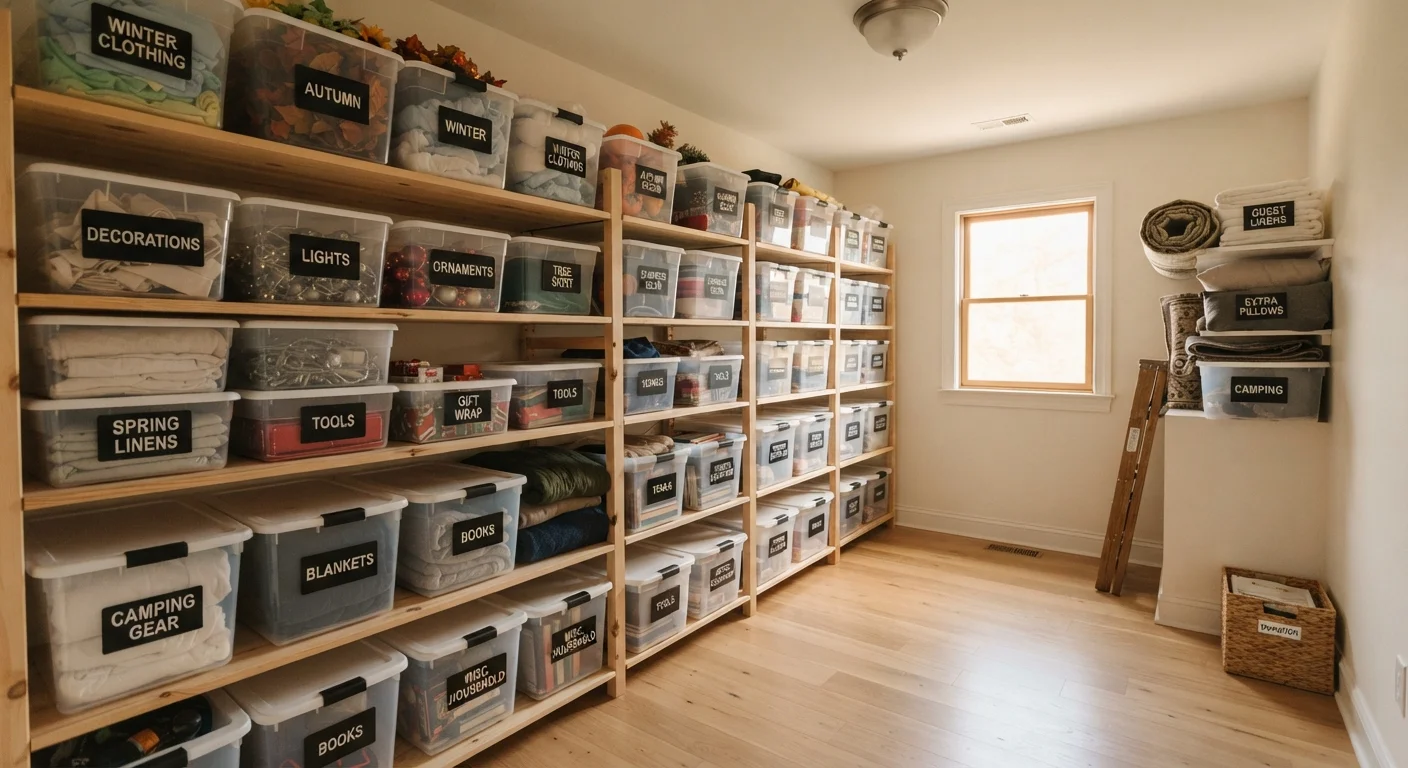
Photo credit: FaqsInsights.com | Stay Informed, Stay Ahead
In this article
Rotating what's accessible by season reduces everyday clutter and protects infrequently used items. Here's how to build a reliable system.
Key Takeaways
- Seasonal rotation reduces clutter by keeping only currently relevant items in prime, accessible storage zones.
- Archiving off-season items properly protects them from damage and makes retrieval predictable.
- A consistent rotation schedule - ideally tied to the calendar - prevents backslide into disorganization.
- Labeling and containerizing archived items is what separates functional storage from forgotten piles.
- Sorting before you store is a non-negotiable first step that saves time during every future rotation.
Why Seasonal Rotation Is a System, Not a One-Time Project
Most people reorganize reactively - when things become unmanageable. Seasonal storage rotation reframes organization as a maintenance cycle, not a crisis response. The goal is simple: what you need most often lives in the most accessible spots, and everything else is archived in a way you can reliably retrieve.
This matters more than it sounds. When out-of-season items occupy prime real estate - closet floors, front shelves, the kitchen counter - they create daily friction. You work around them, pile things on top of them, and forget what's underneath. Before you rotate anything, sort through what you have first - skipping that step is the most common reason storage systems don't hold.
Rotation Schedules Vary by Climate
The four-rotation model (one per season) works well in regions with distinct seasonal swings. In milder climates, two rotations per year - spring-summer and fall-winter - may be entirely sufficient. Adjust your schedule to match what your household actually uses and when, rather than following a rigid calendar that doesn't reflect your local conditions.
How to Decide What's Active vs. What's Archived
The dividing line is frequency of use within the current season. If you've reached for it in the last 30 days or will need it regularly in the next 60, it's active. Everything else is a candidate for the archive zone.
Common active-season items include current-weather clothing, sport or outdoor equipment in use, seasonal cooking tools (like a slow cooker in winter or a grill brush in summer), and relevant garden supplies. Off-season versions of all of these - plus holiday décor, specialty bedding, and camping gear used only once or twice a year - belong in archive storage.
Sort ruthlessly before each rotation, not after.
Moving items you no longer use into archive storage just delays the decision. Sorting first means only genuinely useful things make the cut, which keeps archive boxes lean and retrieval straightforward. It also prevents the creep of expired, broken, or redundant items accumulating in long-term storage.
Designate fixed zones - one for active storage, one for archives.
Without physical boundaries, seasonal items mix with everyday items and the system collapses. A clear spatial divide - even if it's just one shelf in a closet versus a corner of the garage - trains household members to return things to the right zone automatically.
Use uniform, stackable containers for all archived items.
Mismatched boxes waste vertical space and make stacks unstable. Uniform containers let you maximize height, maintain safer stacks, and create a visual system where the size of a container signals the category of contents.
Label every archived container on at least two sides.
A label on only the front becomes invisible once a bin is stacked or pushed against a wall. Two-sided labeling means you can identify contents from whatever angle you approach the shelf - saving time and frustration during retrieval.
Schedule rotation days on your calendar like any household task.
Rotation that happens reactively - when you suddenly need the items - is chaotic and rushed. A planned date gives you time to sort, clean items before storing, and set up the new season's active zone thoughtfully rather than frantically.
Store archived items clean, dry, and climate-appropriately.
Storing items dirty or damp is how mold, pests, and material degradation happen in archive spaces. A few extra minutes of prep before boxing something away can prevent damage that makes items unusable when next season arrives.
Setting Up Your Archive Zone Effectively
Archive zones work best when they're predictable and physically separate from everyday storage. Garages, attics, basement corners, and high closet shelves are natural candidates. The key is that everyone in the household knows the boundary. If you have a garage and want a complete framework for zoning it by function, the garage organization guide walks through how to divide that space from the ground up.
Good archive zones share a few traits: adequate shelving to keep bins off the floor, temperature that doesn't swing to extremes (which can damage fabrics, electronics, and plastics), and a layout where the most recently archived items are most accessible. A clear labeling system is what makes the whole thing retrievable.
Making Rotation a Household Habit
A rotation system maintained by one person is fragile. When the whole household understands where things go and why, the system is self-reinforcing. That means explaining the logic simply: active stuff stays close, off-season stuff goes to archive, and rotation happens twice a year on predictable dates.
“The home should be the treasure chest of living. But it can only serve that function when what's inside is intentionally kept - not just accumulated.”
— Le Corbusier, Architect and urban planning theorist
If you share your home with others and want strategies for making shared habits actually stick, getting the whole household on board covers approaches for different ages and personalities. For households with limited space, the principles of rotation still apply - small-space storage strategies can help you adapt the archive concept to compact layouts.

Author
Home & Garden Editorial Team
Home & Garden Editorial Team is the collective byline for our editorial team and contributor network. Articles published under this byline or an editorial pen name are researched, written, and reviewed according to our editorial standards for clarity, consistency, and independence before publication.
View all articles →