
Sorting Before Storing: Why the Order You Tackle Decluttering Matters
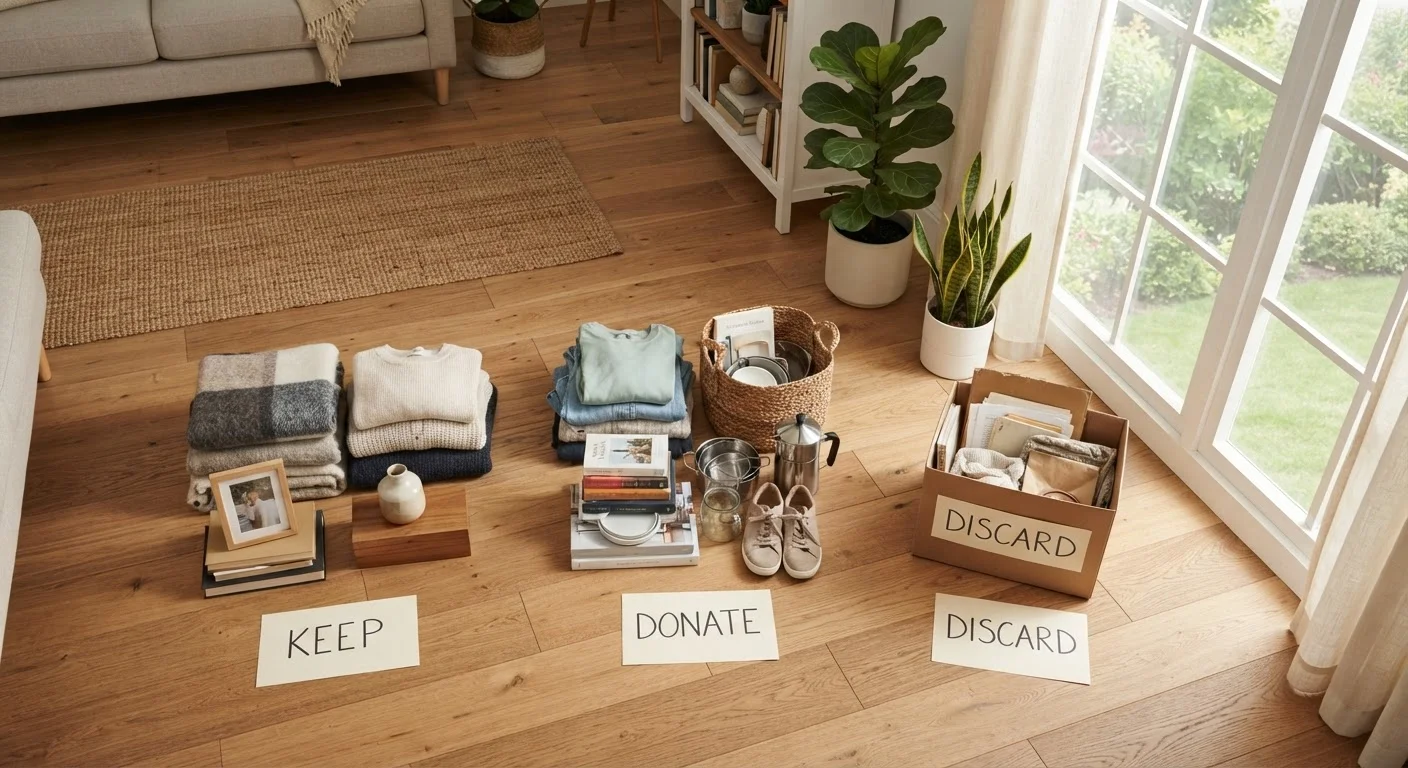
Photo credit: FaqsInsights.com | Stay Informed, Stay Ahead
In this article
Skipping the sort-first step is the single most common reason organization efforts fall apart. Here's what to do instead.
Key Takeaways
- Buying storage containers before sorting is one of the most common and costly decluttering mistakes.
- A clear sorting sequence - keep, donate, discard - must happen before any organizing begins.
- Tackling an entire home at once instead of one zone leads to burnout and abandoned projects.
- Items that don't have a designated home will always drift back into clutter.
- Emotional fatigue during decluttering is predictable - building in breaks prevents poor decisions.
Why Sequence Is Everything in Decluttering
Most failed decluttering projects don't fail because of laziness or lack of storage. They fail because the steps were done out of order. When you organize before you sort, or sort before you decide what actually belongs in a space, you're building structure on an unstable foundation.
Understanding the correct sequence - assess, sort, decide, then store - is the single most transferable skill in home organization. It applies to a junk drawer, a garage, or an entire house. If you've ever reorganized a space only to watch it collapse back into chaos within weeks, sequence is almost certainly where things went sideways. For a broader look at why disorder feels so persistent, see our article on why clutter feels so overwhelming.
Buying storage containers before sorting.
Why it happens: Containers feel productive and optimistic - they signal that organization is underway. Many people shop for bins and baskets as a first step because it's easier than making decisions about what to keep.
Trying to organize an entire home in a single session.
Why it happens: Initial motivation is often high, and the whole-house problem feels urgent. Starting everywhere at once feels like momentum, but it quickly creates a bigger mess than existed before.
Sorting items without assigning them a specific home afterward.
Why it happens: People often stop at the decision phase - keep, donate, discard - without thinking through exactly where kept items will live. Items left without a designated location tend to migrate back into piles.
Making high-stakes decisions late in a long sorting session.
Why it happens: Decision fatigue is real and accumulates quickly when sorting through sentimental or ambiguous items. People often push through fatigue instead of pausing, leading to regret in both directions - keeping too much or discarding things they later miss.
Skipping the discard step entirely by creating an "unsure" pile.
Why it happens: Ambiguous items feel too difficult to decide on in the moment, so they get temporarily set aside. In practice, "unsure" piles rarely get revisited and simply become a new form of clutter.
Applying the Right Order - and Making It Stick
Knowing the mistakes is only half the work. The other half is building a process that protects you from repeating them. A reliable framework looks like this: choose a single, clearly bounded zone, remove everything from it, sort items into keep, donate, and discard categories, then - and only then - return kept items to a designated spot.
Boundaries matter enormously here. A "zone" might be one shelf, one closet, or one room - not "the upstairs" or "the storage areas." Completing one bounded zone gives you a tangible win and a replicable method. If you're approaching this for the first time, the first-time organizer's introduction offers a low-pressure starting point.
Sentimental Items Deserve a Separate Session
Mixing high-emotion items - photos, heirlooms, childhood keepsakes - into a general sort session almost always slows or derails the process. These categories require more mental energy and more deliberate decision-making. Plan a dedicated session for them with a clear time boundary, and consider inviting a trusted person to help you stay grounded and on track.
Once the sorting phase is complete, the long-term challenge becomes preventing new clutter from filling the space you've created. That's where sustainable rules come in - the one-in, one-out principle and similar habits address exactly this. And don't overlook digital spaces: digital clutter carries the same cognitive cost as physical disorder and benefits from the same sequenced approach.

Author
Home & Garden Editorial Team
Home & Garden Editorial Team is the collective byline for our editorial team and contributor network. Articles published under this byline or an editorial pen name are researched, written, and reviewed according to our editorial standards for clarity, consistency, and independence before publication.
View all articles →