
Junk Drawer, Reimagined: Turning Catch-All Spaces Into Functional Zones
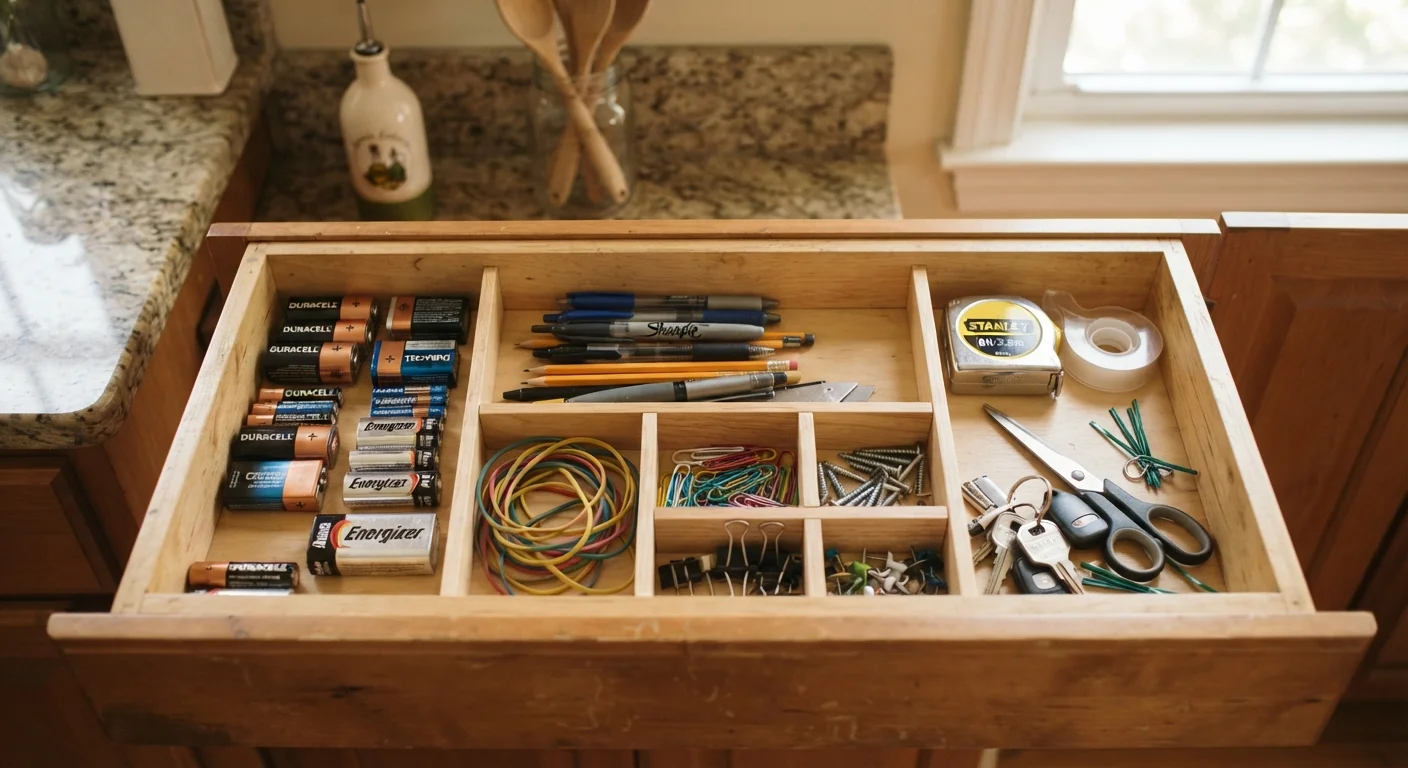
Photo credit: FaqsInsights.com | Stay Informed, Stay Ahead
In this article
Every home has a dumping ground. Learn how to impose just enough structure to make those spaces useful without eliminating their flexibility.
Key Takeaways
- Catch-all spaces work best when assigned a few defined categories rather than eliminated entirely.
- Emptying and sorting before buying any organizers prevents wasted purchases.
- Dividers and small containers are the primary tools for creating zones within a drawer or shelf.
- A regular five-minute reset prevents catch-all spaces from reverting to chaos.
- The goal is controlled flexibility, not perfection - some miscellaneous space is genuinely functional.
Why Catch-All Spaces Are Worth Saving, Not Eliminating
The instinct when facing a chaotic junk drawer is often to eliminate it entirely - redistribute everything, get ruthlessly minimal. But catch-all spaces exist because real life generates a constant stream of small, category-defying objects: a spare key, a birthday candle, a twist tie, a single AA battery. These items need a home.
The problem isn't the drawer's existence. It's the absence of any internal structure. Without zones, everything competes for the same undifferentiated space, and retrieval becomes a dig-and-hope exercise. The goal here is controlled flexibility: enough structure to make the space useful, loose enough to remain adaptable.
This approach applies well beyond the kitchen junk drawer. Entry-table drawers, home-office catch-all shelves, and the "everything" bin in a mudroom all benefit from the same zoning logic. For spaces with more vertical potential, the guide to vertical storage is worth reviewing alongside this one.
Don't Skip the Empty-Out Step
Organizing around existing clutter is one of the most common reasons junk drawers fail to stay tidy. Everything must come out before any structure can be built. This step surfaces forgotten items, expired coupons, and duplicates that inflate the drawer's perceived volume.
Before gathering any supplies, walk through what you'll need.
What you will need
Drawer dividers or small bins
Create distinct zones within the drawer so categories stay separated over time.
Measuring tape
Confirm interior dimensions before purchasing any organizers.
Sticky labels or label maker
Mark each zone so everyone in the household knows where categories live.
Small zip-lock bags
Corral tiny loose items like batteries, twist ties, and spare screws that slip under dividers.
Step-by-Step: Building a System That Holds
The steps below work for a standard kitchen junk drawer, but the same sequence applies to any catch-all space. Adjust category names and container sizes to fit your context.
Empty the space completely
Pull everything out and place it on a flat surface. Resist the urge to sort as you go - get it all out first. This gives you a true picture of volume and prevents overlooked items from anchoring the old chaos in place.
Sort into broad categories
Group items by function: writing tools, fasteners (rubber bands, binder clips, twist ties), batteries, tools (tape measure, small screwdrivers), paper and coupons, and a miscellaneous pile. Don't create more than five or six categories - narrower groupings become harder to maintain.
Discard duplicates, dead batteries, expired coupons, and anything genuinely broken beyond use.
Measure and plan your zones
Measure the interior dimensions of the drawer or shelf. Sketch a rough layout on paper, allocating more space to high-frequency categories (pens, scissors) and less to rarely needed items. This step prevents buying organizers that don't fit.
[tip_callout]Add dividers and containers
Place dividers, bins, or small containers to define each zone. Adjustable divider systems allow you to resize zones if your habits change. For very small items like batteries or spare screws, use a small zip-lock bag or a dedicated tiny bin to prevent them from migrating under everything else.
Return items to their assigned zones
Place each category back in its designated area. If something doesn't fit cleanly into any zone, decide right now whether it belongs in the drawer at all - or whether another location in your home is more logical. Items that ended up in the junk drawer by default often have a better permanent home elsewhere.
Label each zone
Add a simple label to the front of each divider section or bin. Labels don't need to be elaborate - a strip of masking tape with a handwritten word is sufficient. Labels matter most in shared households where multiple people interact with the same drawer.
Schedule a monthly five-minute reset
Set a recurring reminder - monthly works for most households - to spend five minutes returning stray items to their correct zones. This reset prevents the gradual drift that turns an organized drawer back into a catch-all over several weeks.
Once your drawer is organized, it becomes much easier to spot what's missing or misplaced during your monthly reset. For a broader audit of storage opportunities throughout your home, the room-by-room declutter audit offers a systematic approach room by room.
Keeping the System Honest Over Time
The most common reason organized spaces revert is that the system was designed for an idealized version of household behavior rather than the real one. If the drawer gets disrupted repeatedly in the same way - say, the battery zone always overflows - that's a signal to resize that zone, not to blame the people using it.
Treat your first layout as a draft. After living with it for a few weeks, notice what's working and what isn't, then adjust. Adjustable dividers make this easy. Fixed organizers may require a partial restart, which is a reasonable trade-off if the original configuration clearly isn't working.
Avoid Over-Organizing Too Narrowly
Assigning a dedicated spot to every single item creates a system too rigid to maintain. If putting something away requires more than a two-second decision, most people will stop using the system. Leave one intentional 'miscellaneous' zone to absorb the genuinely unpredictable.
If your catch-all challenges extend to a larger space like a mudroom or garage, the garage organization guide covers zoning strategies at a larger scale. For smaller living situations where every square foot matters, smart storage strategies for small apartments offers approaches tailored to tight spaces.

Author
Home & Garden Editorial Team
Home & Garden Editorial Team is the collective byline for our editorial team and contributor network. Articles published under this byline or an editorial pen name are researched, written, and reviewed according to our editorial standards for clarity, consistency, and independence before publication.
View all articles →