
Group Classes vs. One-on-One Training for Dogs
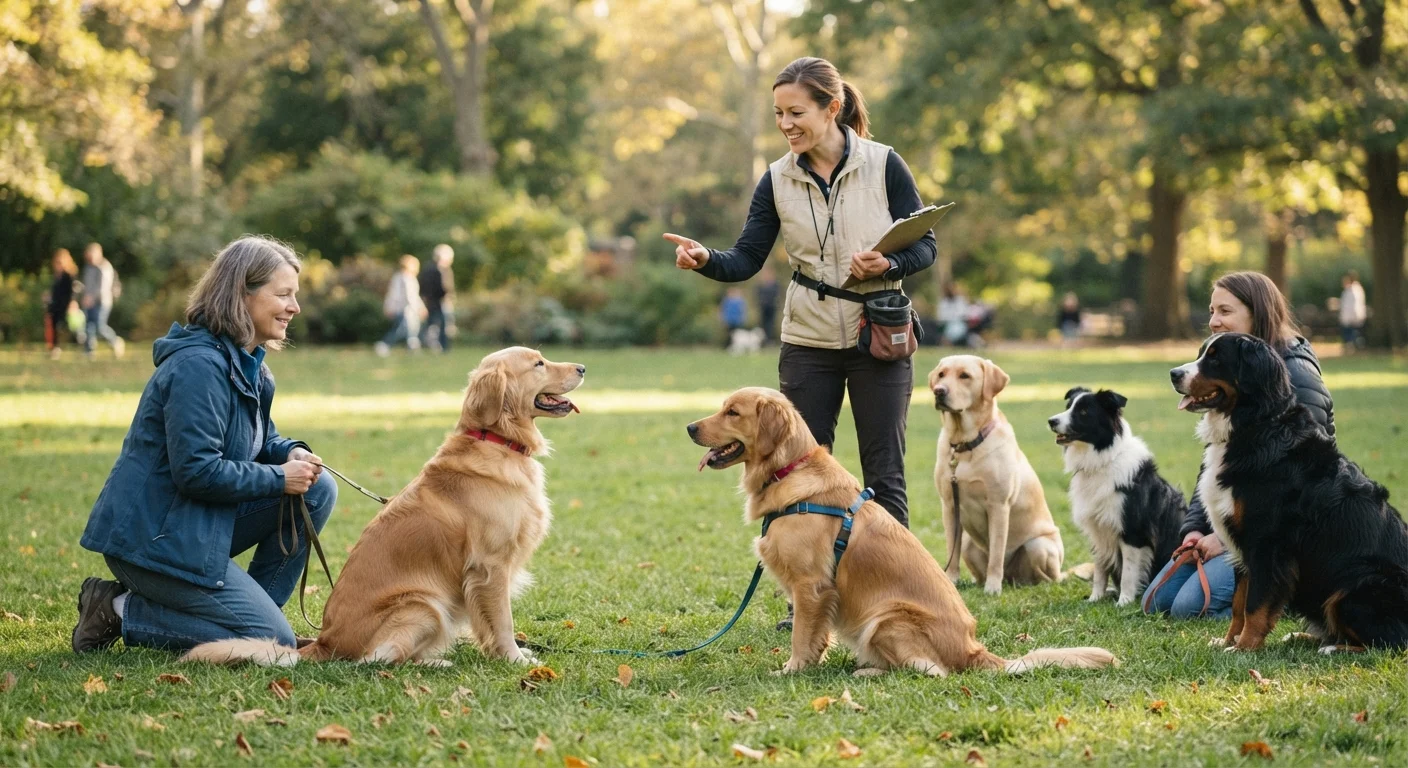
Photo credit: FaqsInsights.com | Stay Informed, Stay Ahead
In this article
Both group and private training formats have genuine advantages. Compare what each offers so you can match the format to your dog's needs and your goals.
Key Takeaways
- Group classes build socialization skills alongside obedience, making them ideal for well-adjusted puppies and social dogs.
- One-on-one training offers personalized attention and is better suited for dogs with fear, reactivity, or complex behavioral issues.
- Cost and scheduling flexibility differ significantly between the two formats.
- Many owners find that combining both formats over time yields the strongest long-term results.
- The right format depends on your dog's temperament, your training goals, and your lifestyle.
What Each Format Actually Involves
Group dog training classes typically bring together four to eight dogs and their owners in a shared space - often a training facility, pet store, or outdoor park. Sessions follow a set curriculum, usually progressing through foundational cues like sit, stay, and loose-leash walking over several weeks. The trainer divides attention across all participants while coaching handlers through exercises.
One-on-one training, sometimes called private training, pairs your dog and you directly with a trainer - either in your home, at a facility, or at a location relevant to your dog's specific challenge (a park where leash reactivity occurs, for example). The trainer's full attention is on your dog's behavior and your handling technique throughout each session.
If you're starting from scratch, see our pre-session checklist to make sure you're prepared before booking either format.
The Case for Group Classes
The most distinctive advantage of group classes is exposure. Dogs trained only at home can struggle when real-world distractions appear - other animals, strangers, new smells. A classroom environment introduces controlled, manageable levels of distraction from the first session, which helps dogs generalize their skills more reliably.
Socialization is a parallel benefit, particularly for puppies. Positive, structured exposure to other dogs during the critical developmental window (generally up to 16 weeks) shapes how a dog responds to other animals for life. Group classes provide this in a supervised, reward-based context.
Cost is also a practical consideration. Group sessions are typically more affordable per hour than private training because the trainer's time is shared across multiple clients. For owners working on standard obedience goals with a sociable dog, this format offers strong value.
Ask to Observe Before You Enroll
Most reputable trainers will allow prospective clients to watch a session before signing up. Use this opportunity to evaluate the trainer's communication style, how they manage stressed or distracted dogs, and whether the pace feels right for your dog's level. A single observation visit can save you from a poor fit.
For a broader look at how training formats fit into an owner's longer journey, our first-time owner's training foundation guide covers the core principles worth knowing before you begin.
The Case for One-on-One Training
Private training becomes especially valuable when a dog's behavior falls outside what a group setting can safely or effectively address. Dogs who are reactive toward other dogs or people, those with significant fear responses, or those working through resource guarding often cannot make meaningful progress in a classroom - and may even be stressed by the environment itself.
The undivided attention of a one-on-one session means a trainer can observe your specific dog's body language, identify triggers, and adjust techniques in real time. Handler coaching is also more precise: trainers can correct your timing and technique immediately rather than cycling back to you among several participants.
Private sessions are more easily scheduled around your calendar and can be held where the problem actually occurs - making the training directly relevant to your daily life. This contextual specificity is difficult to replicate in a fixed classroom setting.
| Group Classes | One-on-One Training | |
|---|---|---|
| Cost | Generally lower per session | Higher per session |
| Trainer attention | Shared across participants | Fully focused on your dog |
| Socialization opportunity | Built into every session | Limited or absent |
| Distraction training | Natural, real-time exposure | Controlled by trainer choice |
| Suitability for reactive dogs | Often not recommended | Strongly recommended |
| Scheduling flexibility | Fixed class schedule | More flexible by arrangement |
| Location options | Facility or designated space | Home, facility, or problem location |
| Best developmental stage | Puppies and social adults | Any age, especially complex cases |
How to Decide - and When to Combine Both
Start by honestly assessing your dog's temperament and your primary goals. If your dog is comfortable around other dogs and people and you want to build foundational manners, a group class is a logical, cost-effective starting point. If your dog shows avoidance, fear, or aggression in social settings, beginning with private sessions allows a trainer to address those responses before group exposure is attempted.
Age matters, too. Puppies tend to thrive in well-run puppy classes where socialization is baked into the curriculum. Adult dogs with established behavioral patterns often benefit from the focused assessment a private trainer can provide.
Many experienced trainers recommend a sequenced approach: use private sessions to resolve specific challenges or lay a solid foundation, then transition to group classes to practice those skills amid distractions. This combination often produces the most durable results.
Whichever format you choose, the underlying methods matter just as much as the setting. Common training myths - like the idea that dominance-based techniques are more effective - can undermine progress regardless of format. Seek out trainers who use reward-based, evidence-informed approaches, and don't hesitate to ask about their credentials and methods before committing.
You may also want to consider which specific technique fits your dog's learning style. Our comparison of clicker training versus verbal cues can help you think through that decision alongside your format choice.

Author
Pets & Animals Editorial Team
Pets & Animals Editorial Team is the collective byline for our editorial team and contributor network. Articles published under this byline or an editorial pen name are researched, written, and reviewed according to our editorial standards for clarity, consistency, and independence before publication.
View all articles →