
New Car vs. Used Car: Understanding the Real Trade-Offs
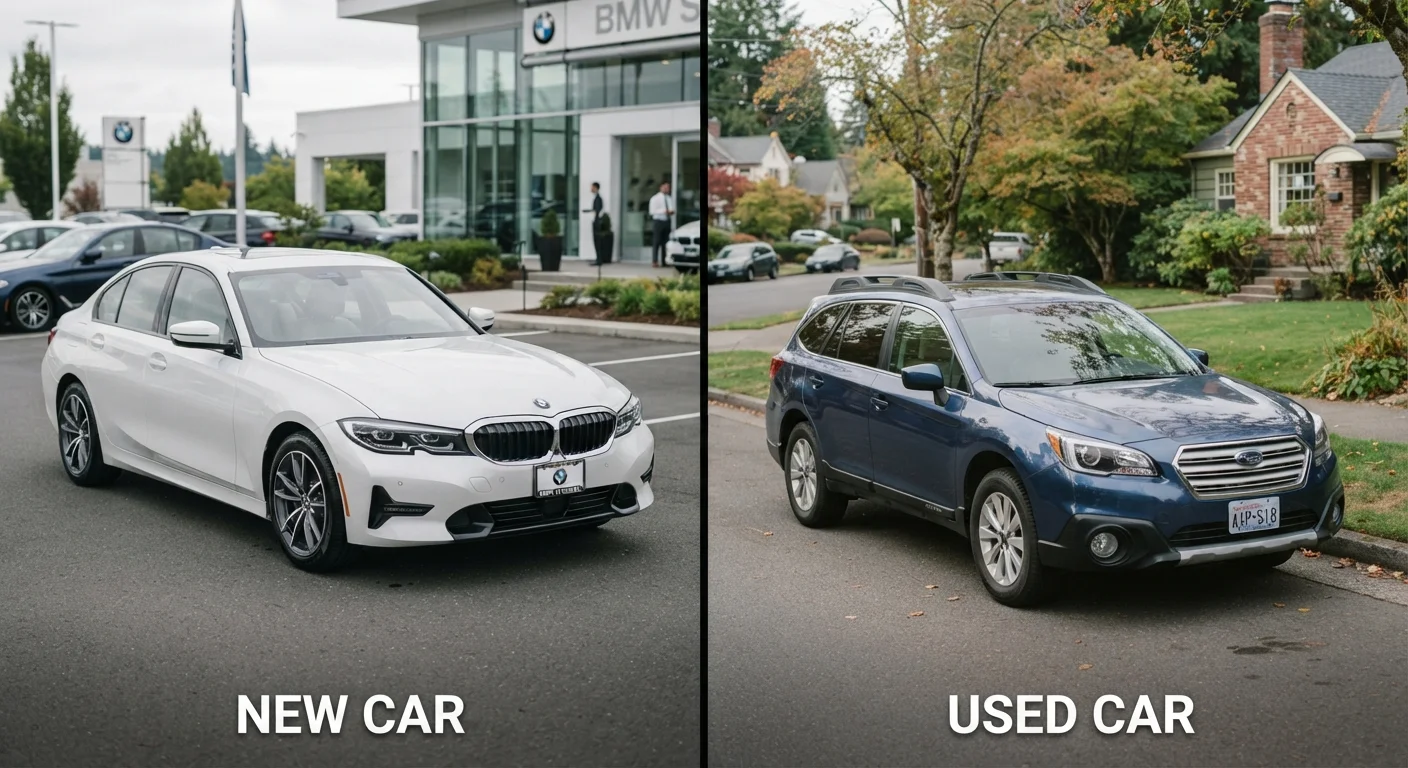
Photo credit: FaqsInsights.com | Stay Informed, Stay Ahead
In this article
Depreciation, warranties, financing rates, and reliability — here's how new and used vehicles genuinely differ.
Key Takeaways
- New cars depreciate fastest in the first one to three years, often losing 20-30% of their value.
- Used cars typically carry higher interest rates than new vehicles when financed through a lender.
- Manufacturer warranties on new cars provide coverage that most used vehicles lack unless certified pre-owned.
- Reliability gaps between new and used cars have narrowed as modern vehicles are built to last longer.
- Your total cost of ownership - not just sticker price - is the most meaningful comparison point.
Depreciation: The Cost That Hits Before You Leave the Lot
Depreciation is the single largest hidden expense in car ownership, and it affects new and used vehicles very differently. A new vehicle typically loses a significant portion of its value within the first year - estimates commonly cited in automotive industry research suggest a range of roughly 15-25% in year one, with the steepest losses occurring in years one through three. By the time a car is three years old, the original buyer has often absorbed the worst of that decline.
For used-car buyers, this works in their favor. You are, in effect, letting someone else absorb that early depreciation hit and paying a price that reflects it. Our guide to how depreciation works explains the full curve and what it means at different ownership stages.
New-car buyers are not simply losing money, though. They gain the certainty of a vehicle with no prior accident history, no hidden wear, and a full ownership record from mile zero - factors that have real, practical value even if they don't show up on a depreciation chart.
| Criterion | New Car | Used Car |
|---|---|---|
| Purchase Price | Higher upfront cost | Lower upfront cost |
| Depreciation Exposure | Highest in years 1-3 | Slower rate post-peak loss |
| Financing Rates | Generally lower APRs available | Typically higher APRs |
| Warranty Coverage | Full factory warranty included | Usually none (CPO excepted) |
| Vehicle History | Starts clean, owner-controlled | Prior use unknown without records |
| Safety Technology | Latest features standard | Varies by model year |
| Insurance Cost | Typically higher premiums | Often lower premiums |
| Selection | Any trim and color available | Limited to what's on market |
Financing, Warranties, and the True Cost of Ownership
New vehicles generally attract lower annual percentage rates (APRs) from lenders, including manufacturer-backed financing programs, than used vehicles do. This can offset some of the sticker-price difference, though the math depends heavily on the loan term, down payment, and your credit profile. For a balanced look at how financing paths compare, see our article on financing through a dealership versus getting a bank loan first.
Warranties represent another meaningful gap. New cars typically come with a bumper-to-bumper warranty lasting three years or 36,000 miles, plus a powertrain warranty extending to five years or 60,000 miles in many cases. Used vehicles - unless purchased through a certified pre-owned (CPO) program - usually carry no remaining factory coverage. Understanding what CPO programs actually include is worth doing before ruling out the used market entirely; our comparison of certified pre-owned versus standard used vehicles breaks this down.
~20%
Average first-year new car depreciation
Industry analyses consistently estimate new vehicles lose roughly 15-25% of their value in the first 12 months of ownership.
1-2%
Typical APR gap: new vs. used loans
Used auto loans have historically carried higher interest rates than new-vehicle loans, though the spread varies by lender, credit score, and market conditions.
3 yrs / 36k mi
Common new-car bumper-to-bumper warranty
Many major manufacturers offer at minimum a 3-year/36,000-mile bumper-to-bumper warranty, though terms differ by brand and model.
Insurance costs, registration fees, and maintenance schedules all factor into total ownership cost. New vehicles may carry higher insurance premiums, while older used cars can face higher repair costs as components age. Neither path is universally cheaper - the right comparison is total cost over your expected ownership period.
Reliability and Risk: How Much Uncertainty Are You Taking On?
Modern vehicles are considerably more durable than those built two or three decades ago. A well-maintained five-year-old vehicle from a manufacturer with a strong reliability track record can be a highly dependable purchase. That said, used vehicles carry inherent uncertainty: prior maintenance habits, accident repairs of varying quality, and accumulated wear that isn't always visible during a standard test drive.
A pre-purchase inspection by an independent, qualified mechanic is one of the most practical steps a used-car buyer can take to reduce this risk. This applies even to vehicles that look pristine or come with a clean vehicle history report - those reports have documented limitations.
New-car buyers, by contrast, start with a blank history and full factory support. If something goes wrong mechanically in the first few years, the warranty system exists to address it at no additional cost. This predictability has real value, particularly for buyers who prefer not to manage unexpected repair costs.
Reliability concerns also connect to ongoing maintenance decisions. Whether you buy new or used, understanding your vehicle's service needs matters - from oil change intervals to tire rotations. See our car maintenance resource hub for practical guidance on keeping any vehicle running reliably.
Vehicle History Reports Have Limits
Services that provide vehicle history reports compile data from reported incidents - insurance claims, title changes, and odometer readings logged at certain checkpoints. They do not capture unreported accidents, informal repairs, or maintenance performed outside recorded channels. A clean report should be treated as a useful starting point, not a guarantee of a vehicle's condition. An independent inspection remains the most reliable additional check available to a used-car buyer.

Author
Cars & Driving Editorial Team
Cars & Driving Editorial Team is the collective byline for our editorial team and contributor network. Articles published under this byline or an editorial pen name are researched, written, and reviewed according to our editorial standards for clarity, consistency, and independence before publication.
View all articles →