
Reading the Road Ahead: Scanning Techniques That Give You More Time to React
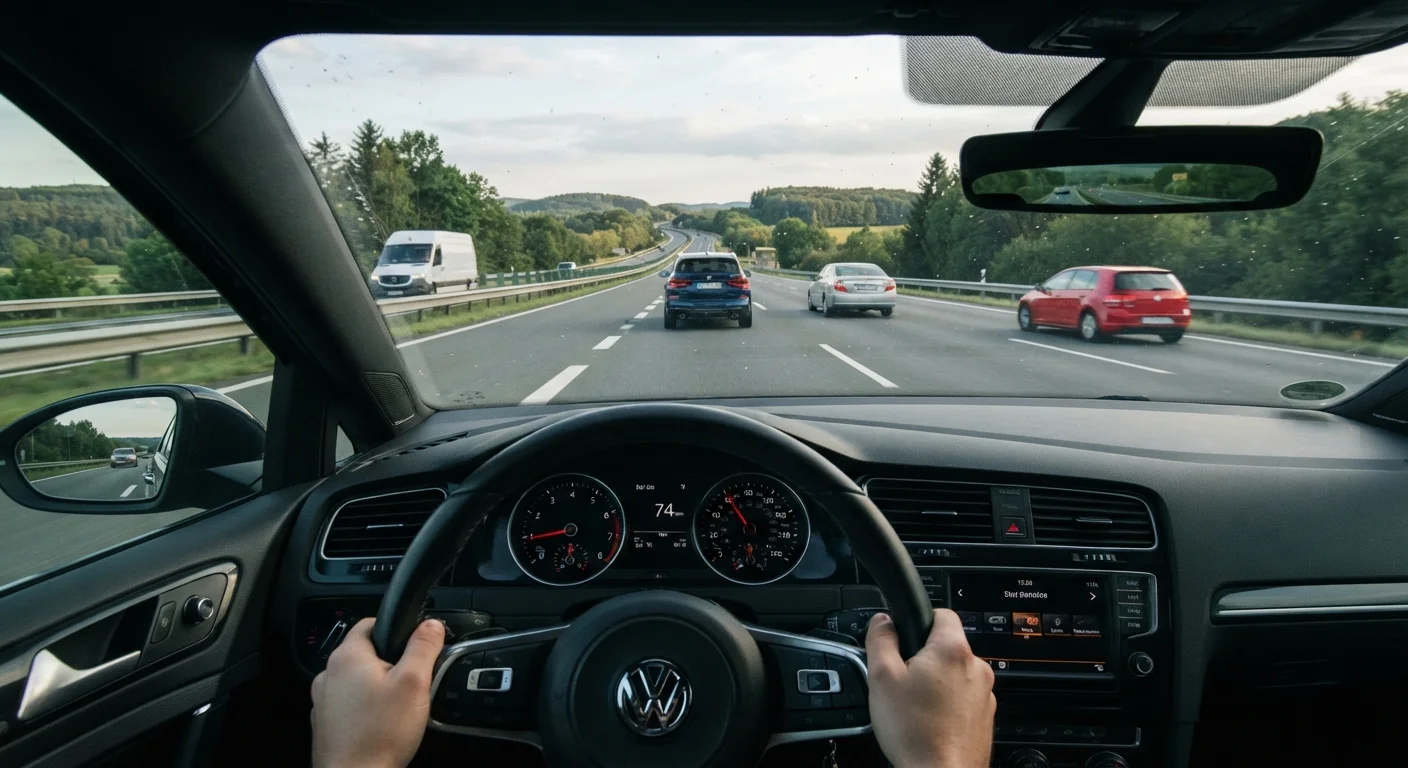
Photo credit: FaqsInsights.com | Stay Informed, Stay Ahead
In this article
Where you look while driving determines how much time you have to respond. Learn the structured scanning methods used in professional driver training.
Key Takeaways
- Most drivers scan too close to the front of their vehicle, leaving insufficient reaction time.
- Professional driver training uses structured scanning patterns covering far ahead, mid-range, and peripheral zones.
- Eyes should be moving constantly - fixating on a single point is one of the most common scanning errors.
- Mirror checks should occur every five to eight seconds and always before any lane change or speed adjustment.
- Building consistent scanning habits significantly reduces the chance of being surprised by a hazard.
Why Eye Placement Is a Safety Skill
Most drivers look where they're comfortable, not where they need to. The result is a narrow, short-range visual field that compresses reaction time to fractions of a second. When something unexpected happens - a vehicle cutting in, a child darting into the street - the difference between avoiding a collision and not often comes down to whether the driver had already begun processing that situation.
Trained drivers don't see more - they look more deliberately. Structured scanning techniques used in commercial driver training and defensive driving courses are built around one core insight: the further ahead you're looking, the more time you have to respond. As experienced drivers demonstrate through repeatable road habits, anticipation is the product of active visual discipline, not years of passive mileage.
These techniques apply equally to new drivers and veterans. If you're new to the road, they're foundational - pair them with the principles in this defensive driving guide for new drivers. If you've been driving for years, you may discover that some habits have quietly drifted toward complacency. Either way, deliberate scanning is a skill that rewards practice.
Scanning Is a Skill, Not Instinct
Most drivers believe they are watching the road - but watching and scanning are not the same thing. Passive, unfocused forward gaze misses threats that structured scanning would catch seconds earlier. Those extra seconds are what separate a controlled response from a crash.
The Structured Scanning Method: Step by Step
The steps below lay out a complete scanning sequence drawn from professional driver training frameworks. Use them as a starting point on your next drive - you don't need a special route or new equipment, just deliberate attention.
What you will need
Properly Adjusted Side and Rear-View Mirrors
Essential for covering blind spots and completing the full scanning loop - mirrors only work when correctly positioned before you drive.
A Low-Traffic Practice Route
Allows you to rehearse structured scanning patterns without the cognitive load of dense traffic.
Set Your Mirrors Before You Move
Structured scanning depends on mirrors that are actually positioned to eliminate - not just reduce - blind spots. Adjust your side mirrors outward until you can just barely see the edge of your own vehicle. Your rear-view mirror should frame the full rear window. Confirm this setup every time you get in the car, since mirrors shift with seat adjustments.
Look 12-15 Seconds Ahead on Open Roads
Professional driver training programs consistently teach drivers to focus their primary gaze roughly 12 to 15 seconds of travel time ahead - not just a few car lengths. At 60 mph, that's approximately a quarter mile. This extended forward view gives your brain time to process what's coming and begin planning a response before a situation turns urgent. On urban streets, this zone shrinks to roughly 8 to 10 seconds due to slower speeds and more intersections.
Scan the Mid-Range for Developing Hazards
While your primary gaze is far ahead, your eyes should regularly sweep the mid-range zone - roughly 4 to 6 seconds ahead. This is where potential hazards are developing: a car beginning to drift lanes, brake lights starting to glow several vehicles ahead, or a cyclist approaching an intersection. Think of mid-range scanning as your early warning system, converting a distant alert into a managed response.
Use Peripheral Vision to Monitor the Sides
Your peripheral vision is more motion-sensitive than your central vision, making it useful for detecting vehicles entering from side streets, pedestrians stepping off curbs, or objects encroaching on your lane. You don't need to turn your head constantly to use your peripheral field - instead, keep your gaze relaxed rather than tunnel-focused, allowing movement at the edges of your visual field to register. In urban driving, actively glance into crosswalks, parking lot exits, and driveways as you approach them.
Check Mirrors Every 5-8 Seconds
Scanning isn't only forward-facing. A complete picture of your driving environment requires knowing what's behind and beside you. Cycle through your mirrors - rear-view, left side, right side - approximately every five to eight seconds during highway driving, and more frequently in stop-and-go traffic. Always check mirrors before braking, accelerating, or changing lanes. This habit directly feeds into making smart following-distance decisions, since you need to know how close traffic is behind you before easing off the gas.
Scan Intersections Before You Enter Them
Intersections are among the highest-risk points on any drive. As you approach, begin scanning left, then right, then left again - even on a green light. Look for vehicles that appear to be running a late yellow or red, cyclists in crosswalks, and pedestrians who may be mid-crossing. Reduce speed slightly so you have options if a vehicle fails to yield. This habit is especially important when turning left across oncoming traffic, where sight lines can be compressed by other waiting vehicles.
Practice in Low-Stakes Environments First
If these scanning patterns feel unfamiliar, practice them on quiet residential streets before applying them on highways or in heavy urban traffic. Muscle memory for eye movement builds faster when you're not also managing complex traffic demands.
Common Scanning Mistakes and How to Correct Them
Even drivers who intend to scan well fall into predictable patterns. The most common error is near-field fixation - watching only the vehicle directly ahead rather than the traffic environment as a whole. This is especially common in heavy traffic, where the temptation is to lock onto brake lights. The fix is deliberate: every 30 seconds or so, consciously push your gaze to the furthest visible point ahead.
A second frequent mistake is mirror neglect - many drivers check mirrors only before lane changes, missing the dynamic picture of what's building behind them. Rear-end collisions often occur because the driver in front had no idea how close the following vehicle was when they braked. Understanding how tailgating collapses the reaction window for everyone in a chain reinforces why mirror discipline matters for the whole flow of traffic, not just your own vehicle.
Finally, distraction-driven tunnel vision - triggered by phones, passengers, or in-car screens - narrows the visual field even when eyes appear to be forward. Research into driver attention consistently shows that cognitive distraction reduces hazard detection even without physical phone use. Common driver assumptions about safety often underestimate this effect. Keeping the mental bandwidth available for scanning is as important as the physical eye movement itself.
Avoid Fixating on Any Single Point
Locking your eyes on one object - another vehicle, a sign, or a hazard - causes the rest of the visual field to effectively disappear. This is called target fixation, and it can cause you to steer toward the very thing you're trying to avoid. Keep your eyes moving at all times.

Author
Cars & Driving Editorial Team
Cars & Driving Editorial Team is the collective byline for our editorial team and contributor network. Articles published under this byline or an editorial pen name are researched, written, and reviewed according to our editorial standards for clarity, consistency, and independence before publication.
View all articles →