
Speed and Stopping Distance: The Numbers That Don't Lie
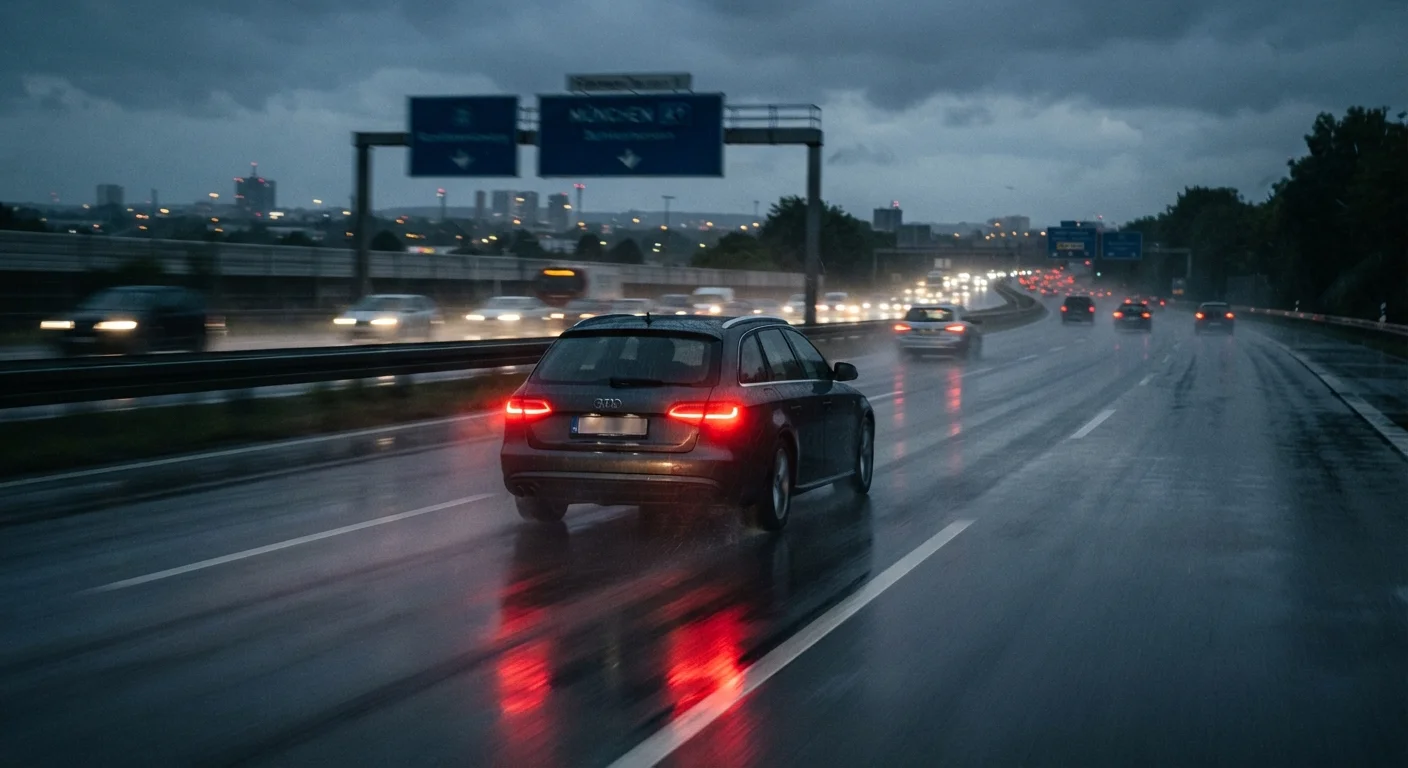
Photo credit: FaqsInsights.com | Stay Informed, Stay Ahead
In this article
Doubling your speed more than doubles your stopping distance. Understand the physics behind braking so speed limits make more than bureaucratic sense.
Key Takeaways
- Stopping distance has two components: reaction distance and braking distance.
- Braking distance grows exponentially - doubling speed quadruples it.
- At 60 mph, total stopping distance can exceed 240 feet under good conditions.
- Wet roads, worn tires, and driver fatigue each extend stopping distance significantly.
- Speed limits are set with real physics in mind, not bureaucratic convenience.
Why Speed and Stopping Distance Aren't Proportional
Many drivers assume that going twice as fast means it takes twice as long to stop. The physics say otherwise - and the gap between that assumption and reality is where serious crashes happen.
Braking distance is governed by kinetic energy, which increases with the square of velocity. Double your speed from 30 mph to 60 mph, and your braking distance doesn't double - it quadruples. That's not a bureaucratic safety margin; it's the unavoidable output of Newtonian mechanics acting on mass and motion.
Add the reaction component - the distance your car covers while your brain processes a threat and your foot finds the brake - and the total stopping distance at highway speeds becomes surprisingly large. At 60 mph with a 1.5-second average reaction time, a vehicle travels roughly 132 feet before braking even begins.
4x
Braking distance increase when speed doubles
Kinetic energy - and therefore braking distance - scales with the square of velocity, a fundamental relationship in classical physics.
132 ft
Distance traveled before braking begins at 60 mph
Based on an average human reaction time of 1.5 seconds, before brakes are applied at highway speed.
240+ ft
Total stopping distance at 60 mph (dry road)
Combining typical reaction distance and braking distance under good road and vehicle conditions - roughly the length of a city block.
Breaking Down the Two-Part Formula
Reaction distance is the first half of the equation. The average human reaction time is widely cited at 1.5 seconds under alert conditions, though this rises noticeably with fatigue, distraction, or impairment. At 30 mph, 1.5 seconds of travel covers around 66 feet. At 60 mph, that same 1.5 seconds covers 132 feet - before you've touched the brake.
Braking distance is the second half. On dry pavement with well-maintained tires and brakes, a car traveling 30 mph needs roughly 45 feet to stop after braking begins. At 60 mph, that figure climbs to approximately 180 feet. Combined with reaction distance, total stopping distance at 60 mph can exceed 240 feet - nearly the length of a standard city block.
This relationship matters practically every time you follow another vehicle. Our guide on following distance and the three-second rule explains how these numbers should shape the gap you leave in traffic.
How Road and Vehicle Conditions Change the Math
The figures above assume near-ideal conditions: dry pavement, alert driver, well-maintained brakes and tires. Real driving rarely matches that baseline.
- Wet roads: Rain reduces friction between tires and pavement, commonly extending braking distance by 25-30%. A car that stops in 180 feet on dry road may need 230 feet or more on wet asphalt.
- Worn tires: Tread depth directly affects a tire's ability to channel water and grip the road. Tires approaching the wear indicator take longer to stop and are far more vulnerable to hydroplaning.
- Brake condition: Degraded brake pads or fluid reduce braking efficiency. Our article on habits that quietly shorten your car's lifespan covers how hard braking patterns accelerate brake wear over time.
- Driver fatigue: Studies consistently show reaction times increase with tiredness. A fatigued driver at 60 mph may travel 20 or more additional feet before braking begins.
Check Your Tires and Brakes Regularly
Tire tread and brake condition are the two variables most directly within a driver's control. A simple tread-depth check and periodic brake inspection can meaningfully preserve the stopping performance your car was designed to deliver. If you notice your car pulling to one side when braking or hear grinding sounds, have a qualified mechanic inspect the system promptly.
What This Means for Speed Limits and Real Decisions
Speed limits are not arbitrary numbers posted to slow traffic for its own sake. They reflect engineering assessments of road geometry, sightlines, typical hazard density, and the stopping distances vehicles can realistically achieve in those environments.
A residential road posted at 25 mph limits stopping distance to roughly 85 feet - appropriate for the short sightlines and unpredictable pedestrian crossings common in those environments. A highway posted at 65 mph is designed for longer sightlines and controlled access, but the physics still demand hundreds of feet to stop safely.
Drivers who treat posted limits as suggestions - rather than the physics-grounded thresholds they are - reduce their margin to zero in situations that demand it most. This pattern appears in multiple contexts: see how speed interacts with following distance in the chain reactions described in our article on how tailgating turns slowdowns into multi-car pileups.
Understanding the numbers doesn't require an engineering degree. It requires accepting that the car does not stop when you decide to - it stops when physics allows it to. That distinction, internalized, changes how most drivers approach speed.
“Speed is the single most important factor in road crash severity. The relationship is not linear - small increases in speed lead to disproportionately large increases in crash energy and stopping distance.”
— Road Safety Foundation, UK-based road safety research organization
Frequently Asked Questions

Author
Cars & Driving Editorial Team
Cars & Driving Editorial Team is the collective byline for our editorial team and contributor network. Articles published under this byline or an editorial pen name are researched, written, and reviewed according to our editorial standards for clarity, consistency, and independence before publication.
View all articles →