
Following Distance: Why the Three-Second Rule Isn't Always Enough
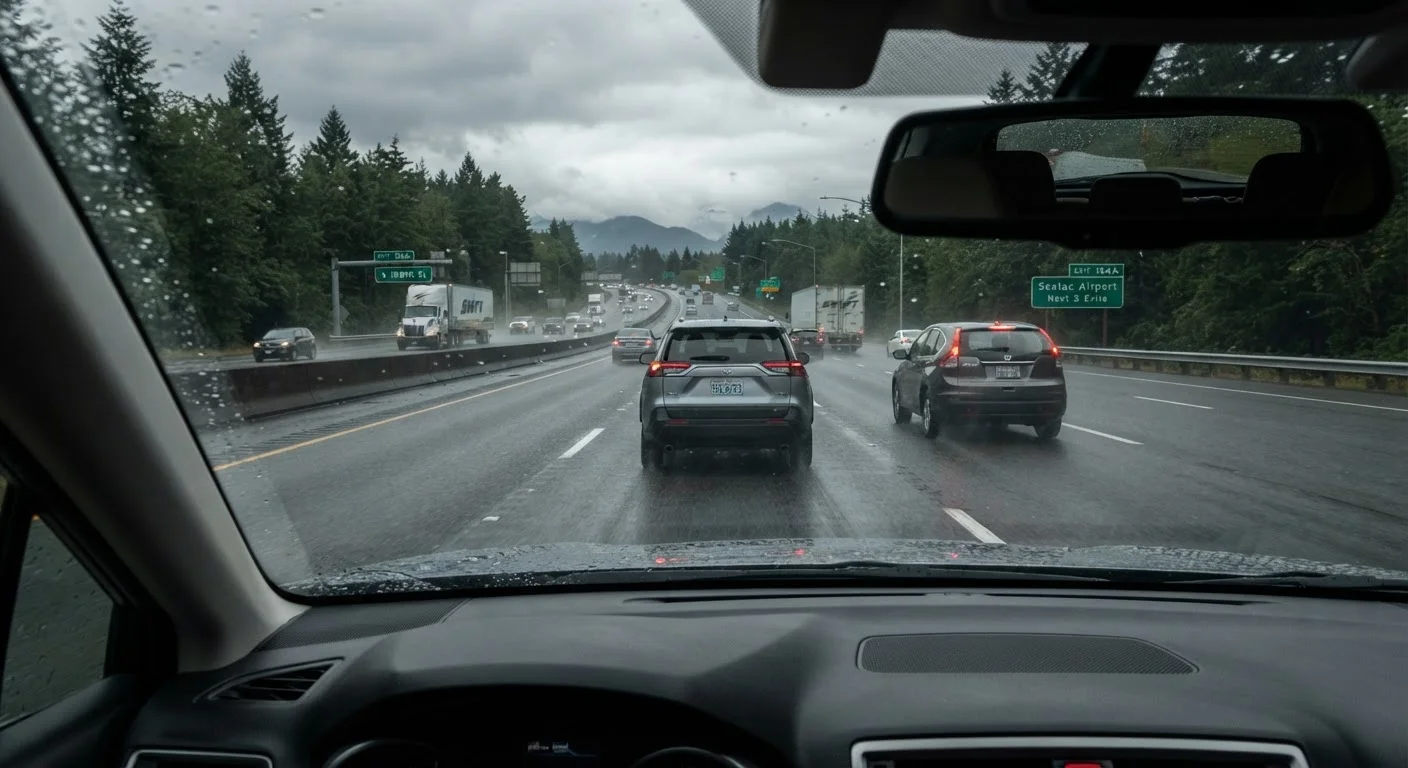
Photo credit: FaqsInsights.com | Stay Informed, Stay Ahead
In this article
The three-second rule is a good start, but speed, weather, and load all change the math. Here's what safe following distance actually looks like.
Key Takeaways
- The three-second rule is a minimum baseline, not a one-size-fits-all solution for every driving condition.
- Wet, icy, or foggy conditions can more than double the stopping distance your vehicle needs.
- Heavier vehicles - including trucks and SUVs with trailers - require significantly more following distance than passenger cars.
- Your reaction time adds to braking distance, meaning fatigue or distraction dramatically increases required gap.
- Increasing your following distance also reduces the risk of chain-reaction collisions for drivers behind you.
Why Three Seconds Is a Starting Point, Not the Answer
The three-second rule has been taught in driver's education for decades, and for good reason - it's simple, speed-adaptive, and works without a tape measure. But calling it a complete solution gives drivers a false sense of precision. Three seconds represents a minimum under near-ideal conditions: dry pavement, alert driver, well-maintained brakes, normal load.
The moment any of those variables shifts, three seconds may no longer be enough. Road safety researchers consistently find that following distance is one of the most underestimated factors in rear-end collisions - the most common crash type on U.S. roads. Understanding what actually drives the number helps you set a real-world gap rather than a comfortable habit.
For a deeper look at how speed compounds this problem, see our guide to speed and stopping distance.
~29%
Of all U.S. crashes are rear-end collisions
According to the National Highway Traffic Safety Administration (NHTSA), rear-end crashes are the most frequent crash type on American roads.
50%+
Increase in stopping distance on wet pavement
Road safety guidelines from multiple state DOTs indicate that wet roads can extend stopping distance by 50% or more compared to dry conditions at the same speed.
44 ft
Distance traveled in 0.5-second reaction delay at 60 mph
At 60 mph, a vehicle travels approximately 88 feet per second, meaning even a half-second increase in reaction time adds roughly 44 feet before braking begins.
The Variables That Change the Equation
Weather and road surface. Wet pavement can increase stopping distance by 50% or more. Ice can multiply it several times over. On a rainy highway, a three-second gap shrinks to a dangerous margin very quickly. Add one to two full seconds for rain, and consider doubling your gap on snow or ice.
Speed. Stopping distance does not scale linearly with speed. Doubling your speed roughly quadruples the braking distance. At highway speeds, even a one-second shortfall in following distance represents a significant physical gap that disappears fast when a vehicle ahead brakes suddenly.
Vehicle weight and load. Brakes slow a vehicle by converting kinetic energy to heat. More mass means more kinetic energy - and longer stopping distances. Drivers towing trailers, hauling cargo, or operating vans and trucks should add at least one to two extra seconds as a baseline, independent of conditions.
Reaction time. The three-second rule implicitly assumes a certain reaction speed. Fatigue, distraction, or impairment lengthen the gap between seeing a hazard and pressing the brake. Even a half-second delay at 60 mph adds 44 feet before braking begins.
Check Your Gap Every Few Minutes
Drivers naturally drift closer over time, especially in highway traffic. Make a habit of re-checking your three-second gap regularly using a fixed object like a road sign or overpass. If you reach the marker before you finish counting, ease off the accelerator rather than braking sharply - a smooth adjustment is safer for traffic behind you.
Practical Adjustments for Real Driving Conditions
Rather than memorizing multiple rules, think of following distance as a dial you continuously adjust. The baseline is three seconds - confirm it regularly using the fixed-object count method. From there, add time whenever conditions degrade:
- Rain or wet roads: four to five seconds minimum
- Snow, ice, or gravel: six or more seconds
- Fog or reduced visibility: match your gap to your sight distance
- Towing or heavy load: add one to two seconds on top of the weather-adjusted gap
- Fatigued or long-haul driving: add one to two seconds and consider stopping to rest
Increasing your gap also benefits everyone behind you. A larger buffer smooths your braking behavior, which reduces the chain-reaction risk that turns minor slowdowns into multi-car events. Our article on how tailgating causes chain-reaction crashes explains this dynamic in detail.
You can also improve your effective reaction window by scanning further ahead rather than fixating on the vehicle immediately in front of you. Structured scanning techniques used in professional driver training are a practical complement to managing your gap.
Common Misconceptions Worth Correcting
One persistent myth is that a larger following gap just invites other drivers to cut in. While lane changes do occur, a car merging ahead typically restores a normal gap within seconds and rarely creates meaningful danger - whereas insufficient following distance creates sustained risk at every moment.
Another assumption is that advanced driver-assistance systems (ADAS) - adaptive cruise control, automatic emergency braking - eliminate the need for conscious gap management. These systems provide a useful safety layer, but they have well-documented limitations in adverse weather, certain lighting conditions, and at high speeds. They are driver-assistance tools, not substitutes for judgment.
It's also worth noting the parallel with other outmoded automotive rules. Just as the old 3,000-mile oil change interval no longer reflects the reality of modern engine technology - as we explore in our oil change interval guide - the three-second rule should be understood as a living guideline, not a fixed prescription. Conditions change, and good drivers adapt.
ADAS Does Not Replace Driver Judgment
Features like adaptive cruise control and automatic emergency braking are designed to assist, not replace, attentive driving. These systems can struggle in heavy rain, snow, or low-contrast lighting conditions. Always maintain an appropriate following distance regardless of which driver-assistance features your vehicle has. Consult your owner's manual for the specific limitations of your system.
Frequently Asked Questions

Author
Cars & Driving Editorial Team
Cars & Driving Editorial Team is the collective byline for our editorial team and contributor network. Articles published under this byline or an editorial pen name are researched, written, and reviewed according to our editorial standards for clarity, consistency, and independence before publication.
View all articles →