
Companion Planting: Which Garden Pairings Actually Work and Why
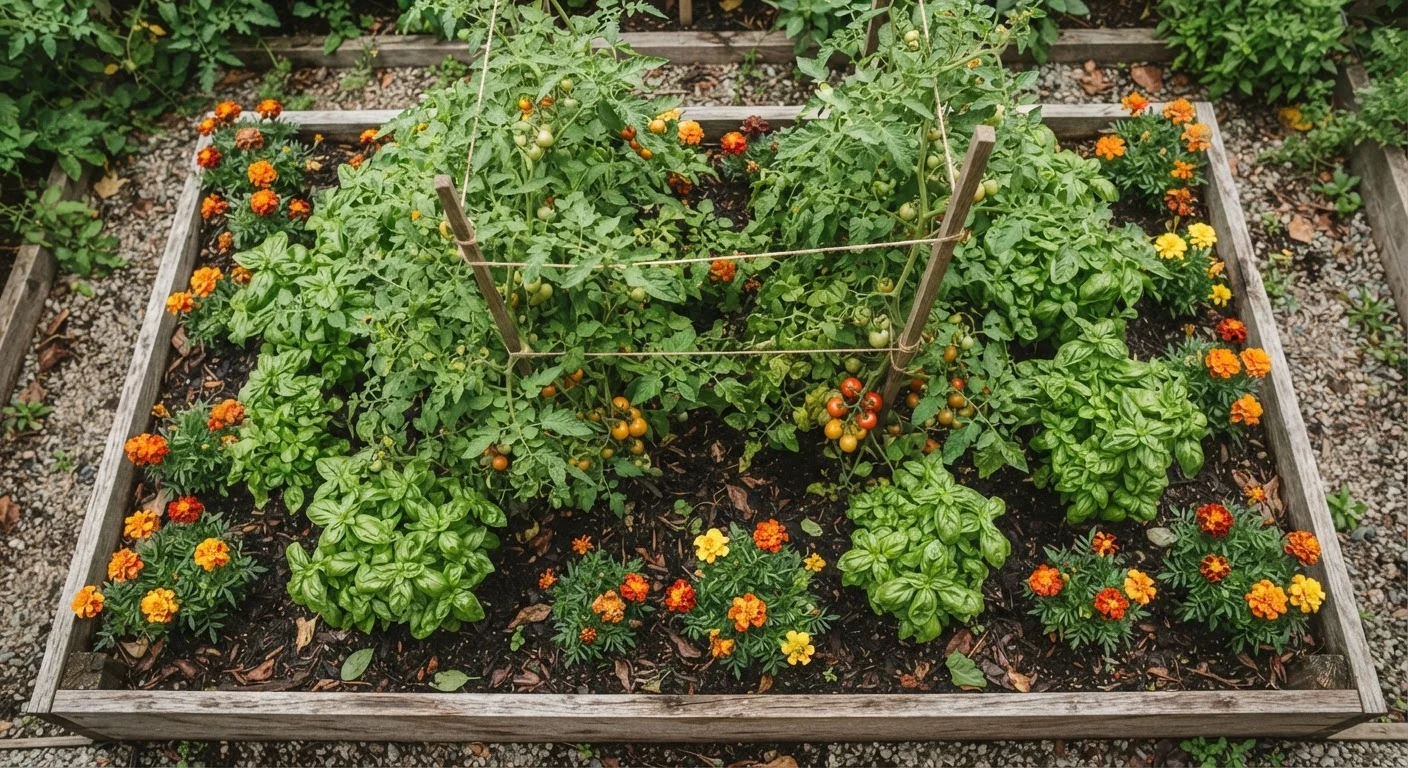
Photo credit: FaqsInsights.com | Stay Informed, Stay Ahead
In this article
Explore the science and tradition behind companion planting — what pairs benefit each other, which combinations to avoid, and how to plan your layout.
Key Takeaways
- Some companion pairings are well-supported by research; others are rooted in tradition with limited scientific backing.
- The Three Sisters - corn, beans, and squash - is one of the most documented and effective companion combinations.
- Certain plant combinations actively inhibit each other and should be kept separated in your layout.
- Companion planting works best when combined with other practices like mulching, crop rotation, and soil management.
- Results can vary by climate, soil type, and local pest pressure - experimentation is part of the process.
The Science and Tradition Behind Plant Partnerships
Companion planting sits at the intersection of horticultural science and time-tested agricultural wisdom. Indigenous farming traditions - most famously the Three Sisters method practiced by many Native American communities - demonstrate that polyculture gardening has been refined over thousands of years. Meanwhile, modern research continues to investigate the mechanisms that explain why some pairings consistently outperform monocultures.
The core idea is straightforward: plants interact with their environment and each other through roots, soil chemistry, and airborne compounds. Some release chemicals that suppress competing weeds or confuse pest insects. Others fix nitrogen from the air into the soil, feeding neighboring plants. Still others attract beneficial predatory insects that keep harmful ones in check.
Not every traditional pairing has been rigorously tested, and results can vary significantly based on soil type, local pest populations, and climate. Approaching companion planting with realistic expectations - as a valuable tool rather than an infallible system - leads to better outcomes and more satisfying experimentation.
“Diversity in the garden - just as in natural ecosystems - tends to create more stability. Monocultures are efficient but fragile; polycultures are complex but resilient.”
— Eliot Coleman, Organic farming author and market gardener
Pairings That Have Earned Their Reputation
A handful of companion combinations have accumulated enough real-world evidence to be considered reliably effective for most home gardeners.
The Three Sisters: Corn, Beans, and Squash
This is the gold standard of companion planting. Corn provides vertical structure for beans to climb. Beans fix atmospheric nitrogen into the soil, feeding the nutrient-hungry corn. Squash spreads wide at ground level, shading out weeds and retaining soil moisture with its large leaves. Each plant addresses a need that the others create - a genuinely symbiotic system.
Tomatoes and Basil
This pairing is widely practiced and commonly cited, though the evidence is more observational than controlled. Many gardeners report that basil planted near tomatoes reduces aphid and whitefly populations, possibly due to the herb's volatile aromatic compounds. At minimum, basil thrives in similar conditions to tomatoes, making it a practical use of space.
Marigolds as a Pest Deterrent
French marigolds (Tagetes patula) have demonstrated in multiple studies the ability to deter nematodes in soil and repel aphids and whiteflies from neighboring vegetables. Planting them as a border around your vegetable beds is a well-supported strategy. For a broader look at chemical-free pest strategies, see our guide on organic pest control methods.
Carrots and Onions
The scent of onions is thought to mask the scent of carrots from carrot flies, while carrot foliage may similarly deter onion flies. This is largely based on observational evidence, but it's a low-risk pairing worth trying.
16%
Yield increase with Three Sisters polyculture
Research published in agricultural journals has documented land equivalent ratios above 1.0 for Three Sisters combinations, indicating greater combined productivity than monoculture plots of equivalent area.
~40%
Reduction in whitefly populations near marigolds
Multiple controlled greenhouse studies have found that French marigolds significantly reduced whitefly infestations on neighboring crops compared to control plots without marigolds.
3,000+
Years of recorded polyculture farming
The Three Sisters agricultural system is documented in Indigenous North American farming traditions going back thousands of years, representing one of the longest-running field tests of companion planting principles.
Combinations to Avoid
Just as important as knowing what to plant together is knowing what to keep apart. Some plants actively inhibit each other through allelopathy - the release of biochemical compounds that suppress the growth of neighboring species.
- Fennel and most vegetables: Fennel is one of the most notorious allelopathic plants in the home garden. It suppresses the growth of tomatoes, peppers, and many other vegetables. Give it its own dedicated spot away from the main vegetable beds.
- Onions and garlic near beans and peas: Alliums (the onion family) are thought to inhibit legume growth. Keep them separated to avoid stunted bean yields.
- Brassicas near strawberries: Broccoli, cabbage, and their relatives tend to compete strongly with strawberries for nutrients and can suppress berry production when planted in close quarters.
- Potatoes near tomatoes: Both are in the same plant family (Solanaceae) and share common diseases, including blight. Planting them together increases the risk of rapid disease spread across both crops.
Keep a Season-by-Season Garden Journal
Record which companions you planted together, where, and what pest pressure or yield differences you noticed. Companion planting outcomes vary significantly by local conditions, and your own multi-season observations will guide better decisions than any general chart. Even a simple notebook entry at planting time and again at harvest can reveal patterns that improve future layouts.
Planning Your Layout Thoughtfully
Effective companion planting starts with a simple map of your growing space. Before the season begins, sketch out which crops you intend to grow and research their known relationships. Group compatible plants, note which need isolation, and plan for the physical size each will reach at maturity - a squash vine needs more room than a row of basil.
If you're working with raised beds, the defined borders make it easier to manage companion groupings and observe results season to season. Our article on raised beds vs. in-ground planting walks through how layout structure affects these decisions. For gardeners with limited space, container gardening offers another way to experiment with pairings in a controlled environment.
Keep a simple journal of what you plant where and what you observe. Companion planting outcomes are highly context-dependent - what works brilliantly in one region or soil type may be less effective in another. Your own observations over multiple seasons are ultimately the most reliable data you have.
Complement your planting strategy with good soil management and garden mulching practices. These foundational steps support whichever plant combinations you choose, and a healthy, well-mulched bed gives every companion pairing the best chance to perform.
Frequently Asked Questions

Author
Home & Garden Editorial Team
Home & Garden Editorial Team is the collective byline for our editorial team and contributor network. Articles published under this byline or an editorial pen name are researched, written, and reviewed according to our editorial standards for clarity, consistency, and independence before publication.
View all articles →