
Rain, Ice, Snow, and Fog: Adjusting Your Driving for Each Condition
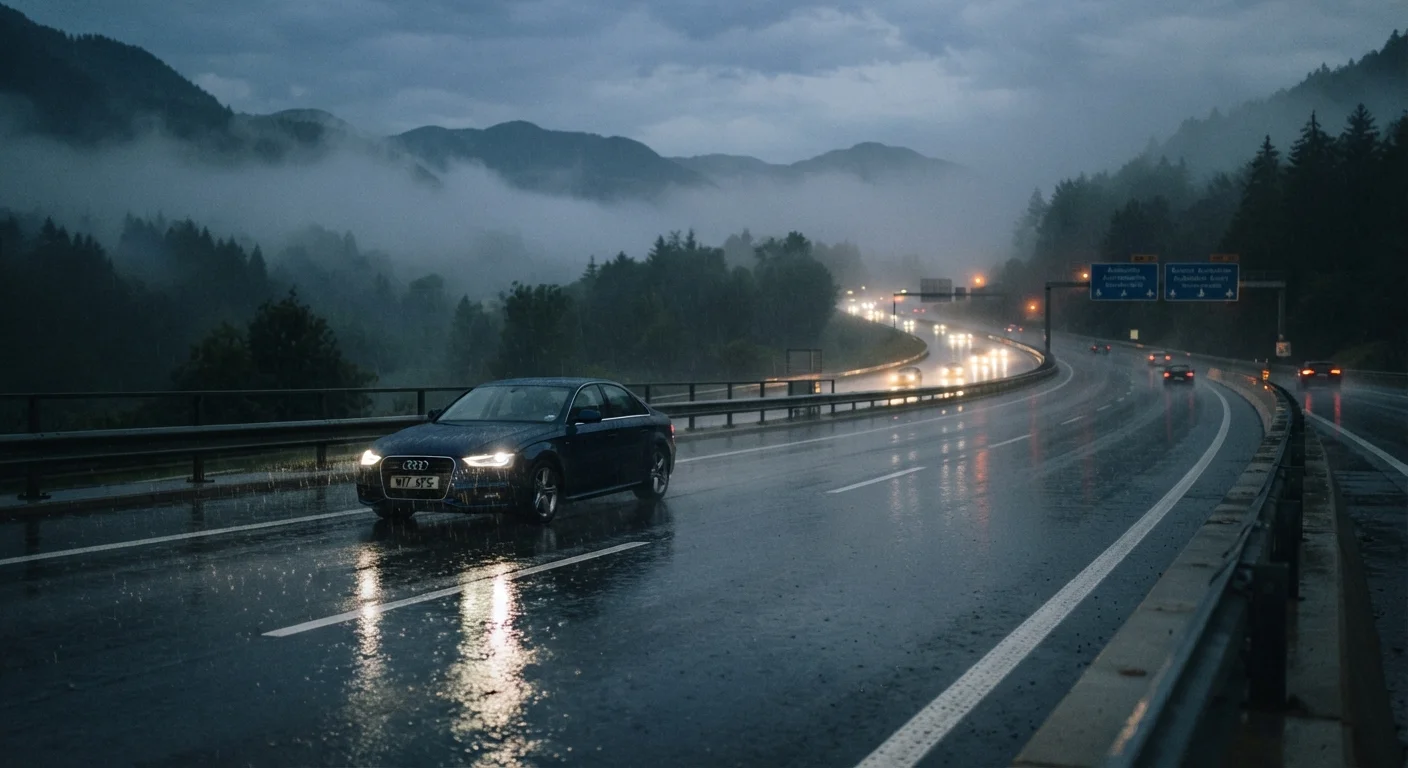
Photo credit: FaqsInsights.com | Stay Informed, Stay Ahead
In this article
Each type of bad weather creates distinct risks on the road. This guide explains the unique challenges and the adjustments that address them.
Key Takeaways
- Rain, ice, snow, and fog each create different hazards that require different driving responses.
- Reducing speed is the single most effective adjustment across all adverse weather conditions.
- Ice is often invisible - 'black ice' can appear even when roads look dry or merely damp.
- In fog, low-beam headlights outperform high beams, which reflect back and reduce visibility further.
- Vehicle preparation before bad weather begins is just as important as how you drive in it.
- When conditions are severe enough, the safest decision is to delay or cancel the trip entirely.
Why Weather-Specific Adjustments Matter
Bad weather is a factor in roughly one in five vehicle crashes in the United States, according to data compiled by the Federal Highway Administration. Yet many drivers apply a one-size-fits-all response - slow down a little, turn on the wipers - regardless of whether they're navigating a light drizzle or dense freezing fog. That generalized approach leaves real gaps.
Rain, ice, snow, and fog each alter the driving environment in fundamentally different ways. Rain reduces friction and can cause hydroplaning. Ice eliminates meaningful traction almost entirely. Snow obscures lanes, accumulates on your vehicle, and masks the ice beneath it. Fog compresses your visible stopping distance to a fraction of what it normally is. The appropriate driver response to each is genuinely distinct.
If you're newer to the road, pairing this guide with a foundation in defensive driving principles will help you apply these adjustments more instinctively. For experienced drivers, it's worth examining whether any habits have drifted - see what research says about seemingly safe habits that actually carry measurable risk.
Driving in Rain
Rain is the most common adverse weather condition most drivers face, and that familiarity can breed complacency. The core hazard is reduced tire-to-road friction. Wet pavement can increase stopping distances significantly compared to dry conditions, and the risk increases with speed.
Hydroplaning - where a layer of water builds faster than your tires can displace it, lifting them off the surface - typically begins at speeds above 35 mph on standing water. If your vehicle starts to hydroplane, ease off the gas smoothly without braking sharply, and steer gently in the direction you want to go until you feel traction return.
When rain begins, increase your following distance before you feel any loss of control - not after. Wet roads take effect immediately, but the feeling of slipping may not register until it's too late to react.
Friction loss begins the moment rain hits the road surface, particularly in the first few minutes. Proactive spacing gives you a buffer that reactive spacing cannot restore.
If you're uncertain whether a road surface is icy, open your window at low speed and listen. Tires on dry or wet pavement make noise; tires on ice go quiet.
Experienced winter drivers use auditory cues as a supplementary traction check, particularly on roads that transition between treated and untreated sections.
Practical adjustments for rain:
- Reduce speed by at least 5-10 mph below the posted limit in moderate rain; more in heavy rain.
- Turn on your headlights - many states legally require it when wipers are active, and it helps others see you.
- Increase following distance to at least four seconds (from the standard two to three).
- Avoid hard braking; brake earlier and more gently than usual.
- Be especially cautious in the first 30 minutes of rainfall, when oil residue on roads mixes with water to create peak slipperiness.
Worn wiper blades are a safety issue, not just an annoyance. If they're streaking or skipping, they need replacement before you're caught in a downpour.
Driving on Ice
Ice is the most dangerous common road surface condition because it can reduce tire grip to near zero, it can appear without obvious visual warning, and it demands an almost entirely different set of driver reflexes.
Black Ice: The Hazard You May Not See Coming
Black ice forms a nearly transparent glaze on pavement that can look like a wet road or a dark dry surface. It's most common on bridges, overpasses, shaded road sections, and intersections - often when air temperature is near or just below freezing. If the road ahead looks unusually shiny or reflective, treat it as potentially iced and reduce speed immediately.
Black ice - a thin, transparent glaze - is particularly dangerous because it makes the road look merely wet or dark. It forms most readily on bridges, overpasses, shaded sections of road, and intersections where exhaust and moisture accumulate. Any time temperatures hover near or below freezing and road surfaces look suspiciously glossy, treat them as potentially iced.
Key adjustments on ice:
- Slow down dramatically. Speed appropriate for dry pavement is almost never appropriate for ice.
- Accelerate and decelerate gently. Abrupt throttle inputs break traction; smooth, gradual movements maintain it.
- Allow significantly more stopping distance - on ice, stopping distances can be up to ten times longer than on dry pavement.
- If you begin to skid: steer smoothly in the direction you want to go, ease off the gas, and avoid stomping the brakes. If your vehicle has ABS (Anti-lock Braking System), apply firm, steady brake pressure and let the system do its job.
Four-wheel drive and all-wheel drive systems improve traction when accelerating but do not meaningfully shorten stopping distances on ice. Drivers of AWD and 4WD vehicles should not assume they are immune to icy-road hazards.
Driving in Snow
Snow combines the traction problems of ice with additional visibility challenges. Fresh snow can obscure lane markings, hide curbs and drop-offs, and mask patches of ice underneath. Packed snow, depending on temperature, can behave like ice.
Before driving in snow, clear your entire vehicle - not just a small porthole in the windshield. Snow left on the roof will slide onto your rear window when you brake, and onto other drivers' windshields when it blows off at speed. In many states, driving with an uncleared vehicle is a traffic violation.
Clear the Whole Vehicle - Not Just the Windshield
Before driving in snow, remove all snow from the roof, hood, trunk, and all windows. Snow left on the roof slides onto your rear window during braking and can fly off at highway speed onto vehicles behind you. Many states have laws penalizing drivers who fail to clear their vehicles.
Driving adjustments in snow:
- Slow down substantially - posted speed limits assume normal conditions.
- In a manual or older vehicle without traction control, start from a stop in second gear to reduce wheelspin.
- Look and signal well ahead of turns; give yourself long, gradual runways for slowing and stopping.
- On downhill grades, use engine braking (downshift or remove your foot from the gas) to reduce speed rather than riding the brakes.
- Keep fuel above half a tank - both for weight over the rear axle and in case you're stranded.
Winter tires (as distinct from all-season tires) are purpose-built for snow and ice, with tread compounds that remain pliable in cold temperatures. If you live in a region with regular winter precipitation, they represent a meaningful safety difference - consult a qualified mechanic or tire specialist about whether they make sense for your situation.
For a full vehicle checklist covering tires, fluids, battery, and wipers before winter, see our guide on seasonal car preparation.
Driving in Fog
Fog creates a unique hazard: it doesn't change the road surface at all, but it can compress your visible ahead-distance to as little as a few car lengths. The danger is that you may be traveling at a speed where your stopping distance exceeds your sight distance - meaning if something appears in the road ahead, you cannot stop in time.
The most counterintuitive fog fact for many drivers: high beams make visibility worse, not better. Light from high beams reflects off the water droplets in fog and bounces back into your eyes, creating glare that obscures rather than illuminates. Use low beams, or dedicated fog lights if your vehicle has them.
Adjustments for fog:
- Slow down enough that your stopping distance fits within your sight distance. This is the foundational rule.
- Use low-beam headlights or fog lights. Never rely on daytime running lights alone - they typically don't activate taillights.
- Use the road's right edge or lane markings as a guide rather than the centerline or oncoming headlights.
- Avoid stopping on the road or shoulder unless absolutely necessary. If you must stop, pull completely off the road, turn off your lights, and use hazard flashers - stationary vehicles with lights on have caused rear-end collisions when other drivers follow them thinking they're moving.
Fog also worsens the visibility challenges described in our guide on night driving and vision, particularly when fog occurs after dark.
~21%
Crashes linked to weather conditions
The Federal Highway Administration estimates roughly 21% of vehicle crashes annually in the U.S. are weather-related.
10x
Longer stopping distance on ice vs. dry road
Transportation safety research consistently shows that stopping distances on ice can be up to ten times greater than on dry pavement at equivalent speeds.
35 mph+
Speed threshold for hydroplaning risk
Tire engineers generally identify speeds above approximately 35 mph on standing water as the range where hydroplaning becomes a real risk for standard passenger tires.
Preparing Your Vehicle Before Bad Weather Arrives
Driver behavior accounts for much of what determines safety in bad weather, but vehicle condition matters too. Tires with worn tread lose traction in wet and snowy conditions far faster than tires within safe wear limits. A weak battery may fail on a cold morning. Degraded wiper blades impair vision in rain and snow.
The pre-drive safety walkthrough is a useful starting point before any significant trip in uncertain conditions. And the habits of experienced drivers - particularly their approach to scanning and spacing - apply with extra force in adverse weather.
When Conditions Are Severe, Not Driving Is an Option
State and local transportation agencies issue travel advisories and road closures for a reason. If conditions are severe enough that authorities are recommending drivers stay off the road, that guidance reflects road safety data and real-time conditions. Delaying or canceling travel is always a legitimate and often the wisest choice.
Finally, it's worth stating plainly: no adjustment fully compensates for severely dangerous conditions. When a storm is severe, road agencies issue advisories for good reason. Delaying or canceling a trip is always a legitimate choice - and sometimes it's the right one.

Author
Cars & Driving Editorial Team
Cars & Driving Editorial Team is the collective byline for our editorial team and contributor network. Articles published under this byline or an editorial pen name are researched, written, and reviewed according to our editorial standards for clarity, consistency, and independence before publication.
View all articles →