
Open Shelving vs. Closed Cabinets: What Each Does to Your Space
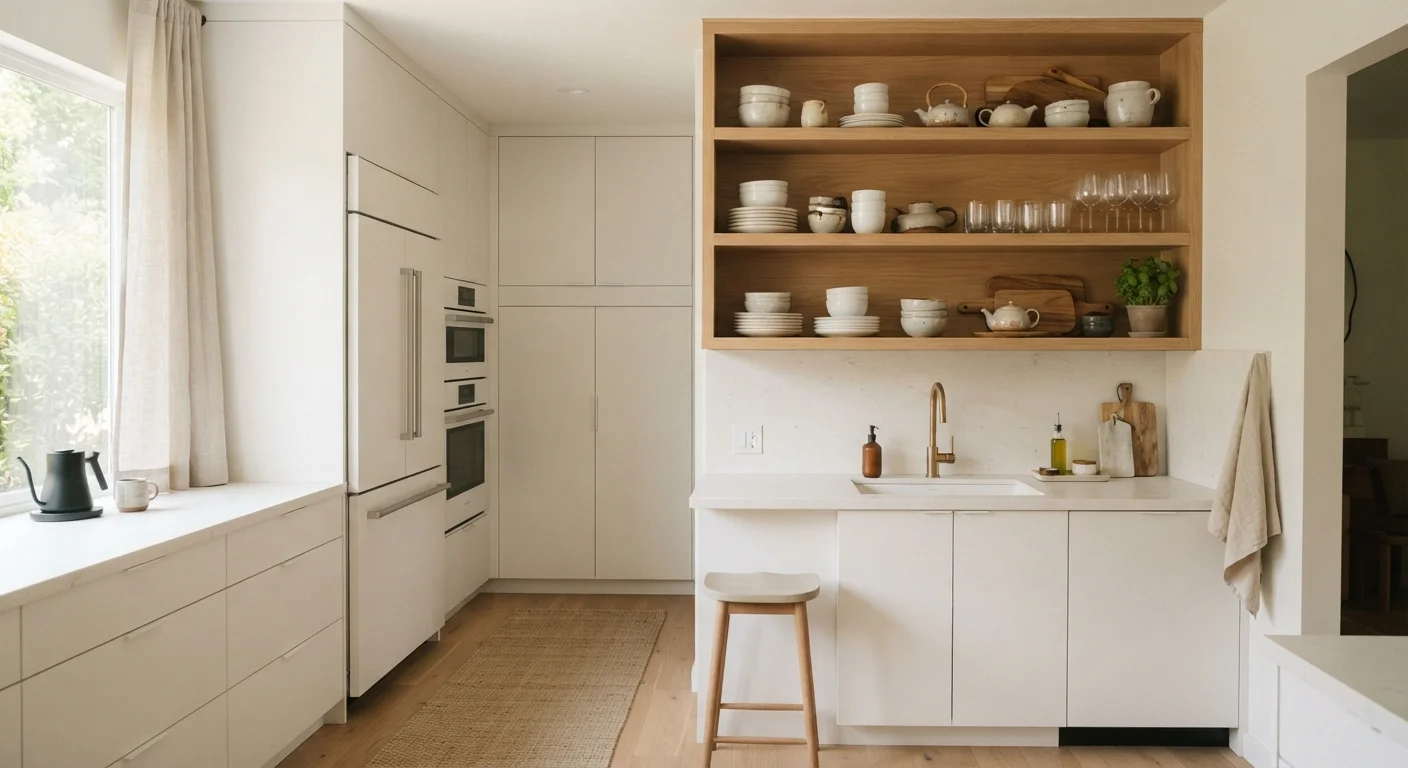
Photo credit: FaqsInsights.com | Stay Informed, Stay Ahead
In this article
Open shelves feel airy but demand discipline. Closed cabinets hide mess but can encourage hoarding. Weigh both before you commit.
Key Takeaways
- Open shelving makes rooms feel larger but requires consistent organization to avoid visual noise.
- Closed cabinets conceal clutter effectively but can obscure what you own and encourage over-accumulation.
- Dust and grease accumulate faster on open shelves, especially in kitchens.
- A hybrid approach - open shelving for display, cabinets for utility - suits many homes well.
- Your household habits matter more than aesthetics when choosing between the two.
- Neither option is universally superior; the right choice depends on your lifestyle and the specific room.
How Each Storage Style Shapes a Room
Storage isn't just functional - it's one of the primary forces shaping how a room looks and feels. Open shelving and closed cabinets operate on fundamentally different principles, and understanding those principles helps you make a choice that serves your household long-term rather than just looking good in a renovation photo.
Open shelves remove visual barriers. They allow the eye to travel continuously across a wall, which can make a room feel more spacious and connected. But that openness is a double-edged quality: everything stored on those shelves is always on display, always part of the room's visual composition. For people who enjoy organizing and styling their belongings, this is a feature. For households where storage tends toward organized chaos, it quickly becomes a liability.
Closed cabinets do the opposite. They present a uniform, finished surface - typically a flat door in a consistent color - that visually quiets a room. The mess behind those doors is irrelevant to how the room looks. That's genuinely useful in busy households, but it also removes the natural pressure to audit and edit what you're keeping. Out of sight can mean out of mind for longer than is useful. See our guide to reimagining catch-all spaces for strategies on keeping hidden storage from becoming a dumping ground.
| Criterion | Open Shelving | Closed Cabinets |
|---|---|---|
| Visual effect | Airy, expansive feel | Clean, uniform surface |
| Clutter tolerance | Low - everything is visible | High - mess stays hidden |
| Dust and grease exposure | High - items fully exposed | Low - contents protected |
| Maintenance effort | Regular styling and cleaning | Periodic interior audit |
| Typical installation cost | Lower - fewer materials | Higher - more components |
| Item accessibility | Instant visual access | Requires opening doors |
| Best room fit | Living areas, light kitchens | Busy kitchens, utility spaces |
Practical Trade-Offs Worth Thinking Through
Beyond aesthetics, the day-to-day reality of living with each system differs in ways that aren't always obvious before installation.
Maintenance and Dust
Open shelves collect dust, grease, and airborne particles - particularly in kitchens. Items stored on them need to be wiped regularly, not just the shelf surface. In a working kitchen, dishes and glassware on open shelves can accumulate a light film of cooking residue faster than most people expect. Closed cabinets largely protect their contents from this, reducing how often you need to clean individual items.
Accessibility
Open shelves offer instant visual access - you can see everything at a glance, which speeds up retrieval for frequently used items. Closed cabinets require you to open a door, and without thoughtful organization inside, things can get lost behind other things. Door-mounted organizers, pull-out trays, and labeled bins can significantly improve cabinet usability. For ideas on maximizing vertical reach within either system, the vertical storage guide offers practical frameworks.
Cost and Installation
Open shelving is generally less expensive to install than full cabinetry. Floating shelves require brackets, wall anchors, and a level - materials most DIYers can manage. Full cabinets involve more material, more precise installation, and often professional fitting, particularly for kitchens where upper and lower units need to align with appliances and countertops.
When Building Codes or Rentals Limit Your Options
In rental apartments, wall-mounted open shelving may require landlord approval, and certain wall types (masonry, plaster over metal lath) need specialized anchors. Before installing either open shelves or new cabinetry in a rental or older home, check your lease and consult a professional about wall composition. Unpermitted structural modifications - even shelving attached to load-bearing elements - can create liability and affect your security deposit.
Room-by-Room Considerations
The right choice also varies by where in the home you're making it.
Kitchens: This is where the debate is most active. Open shelves work well for everyday dishes, glassware, and a few cookbooks - items used constantly and therefore rotated before dust accumulates. Closed cabinets are generally more practical for pantry staples, pots and pans, and cleaning supplies. A hybrid approach is common and often the most functional outcome.
Living rooms and studies: Open shelving suits books, plants, and curated objects. The display quality of open shelving complements these environments well, and the items stored tend to be dry and not grease-prone. Consider how this connects to broader layout decisions - our article on open-plan living trade-offs explores how storage choices interact with sight lines in open floor plans.
Garages and utility spaces: Closed or semi-open systems with doors tend to perform better in garages, where dust, debris, and humidity can damage stored items. Labeled bins behind solid or slatted doors keep things accessible without full exposure. For a deeper look at zoning these spaces, see our garage organization guide.
Small apartments: Open shelving can help a compact space feel less closed-in. However, in a studio or one-bedroom where a single room serves multiple functions, visual clutter on open shelves can make the whole space feel busier. The small apartment storage strategies article covers how to balance openness with calm in limited square footage.
~30%
Kitchen remodels that include open shelving
Industry surveys from kitchen and bath design associations have consistently found roughly a third of kitchen renovations incorporate at least some open shelving alongside closed cabinetry.
2-3×
Faster dust accumulation on exposed shelves vs. inside cabinets
Home organization research suggests open surfaces in high-traffic rooms accumulate airborne particles significantly faster than enclosed storage, depending on ventilation and cooking activity.

Author
Home & Garden Editorial Team
Home & Garden Editorial Team is the collective byline for our editorial team and contributor network. Articles published under this byline or an editorial pen name are researched, written, and reviewed according to our editorial standards for clarity, consistency, and independence before publication.
View all articles →